Big Breakfast Receives King’s Award. Swindon-based charity Big Breakfast Plus is among a select group of volunteers awarded The King’s Award for Voluntary Service for 2024. This is the highest award a local voluntary group can receive in the UK and equates to an MBE.
Big Breakfast Plus serves breakfasts seven days a week from the Pilgrim Centre in Swindon town centre. The service is available for anyone in the town who is homeless or hungry.
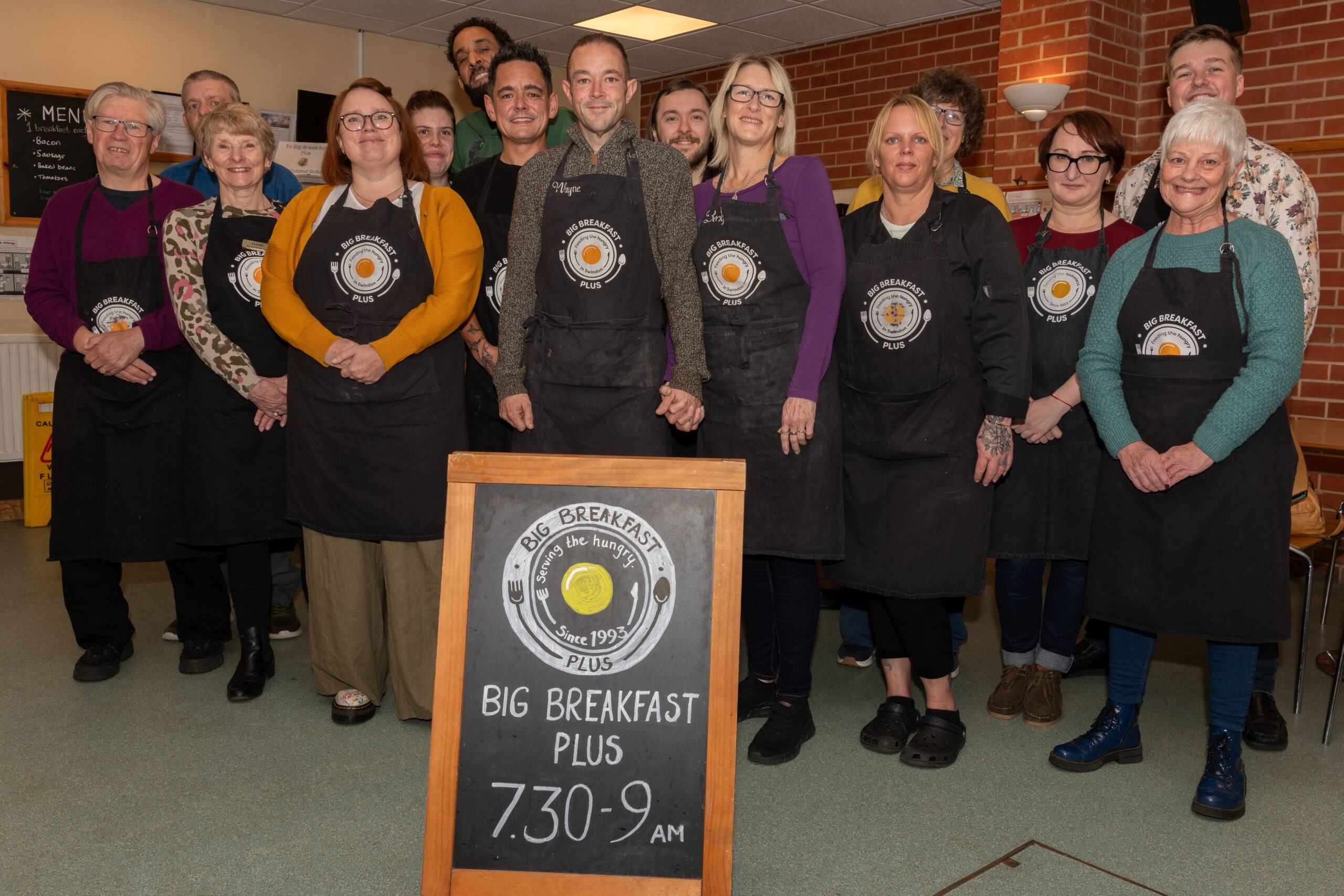
Big Breakfast Receives King’s Award – Volunteers at Big Breakfast Plus – Steve Grimmett Photography
BPP is run almost entirely by volunteers. And that includes a dedicated board of trustees with a mere four part-time paid members of staff.
Every day, the team serve 80 to 90 breakfasts, and on busy days this can be as many as 120. They pride themselves on serving freshly-cooked breakfasts to those in need. And all in a warm and welcoming environment.
A group of local charities
Big Breakfast Plus is one of 281 local charities, social enterprises and voluntary groups to receive the prestigious award this year. Their work, along with others from across the UK, reminds us of all the ways fantastic volunteers contribute to their local communities. And work to make life better for those around them.
Charlotte Mannion, Big Breakfast Plus’s chair of trustees, said she was proud and excited on behalf of everyone involved in the charity, to have won the award. In all, a team of around 70 volunteers are on a rota, helping to run the breakfast café, which is open from 7.30am to 9am.
‘Our volunteers are all amazing, committed, and work so well in their teams. I’m so proud that they have won this prestigious award,’ said Charlotte. ‘They come in at 7am, and run a calm, smooth community cafe. Then they greet our guests and make them feel welcome and comfortable. They look out for new people, so they can show them where everything is.
‘All our volunteers go through an induction and receive regular training throughout the year including food safety qualifications. This means we run an efficient and professional operation. The way our volunteers, in teams of 8-10 each day, work together would be the envy of many organisations. They show off all the aspects of high performing teams all in a two-and half-hour window day in and day out.’
About the King’s Award
The King’s Award for Voluntary Service aims to recognise outstanding work by local volunteer groups to support their communities. Created in 2002 to celebrate Her Majesty The late Queen’s Golden Jubilee it’s continued following the accession of His Majesty The King. 2024 marks the second year of The King’s Award for Voluntary Service.
The announcement of recipients takes place each year, on the 14th November, the king’ birthday. This year’s award winners comprise a diverse range. Included are volunteer groups from across the UK. Such entities as:
A mental health and wellbeing support network for veterans and their families in Yorkshire
A group preserving a historic 12th century castle in south Wales
Volunteers providing English lessons for refugees in Stirling …
… and an organisation providing opportunities to engage in the arts for people with learning disabilities in County Fermanagh.
Representatives of Big Breakfast Plus will receive the award crystal and certificate from Lord-Lieutenant of Wiltshire Sarah Troughton later this summer.
In addition, two volunteers from Big Breakfast Plus will attend a garden party at Buckingham Palace in May and June 2025, along with other recipients of this year’s Award.
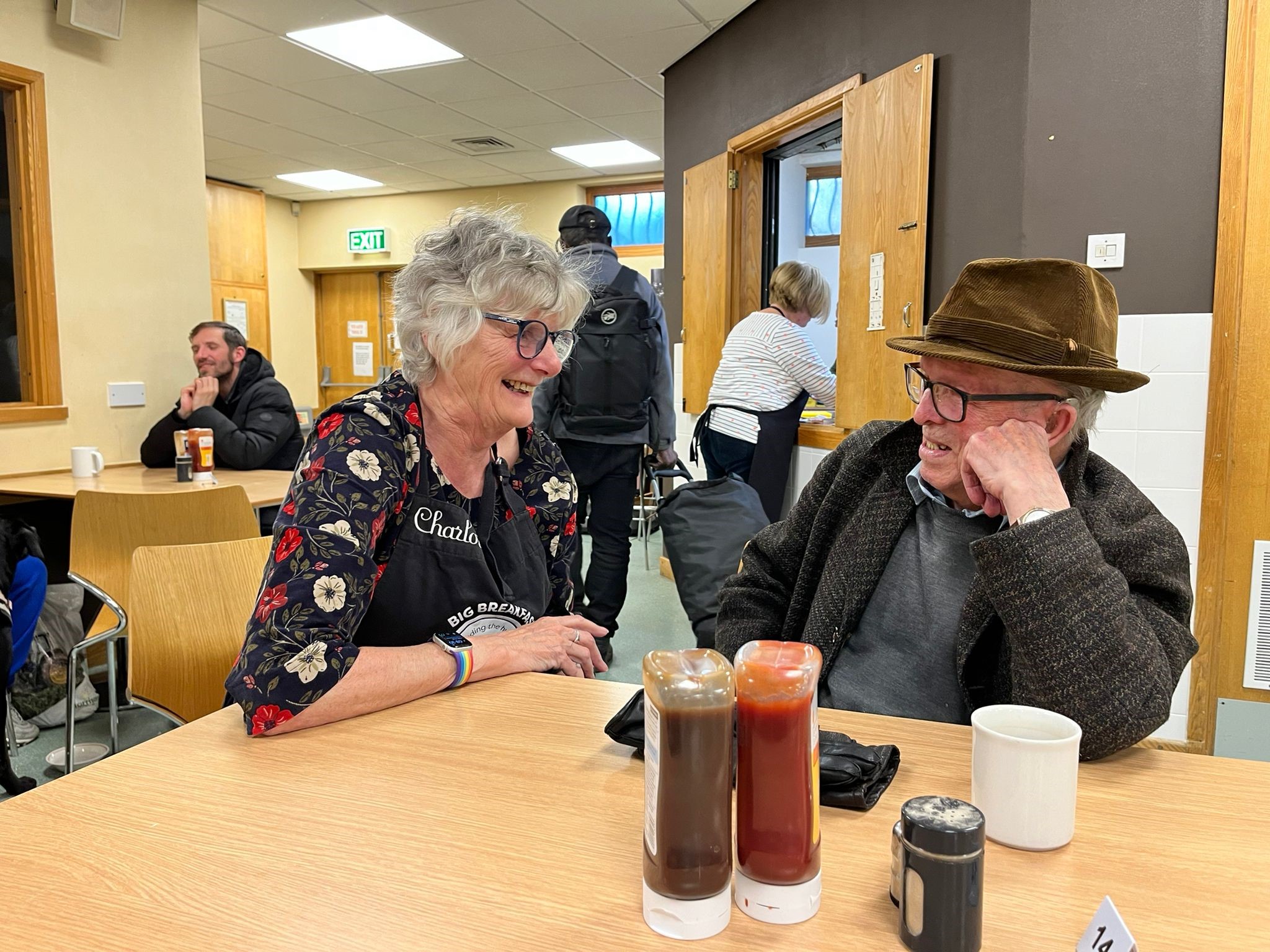
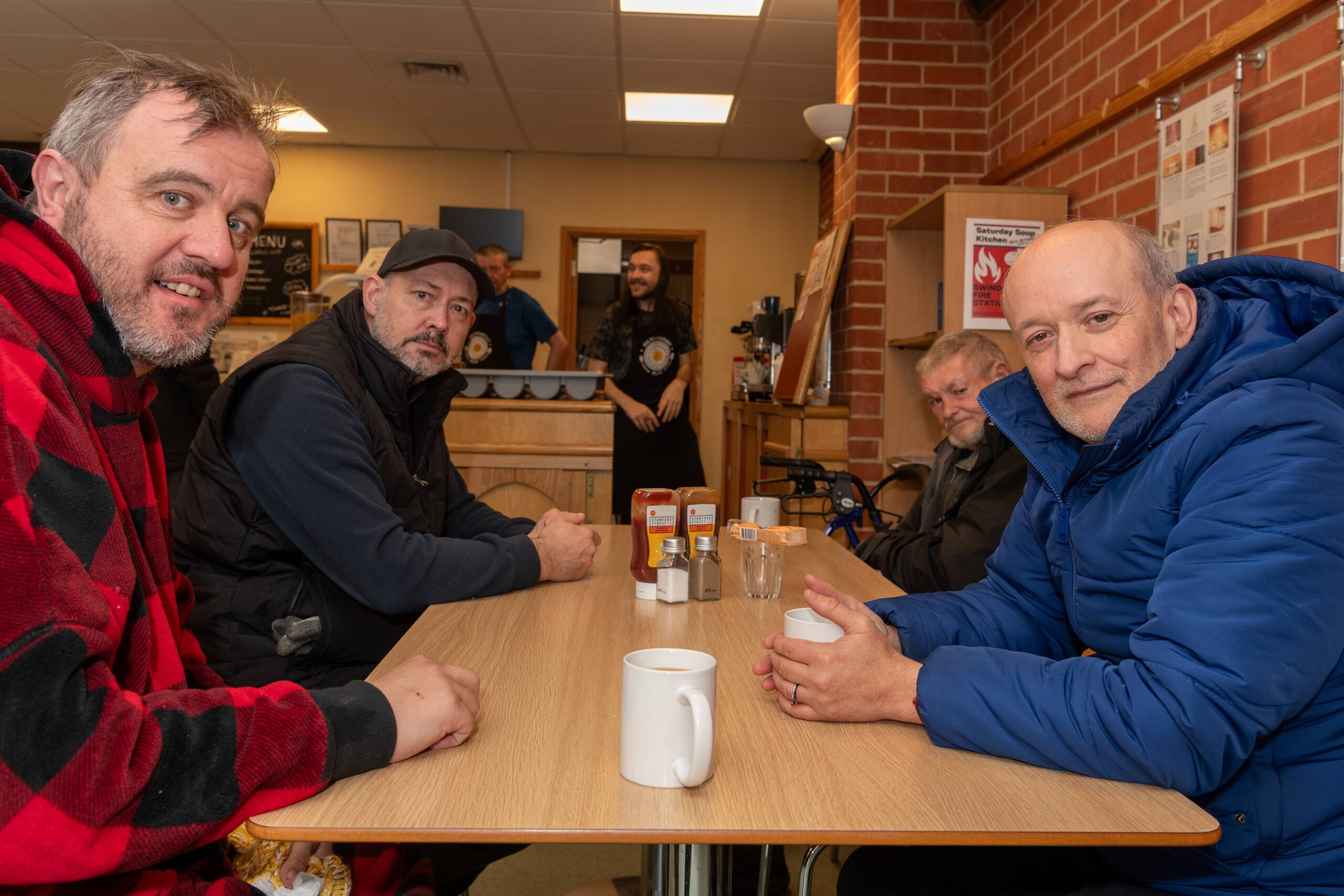
Charlotte Mannion with Timothy, a guest at Big Breakfast plusGuests at Big Breakfast Plus – Steve Grimmett Photography
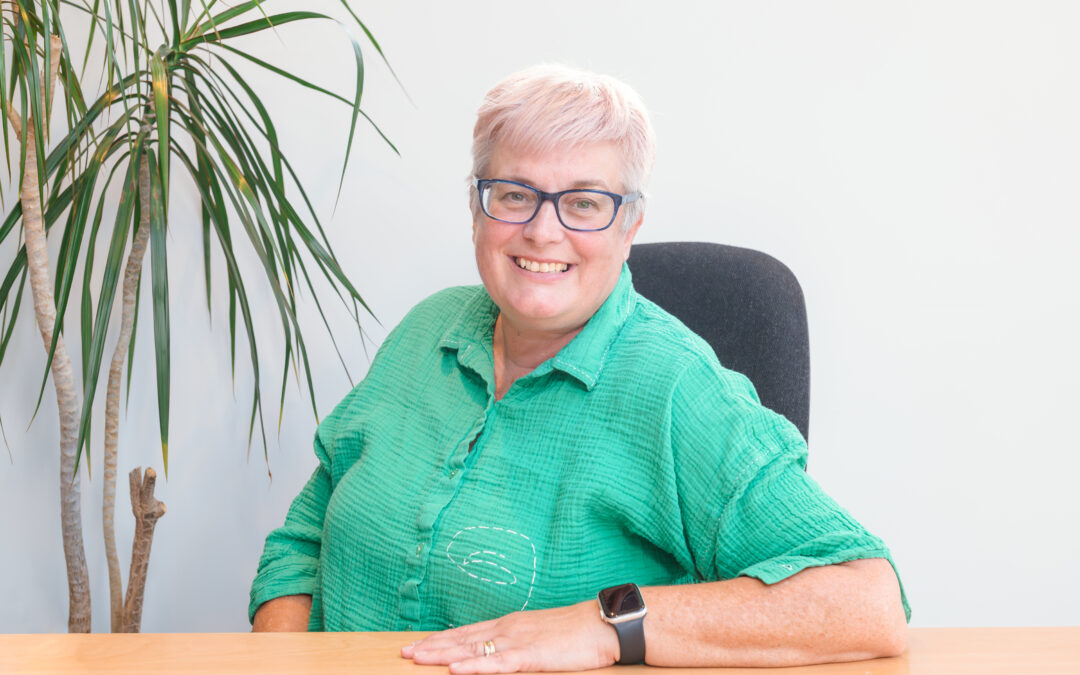
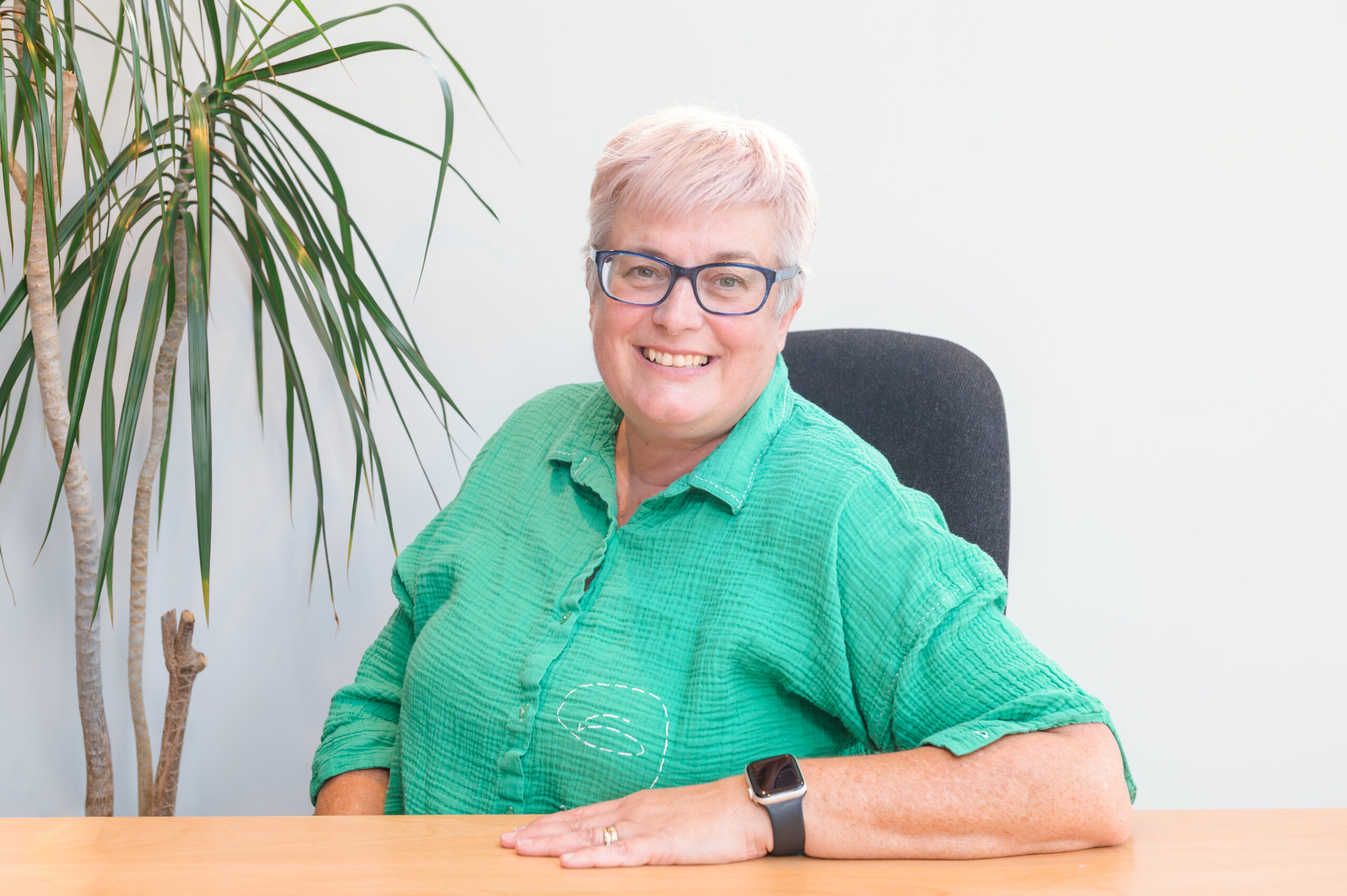
Scott Media Up For Award. PR consultant Fiona Scott has reached the finals of the UK Top Business Advisers Awards.
Fiona was picked from hundreds of advisers in the PR industry and across other important business sectors from around the UK. Her selection came for the outstanding work she does with helping SMEs and entrepreneurs use the power of the media to promote and grow their businesses.
Voting is now open for the overall winners. And Fiona, MD of Swindon-based Scott Media, is a finalist in the PR and Content category.
Scott Media Up For Award – Fiona Scott owner of Scott Media
Being shortlisted for my PR services is a real honour. It’s also a testament to the hard work I and my team put in to helping our clients get in front of their potential customers, using the media,’ she said. ‘I am often telling my clients that entering – and, better still, winning – awards is a great way to raise their profile. So it’s nice to be taking some of my own advice.’
Background
A newspaper and TV journalist, Fiona set up Scott Media 16 years ago. She formed the business to support SMEs wanting to leverage PR as part of their marketing strategy.
Since then, Fiona and her team have represented everyone from solopreneurs and inventors to larger SMEs and Paralympians.
This year, Scott Media also launched a speakers’ platform. Its aim to give clients a new avenue for marketing themselves via speaker engagements. She has a successful podcast – PR Not BS. And in 2023 published her first book, The Hard Yards, about her first decade running a business.
Enterprise Nation
The small business support platform/membership community, Enterprise Nation runs the UK Top Business Advisers Awards to celebrate the country’s hard-working advisers. They’re run in association with Constant Contact. That’s a global digital marketing platform that helps small businesses to grow.
Constant Contact UK General Manager and small business founder Erika Robinson said: ‘When it comes to running your own small business, you are CEO, CMO, CFO and so much more. Bringing in external expertise, helps you focus on what you love. Congratulations to Fiona from Scott Media, helping small businesses in the Wiltshire area to thrive!’
Emma Jones, CBE, founder and CEO of Enterprise Nation said: ‘Business advisers are the unsung heroes behind Britain’s booming small business culture. Businesses need their insight and experience now more than ever. We designed the awards to show how important this work is in action. All in order to help more start-ups and small firms find out about the benefits of taking advice.’
A Visit to Museum and Art Swindon– by Rebecca Davies. First impressions of the new Museum and Art Swindon now located in the civic offices on Euclid Street.
Introduction
I haven’t blogged for a while as these days I am very busy. I have found my dream job. Unfortunately it is 500 miles away. I am working for the Scottish Crannog Centre, I did want a job in a museum, but this is an up and coming heritage centre.
It is probable that this will be my last winter in Wiltshire. I must write a valedictory. (And it is interesting I have found a Wiltshire connection where I am. This could be my next article).
Of course, this won’t stop me from writing on Wiltshire a bit more. Aside from the fact that I have so many projects on these days, many concerning my work. But anyway, to the point, Museum and Art Swindon is now open. It opened up early this summer so of course I had to visit.
The Building
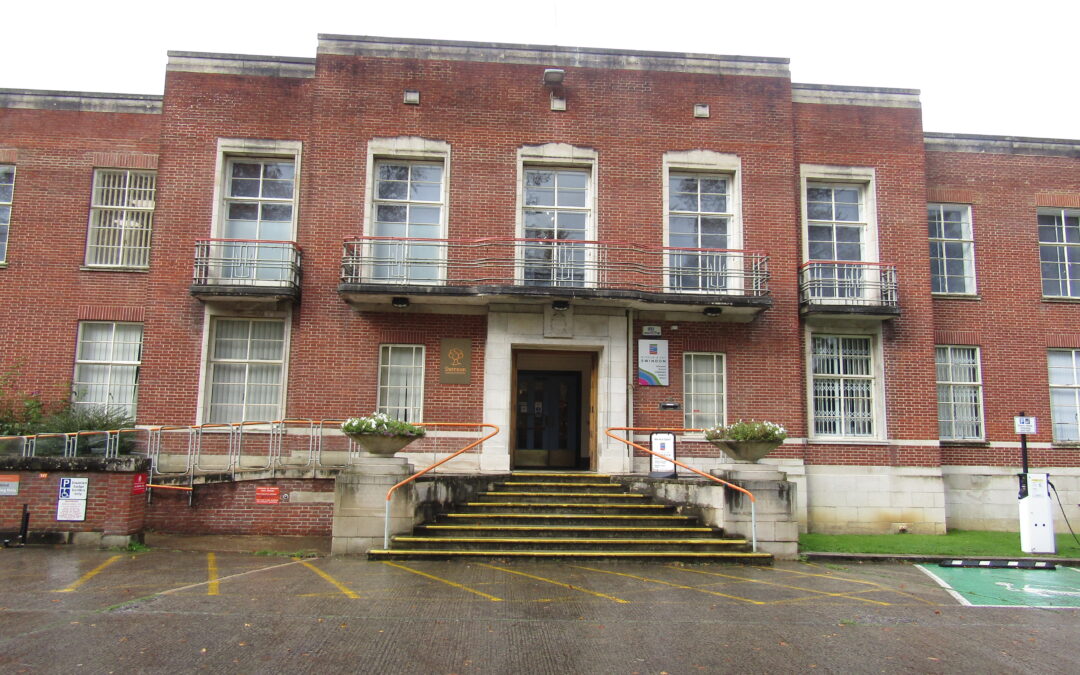
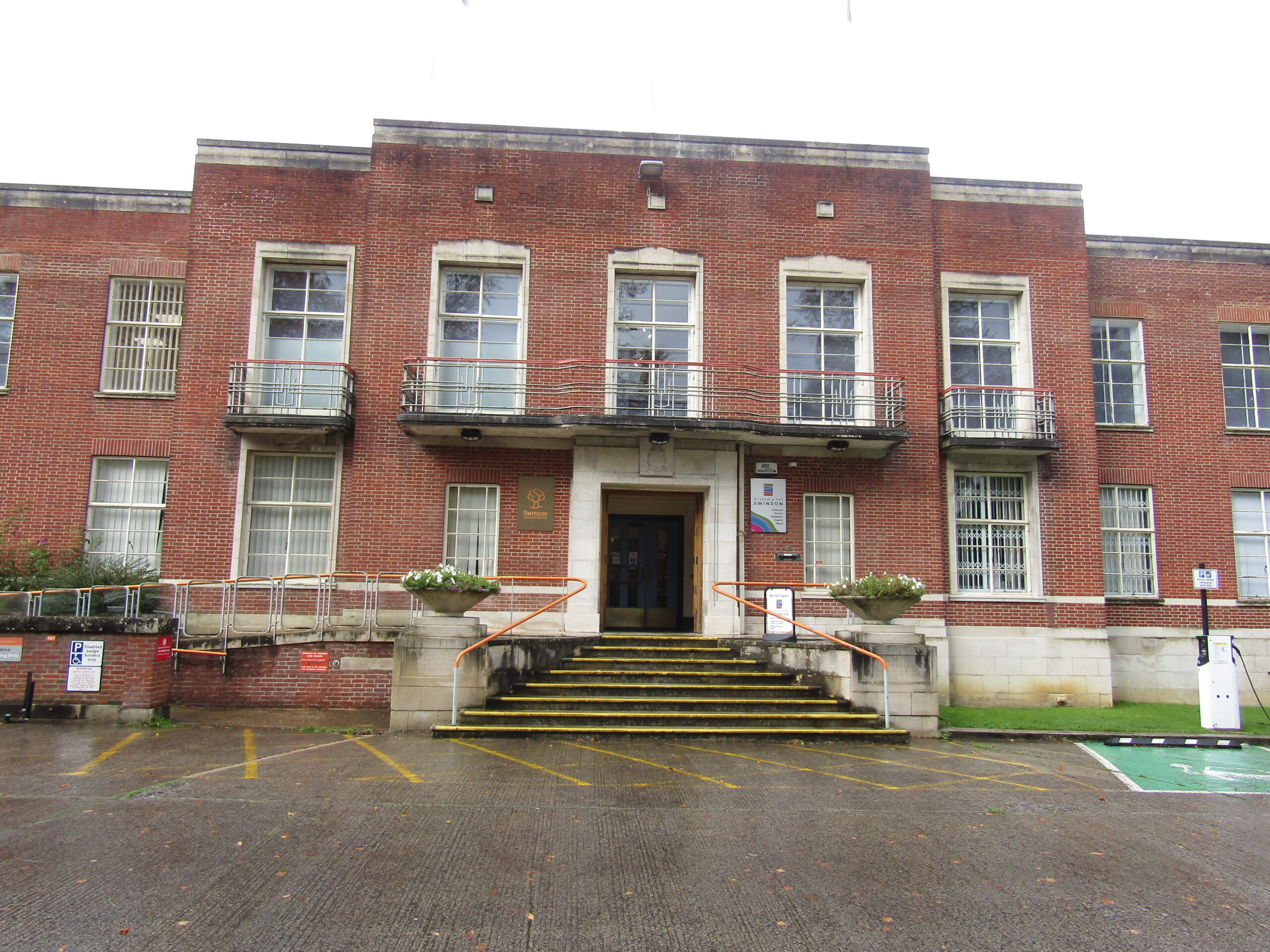
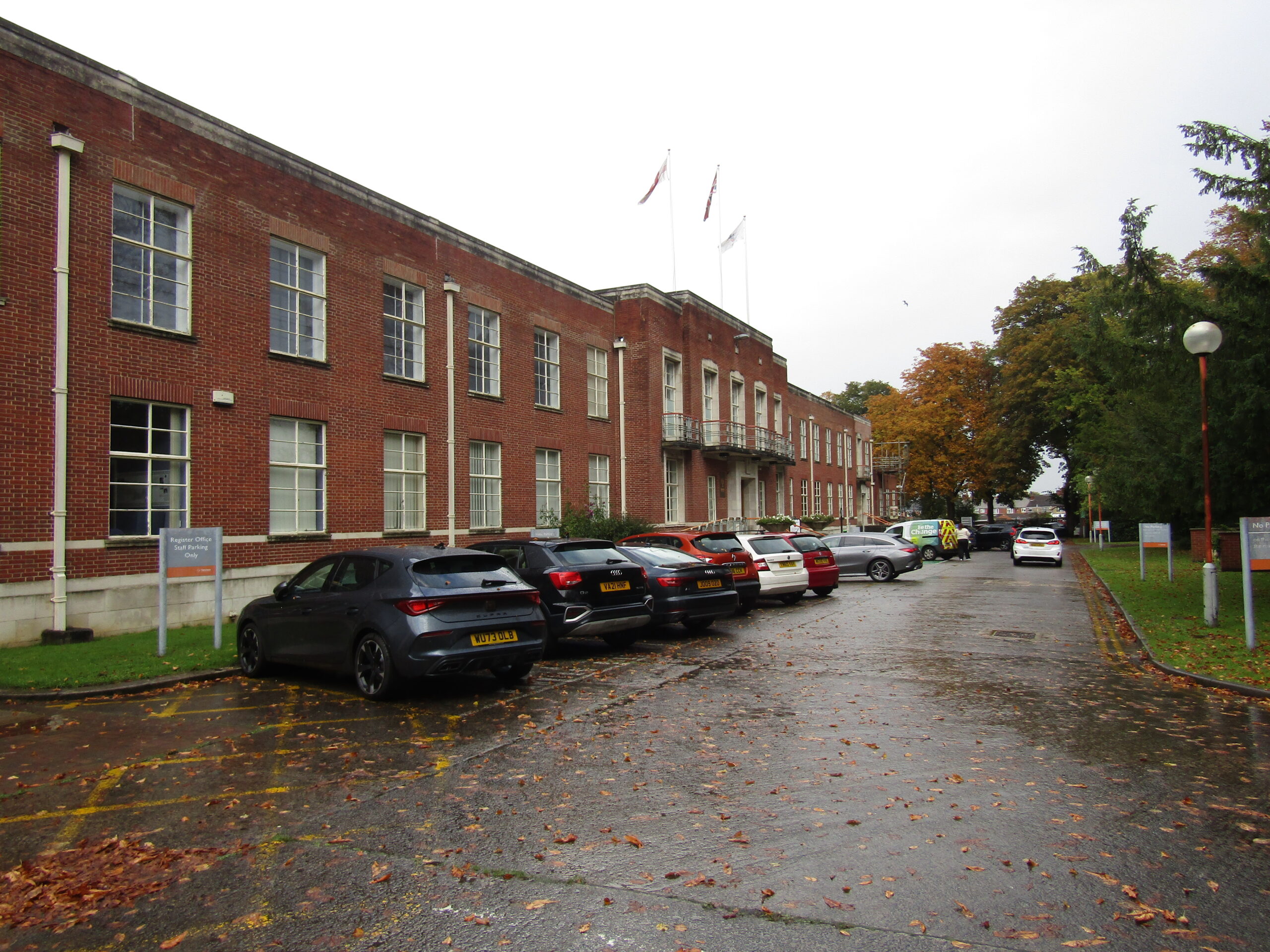
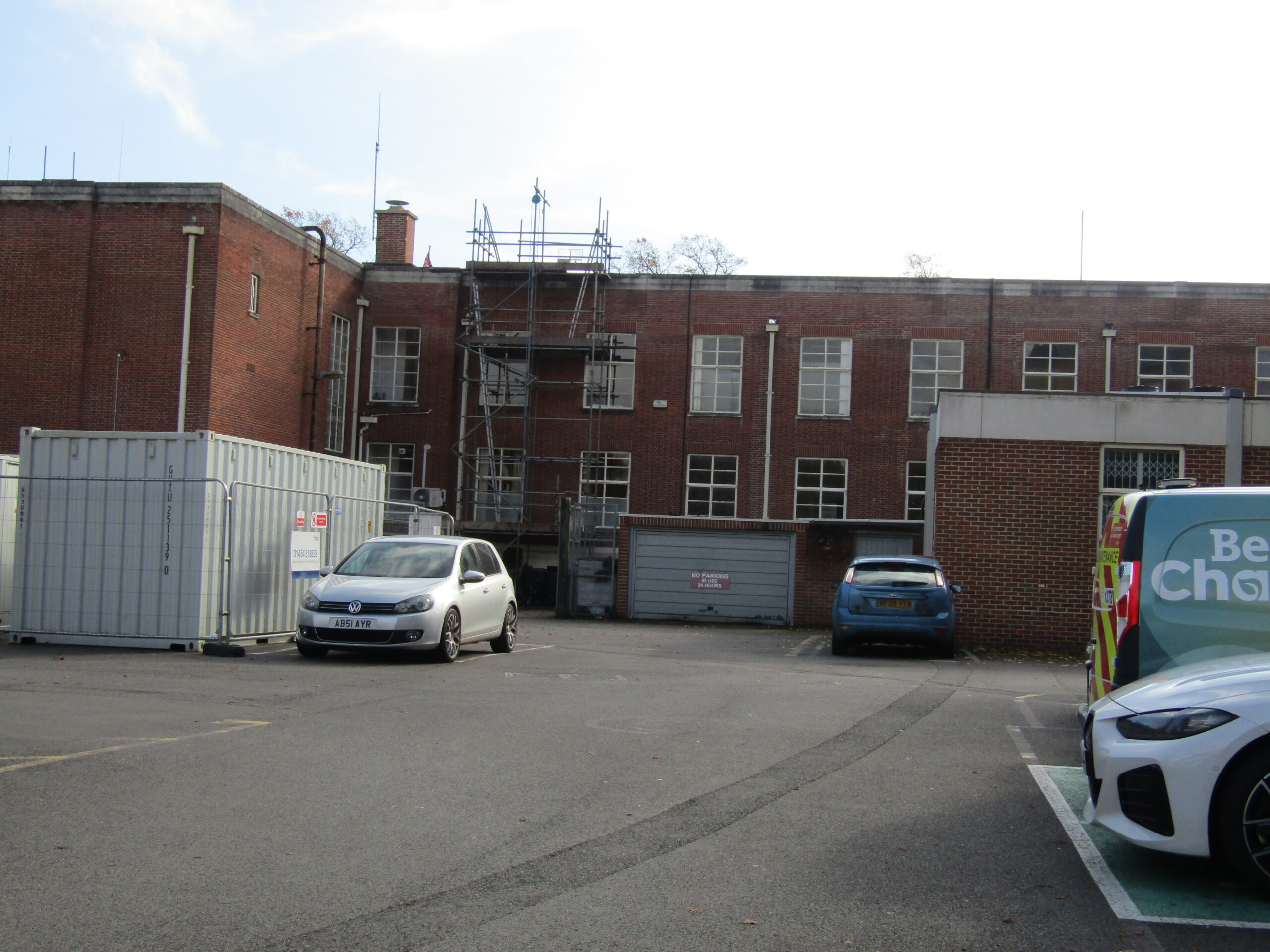
The new museum is in the Grade II listed, brick-built, Art Deco Civic offices, on Euclid Street. So, a bit more central than Apsley house on Bath Road, Old Town.
A Visit to Museum and Art Swindon – the civic offices on Euclid Street Swindon
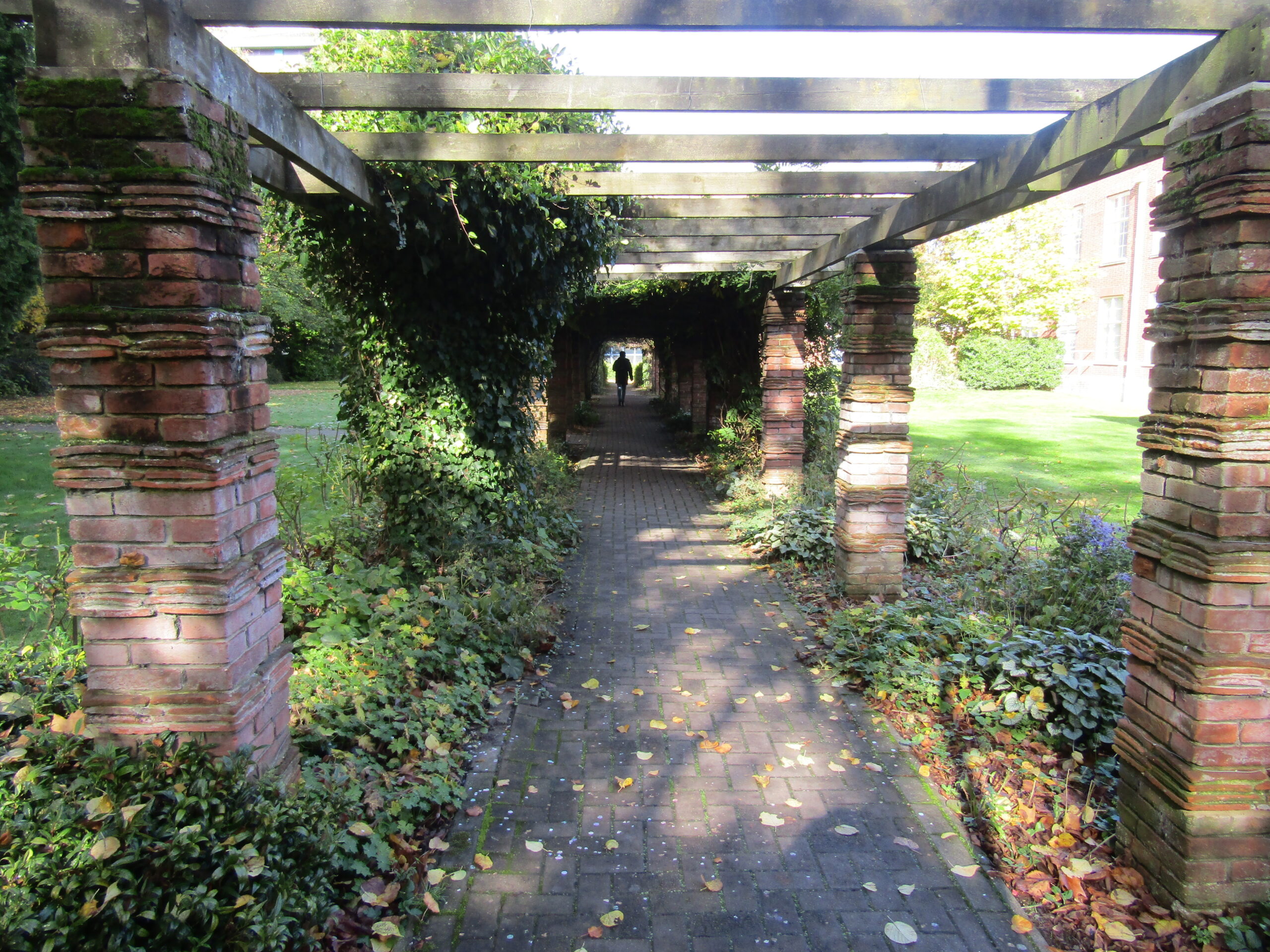
The gardens at the civic offices feature a pergola, contemporary with the building and included in the listing.
The pergola in the gardens at Swindon’s civic offices
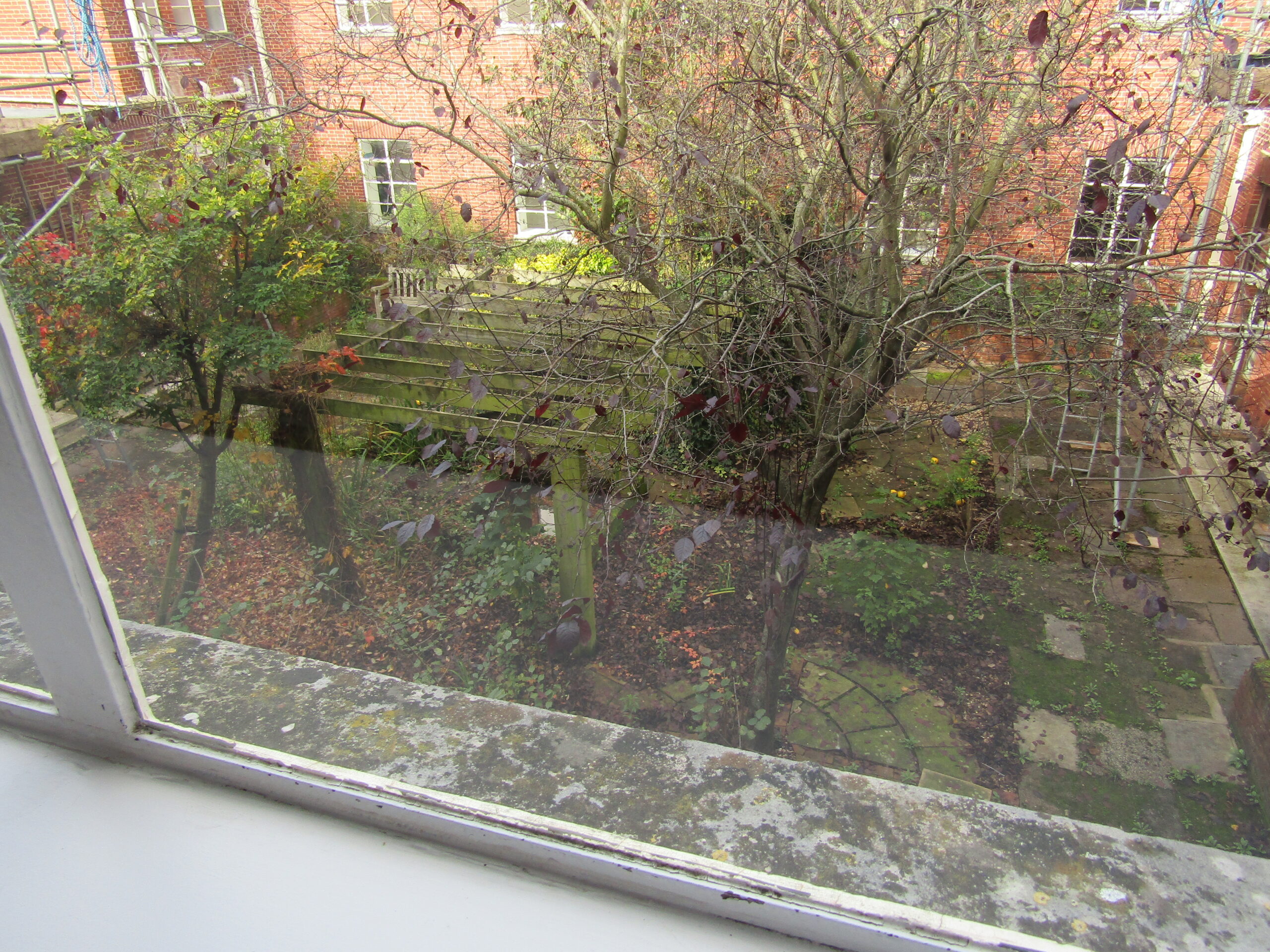
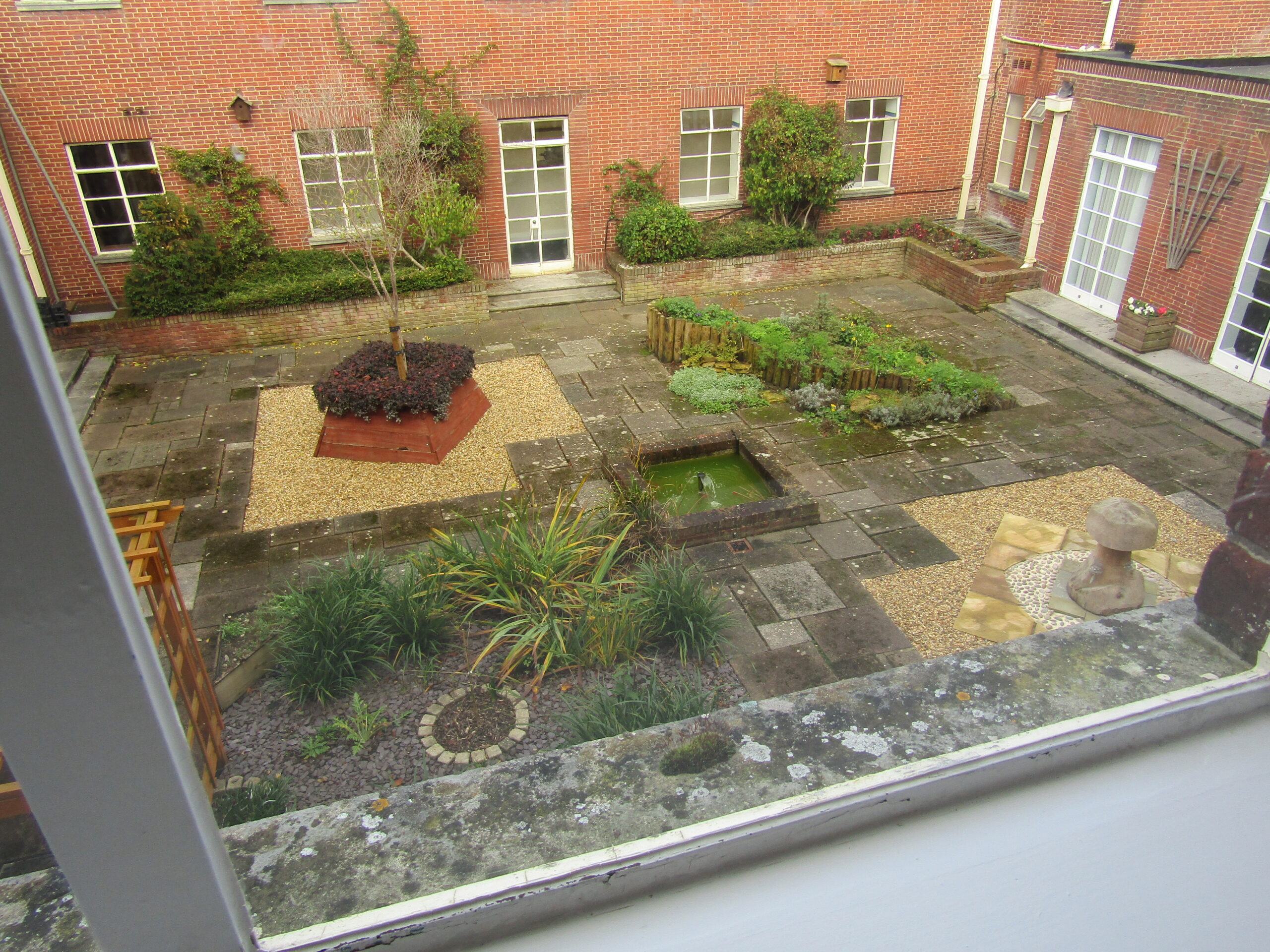
The building is of an `8` plan with two open courtyards. One has been well kept up, and the other is a bit more neglected. They are not accessible to the public and are designed to look down into.
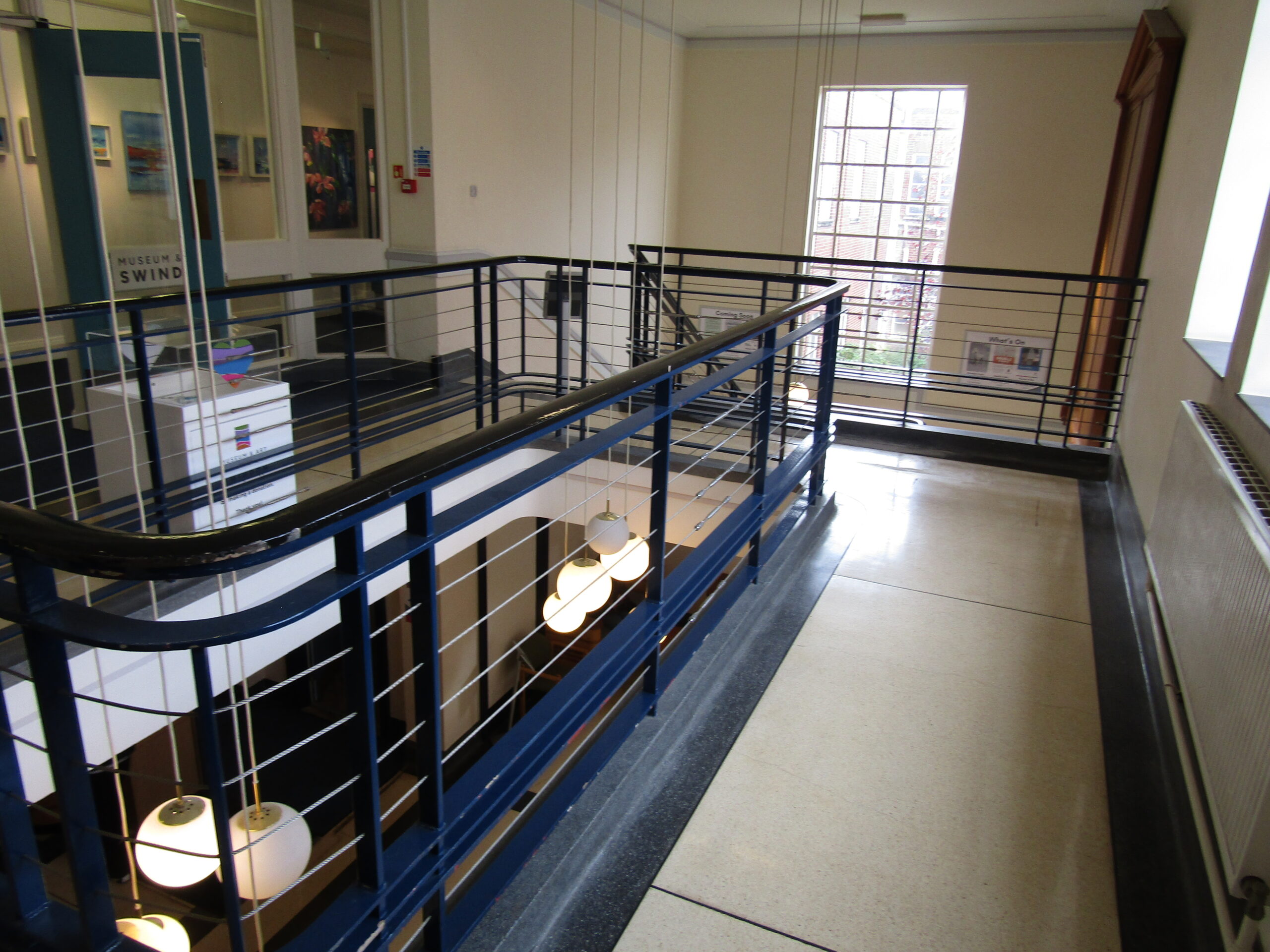
The museum is located on the first floor of the civic offices – accessed either by this fetching staircase or the newly-installed lift.
Staircase in the civic offices on Swindon
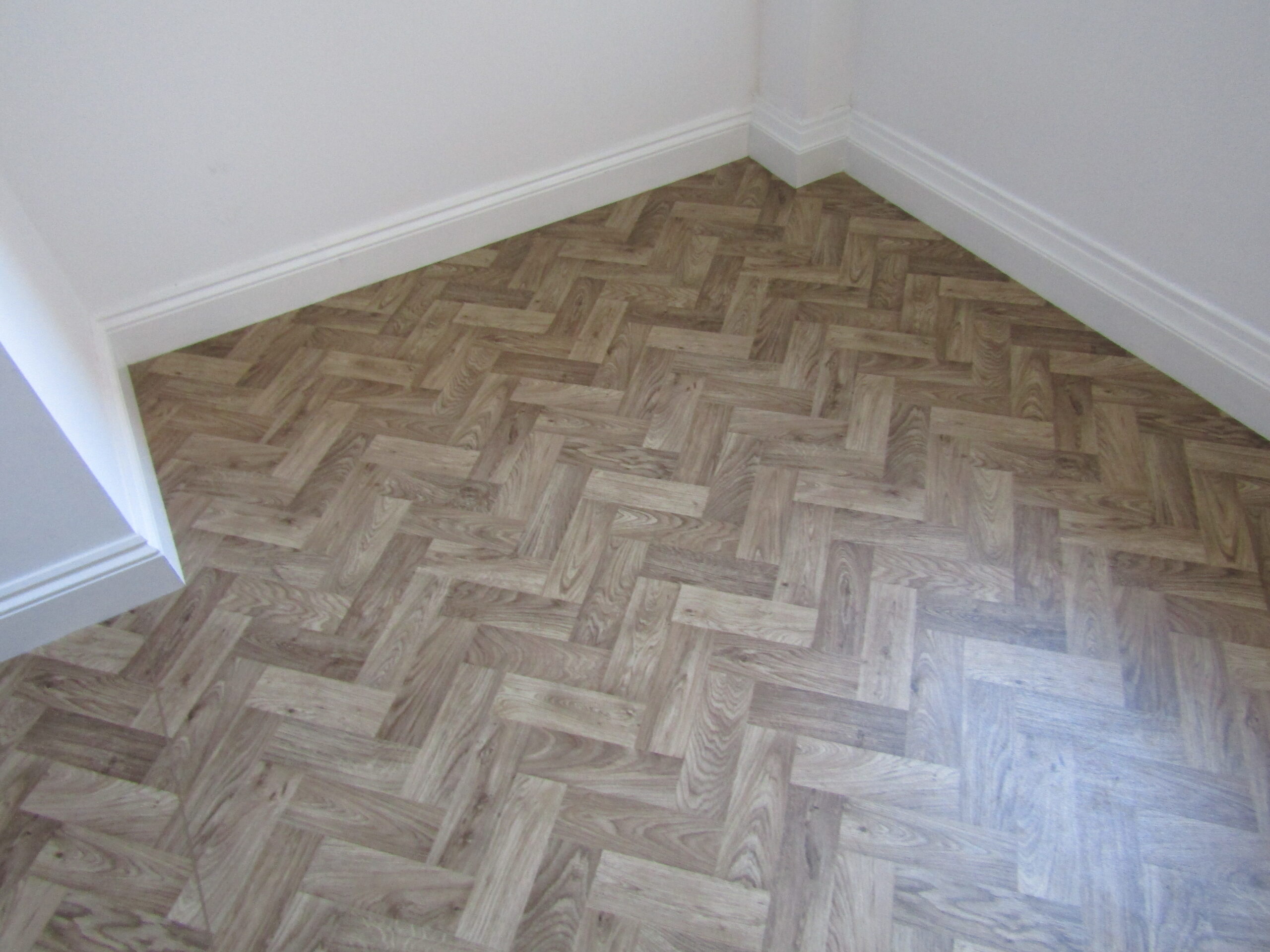
Observe that the original interior is still intact. But I do not know if this nice parquet floor is original; it fits though.
What I saw in the museum
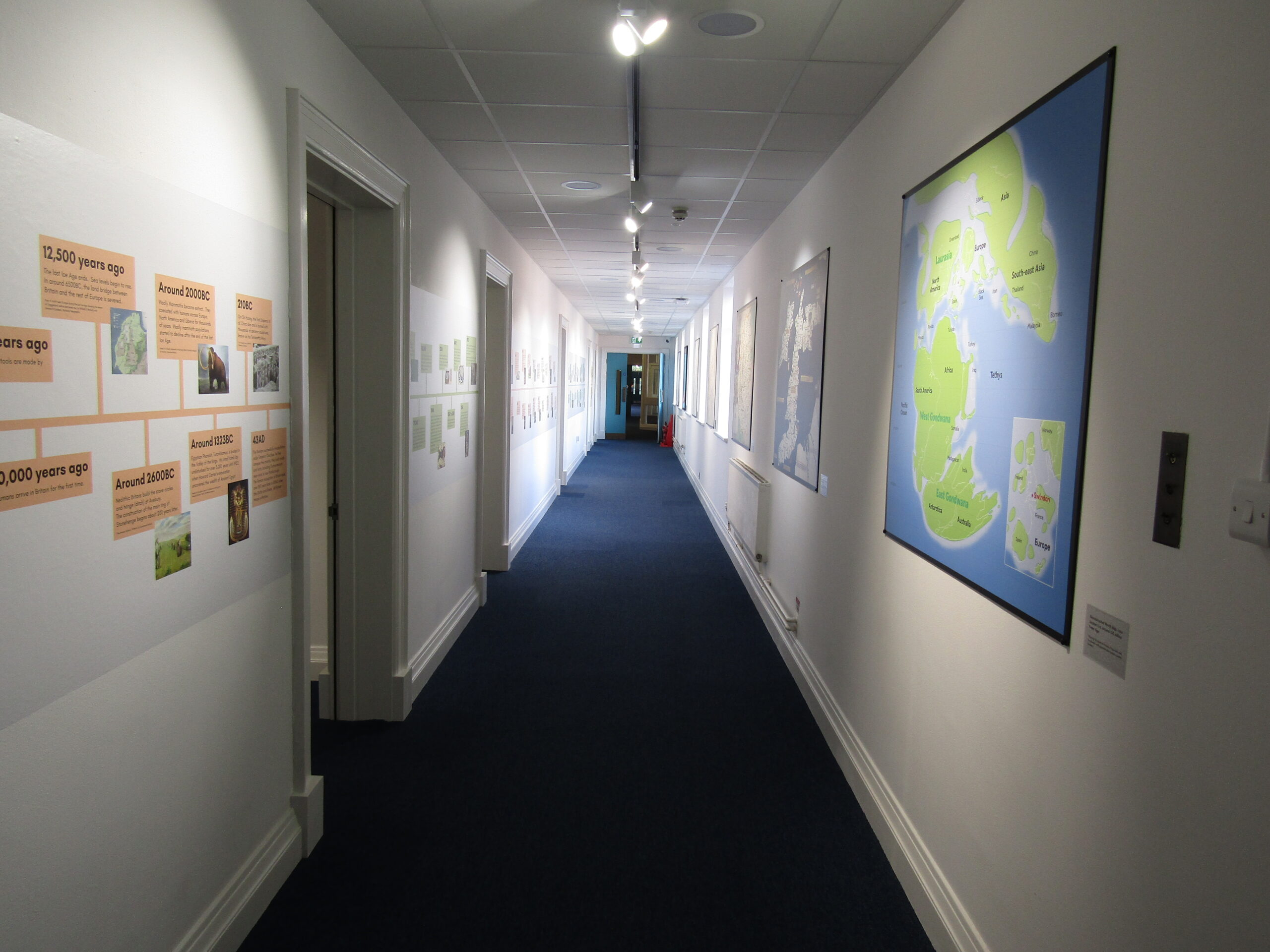
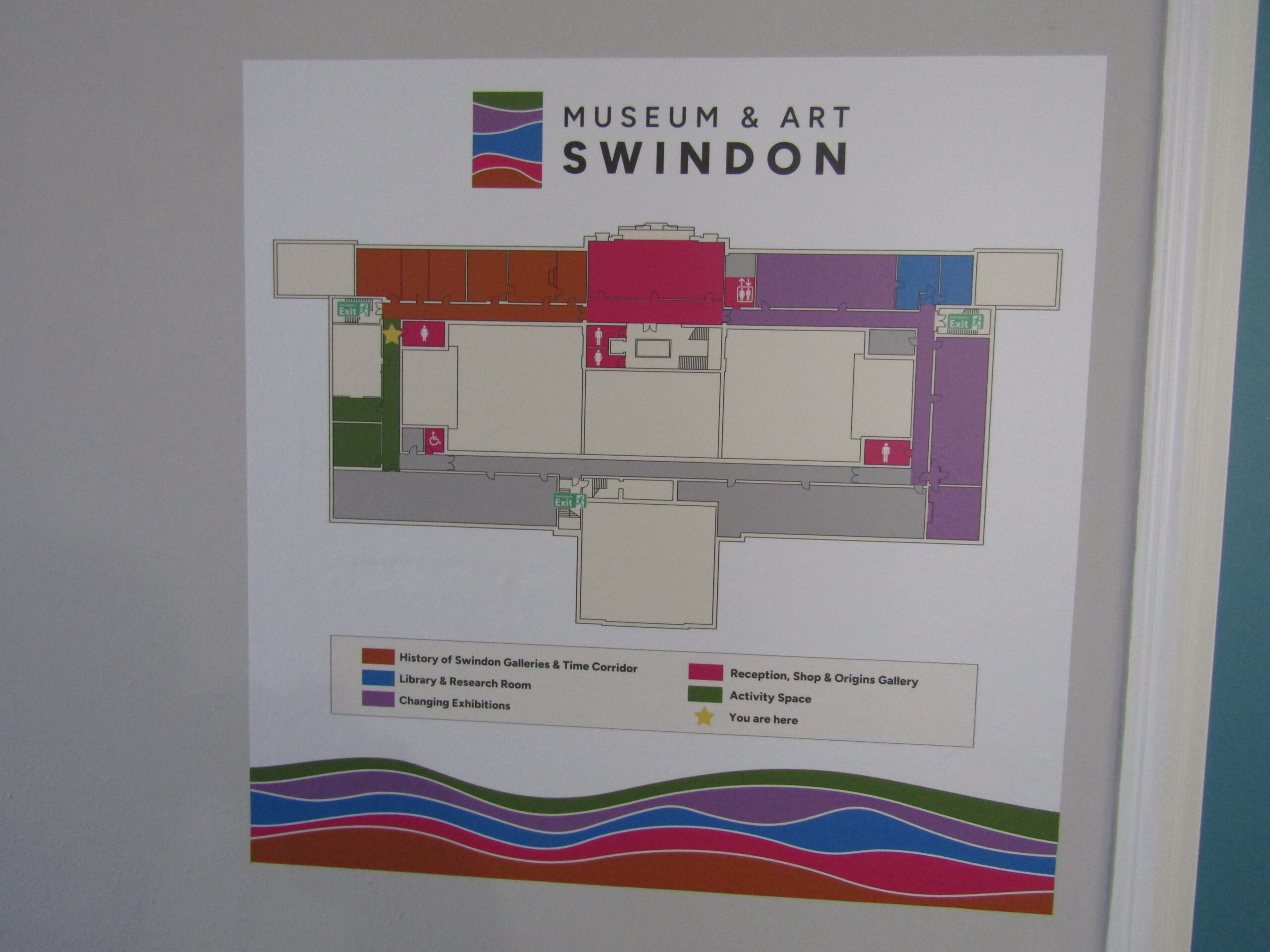
The layout is pretty simple (and there is nothing wrong with that) with a chronological arrangement along the corridor. The exhibits are in the office rooms opposite. It’s an effective use of the layout.
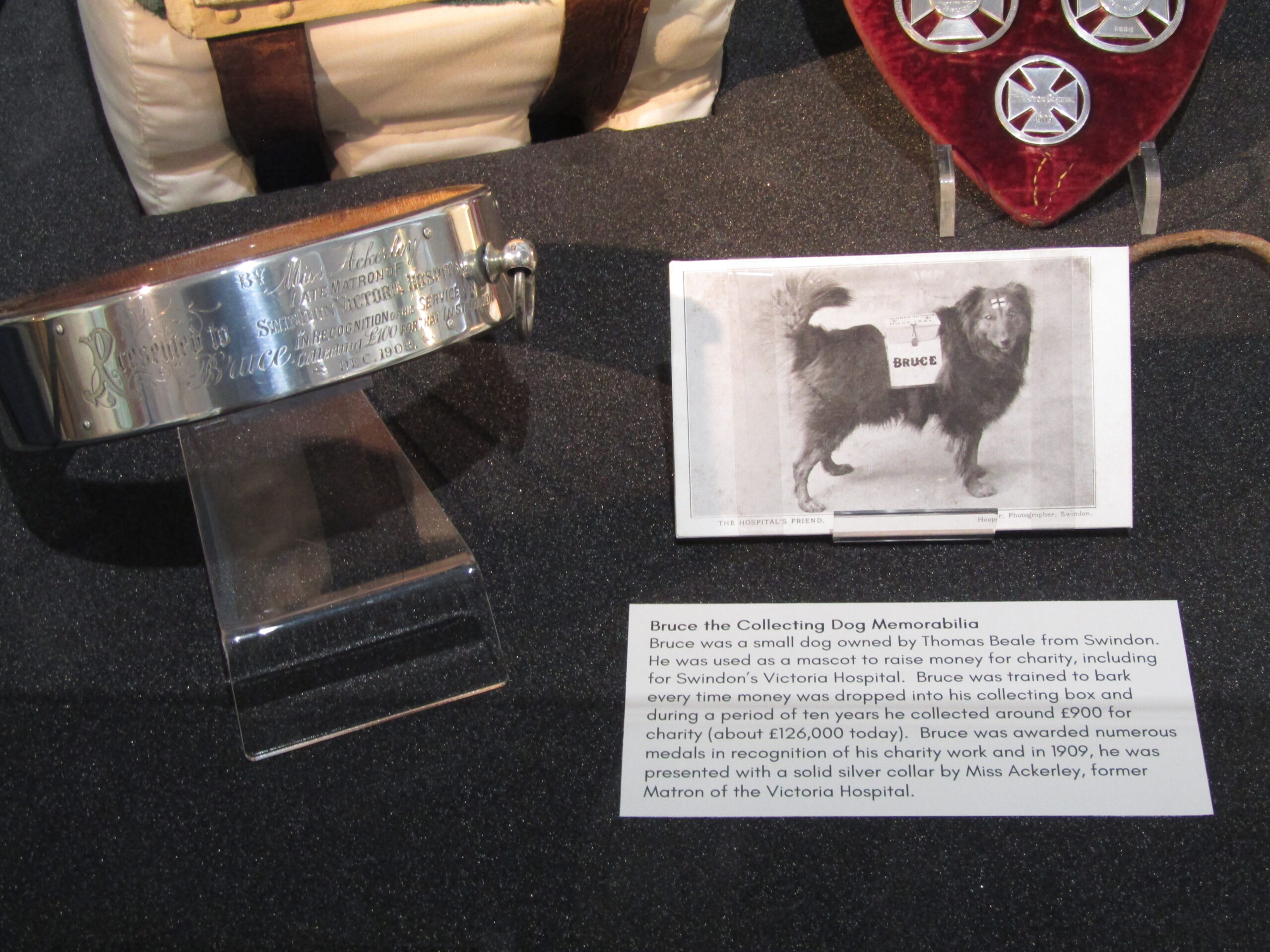
So, it starts with prehistory (everything from Dinosaura to Iron Age – to be tidy) and ends with the present day. I particularly liked Bruce the fundraising dogs collecting box, medals and solid silver collar.
Bruce the collecting dog in swindon’s museum and art gallery
Along the corridor it’s contextualised with a timeline on one side and maps on the other. (I love maps.) These maps are well reproduced. In particular the one of the north-east of the famed Andrews and Drury map of Wiltshire.
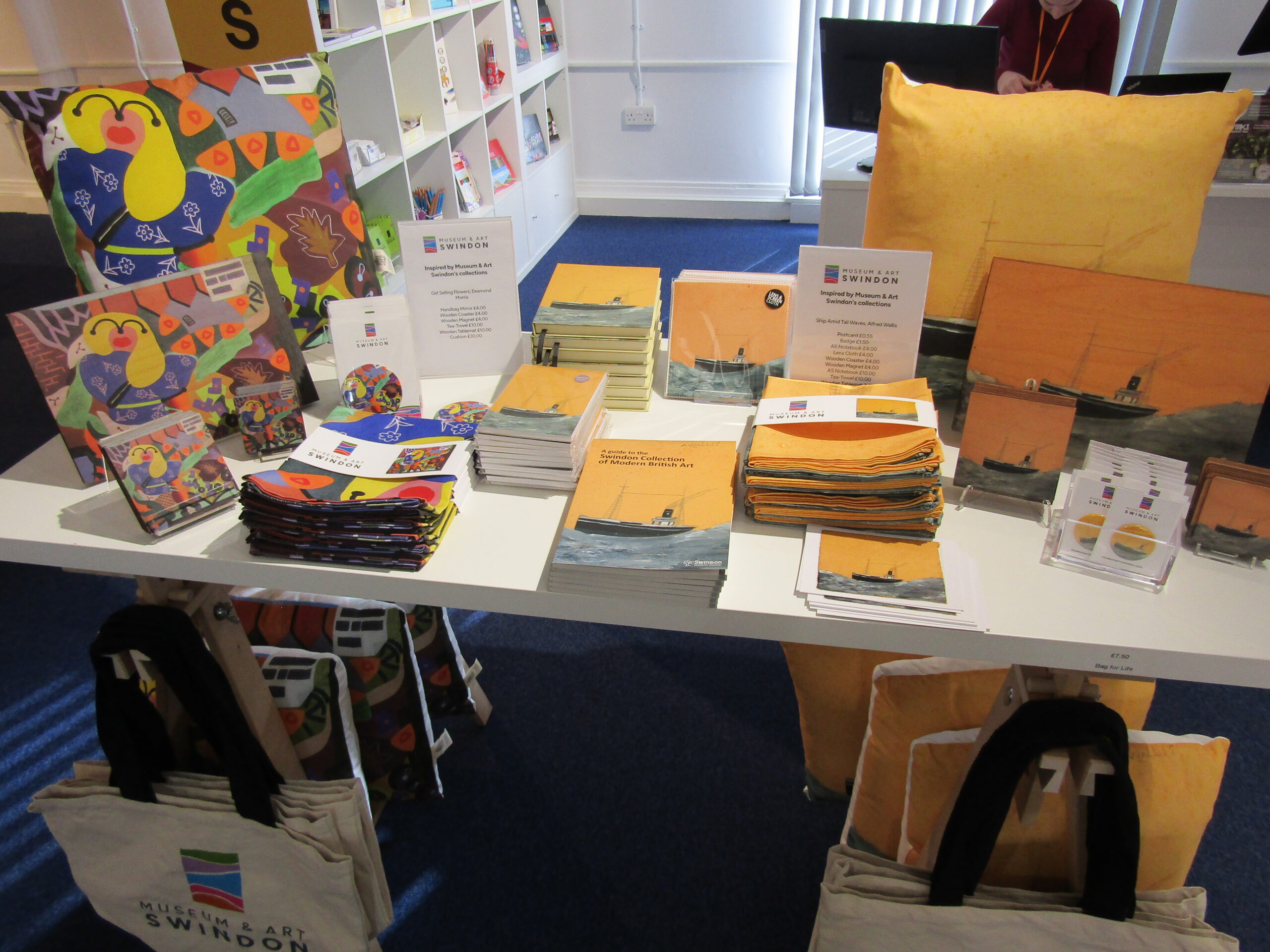
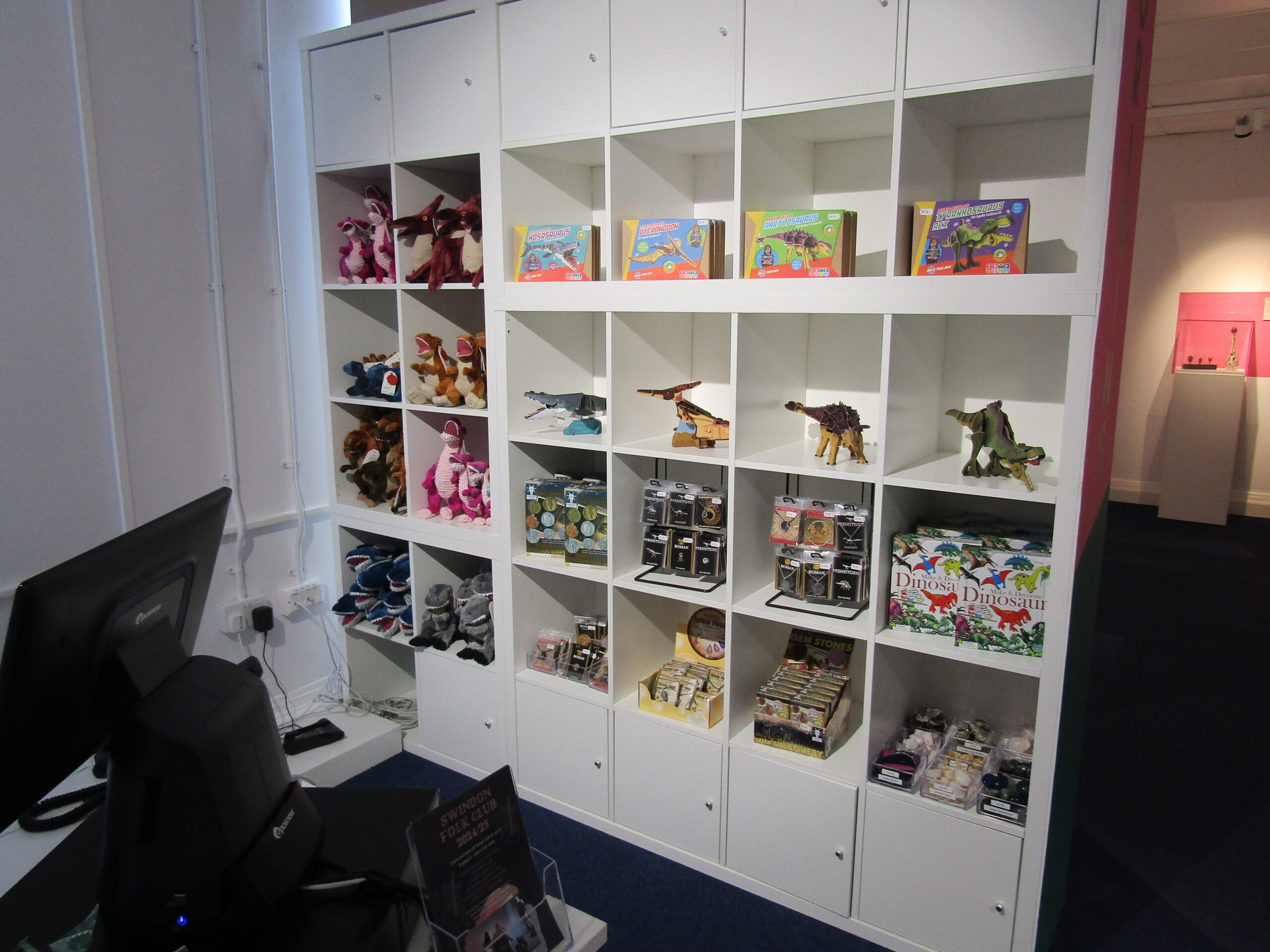
And of course there is a gift shop. A lot of the merchandise is dinosaura based, with not much museums or local merchandise. Though there are some rather nice things, such as the tea towel print of Desmond Morriss Girl selling Flowers, and Alfred Wallis Ship Amid Tall Waves.
Art-related merchandise in the gift shop at Swindon museum and art galleryDinosaur related merch the gift shop
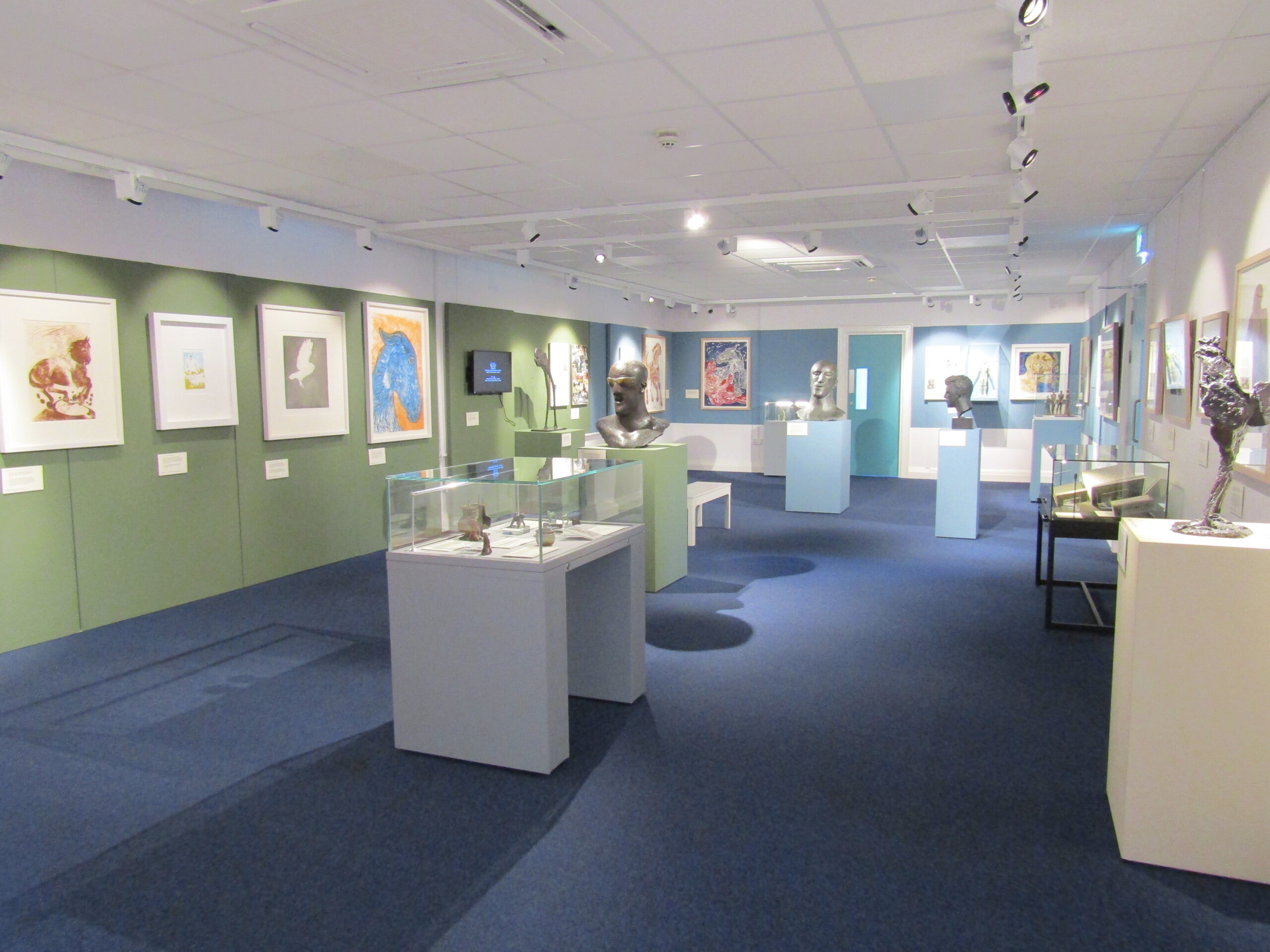
This is Swindon Museum and Art Gallery of course, so the other end is devoted to paintings. A subject I will admit I am no expert on. So, I reserve no comment on that.*
*What’s shown here is the Elizabeth Frink exhibition
The Elizabeth Frink exhibition
What I didn’t see
A crocodile! A Crocodile! (OK, it’s a Gharial…) I did ask after her and I was told she is being restored.*
*Born Again Swindonian here. The gharial is restored and is returning to the museum at length – but in a case this time to the prevent the stealing of teeth and claws etc.
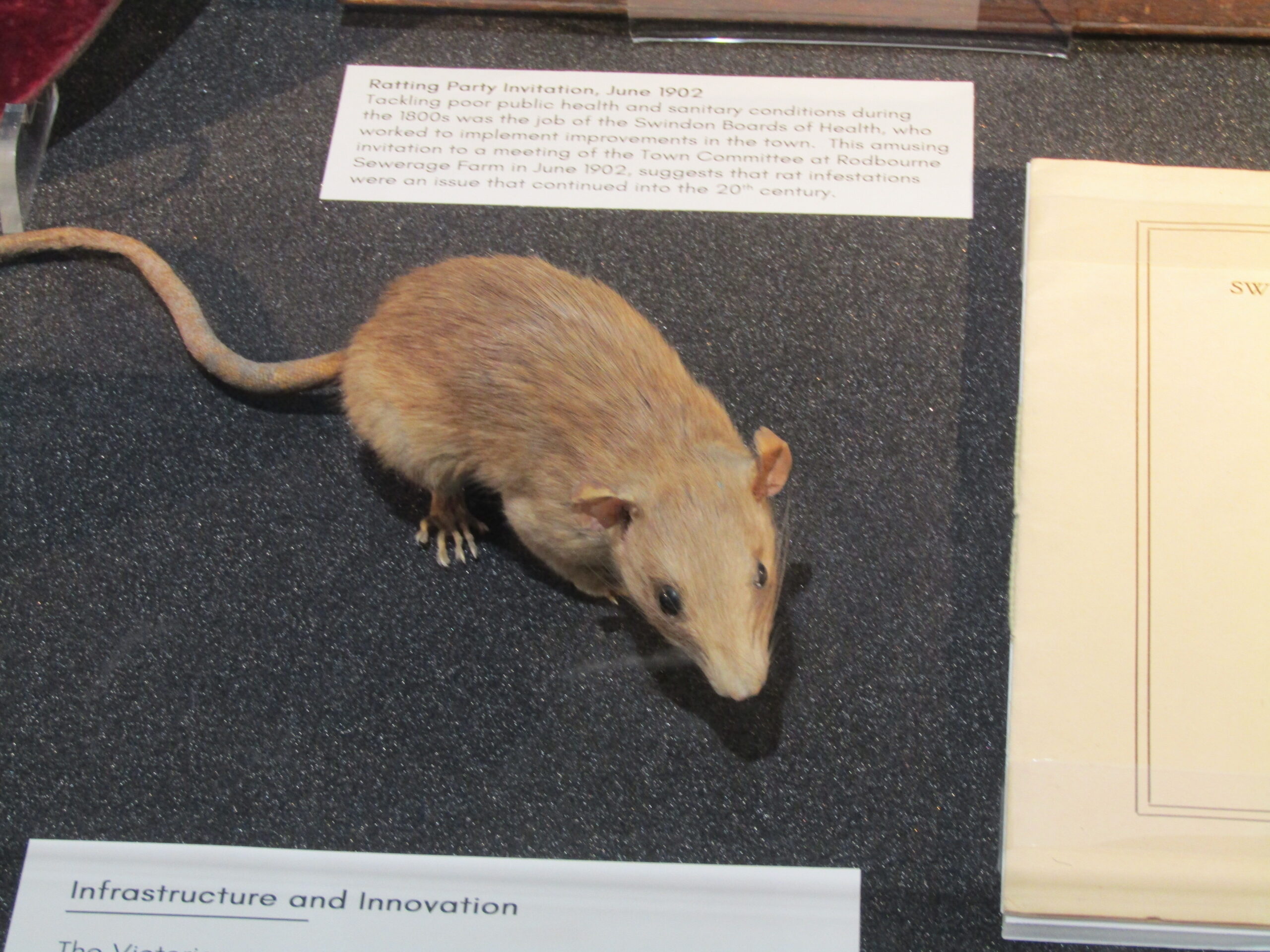
I did though see a stuffed rat but none of the stuffed animals that I recall – though I think they were a touch shabby.
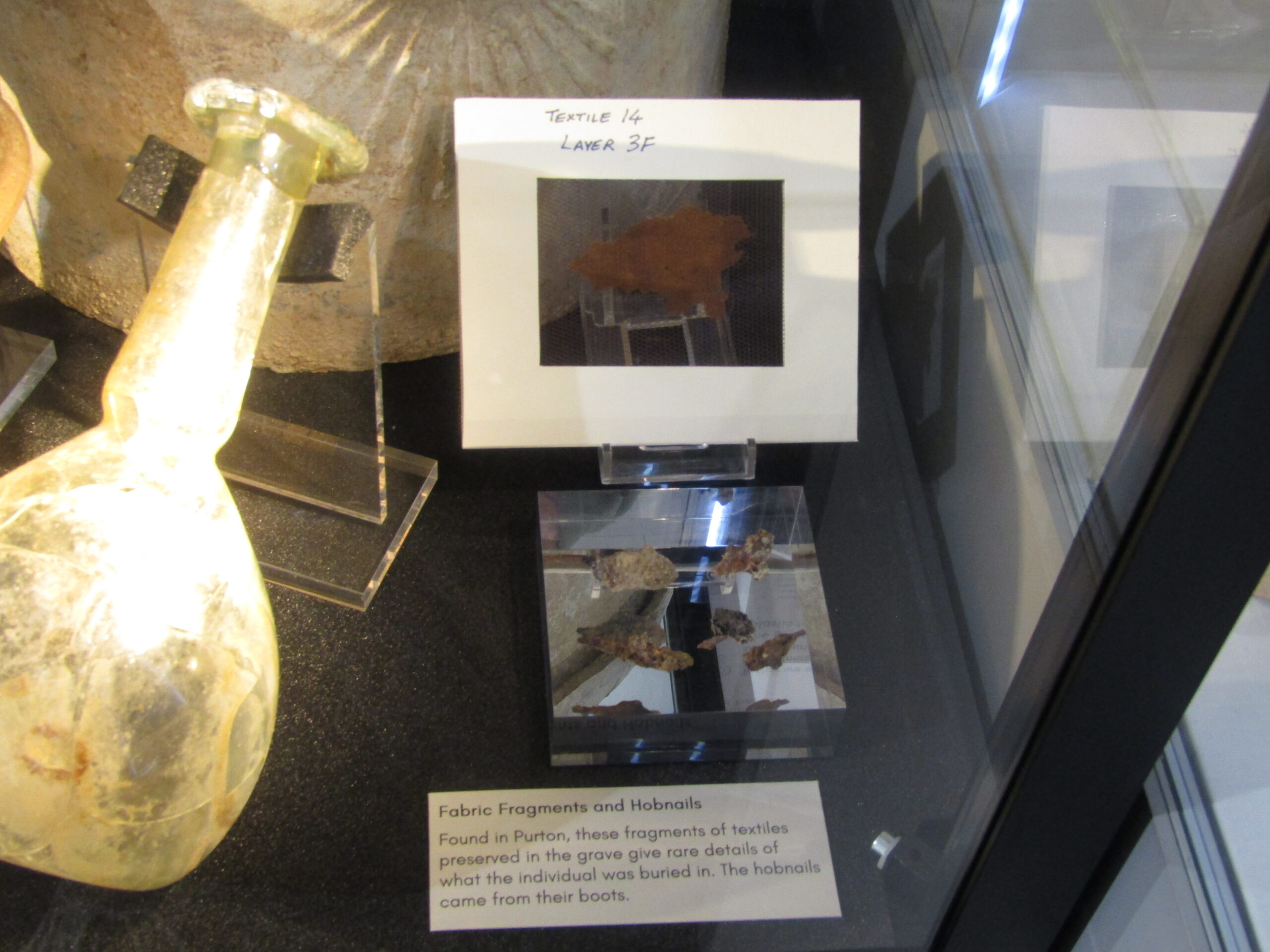
There were the Roman burial remains from Northview, in Purton. But not the section of pavement from Pavenhill – also in Purton.
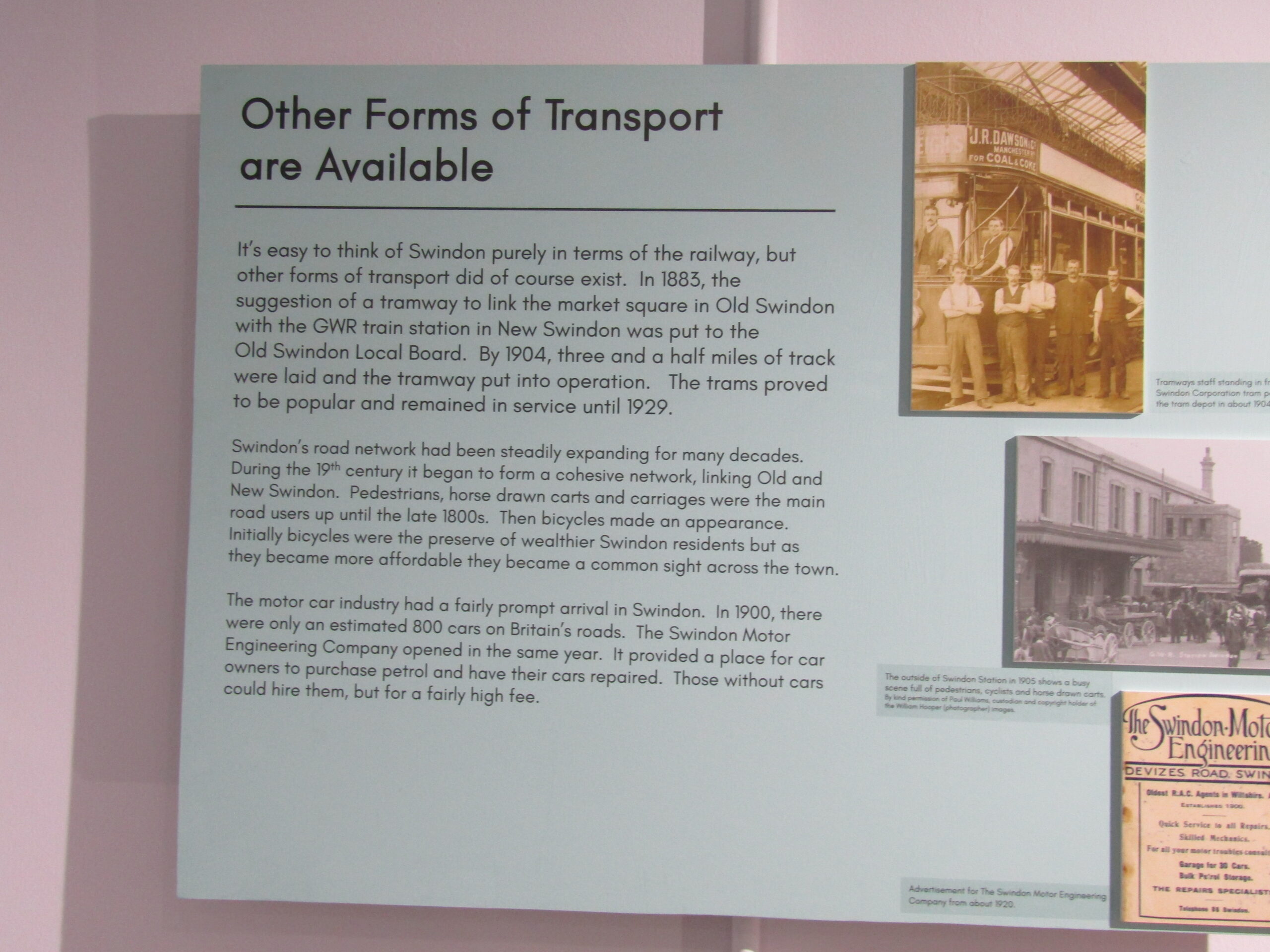
There is almost nothing on the railway, but of course that is the remit of Steam Museum. They do though have a section on the trams.
Living in Scotland I have noticed that, though very keen on heritage there is a certain disdain for Industrial history there. (At the moment, fashions in heritage change, of course, and a lot of the industrial technology was invented and developed in Scotland). To see Swindon without the railway is an interestingly different view.
The website
This is a modern museum and it has a good website. It has a simple design and is and easy to navigate – some are not!
I work for the Scottish Crannog Centre, and I must say their website is half-hearted. But of course, this is a very different sort of museum; one that it is vital to go and see in person. It’s a hands-on museum – though there is a collection. And they are planning on upgrading the museum space to make room for hosting touring exhibitions.
Museum websites are so often very much dependent on having staff/volunteers who can design them.*
*NB: this is not the case with Swindon Museum and Art
In conclusion
I am so glad to see a town museum in Swindon again. As I said in my article on the old museum I myself am rather conservative when it comes to museums; I like ones with lots of artefacts to ogle. It is a bit new feeling at the moment but I am sure it will become familiar to all us Swindonians.
Swindon Theatres Black Friday. As part of Trafalgar Theatres, Swindon Theatres feels excited to be taking part in the UK’s Biggest Black Friday Theatre Event. As this means amazing theatre ticket deals for our customers.
From Glasgow to Guildford via London’s Gielgud, on 18 November 2024, our sister companies London Theatre Direct and Trafalgar Tickets launch the UK’s largest Black Friday theatre event, featuring ticket deals across 60+ venues and over 200 productions nationwide. With prices starting at £15 and savings up to 60%, this is an unmissable opportunity for theatre enthusiasts. And Wyvern Theatre and Swindon Arts Centre customers can be part of the action too!
Swindon Theatres Black Friday
How long does it run for?
Running from Monday 18 November to Sunday 8 December, the UK’s Biggest Black Friday Theatre Event will treat savvy theatregoers. Not only to huge savings on tickets to top-selling shows but also to Premium and Band A tickets, ensuring best-in class visibility.
From pantomime and family shows, comedy to blockbuster musicals, this Black Friday event promises something for everyone.
Besides West End and London shows, you can find great deals can across the UK at Trafalgar Theatres. Theatres including:
Churchill Theatre (Bromley)
New Theatre (Cardiff)
Lyceum Theatre (Crewe)
Orchard Theatre (Dartford)
Fareham Live (Fareham)
Glasgow Pavilion (Glasgow)
G Live (Guildford)
Beck Theatre (Hayes)
Wycombe Swan (High Wycombe)
Trafalgar Theatre (West End)
Cliffs Pavilion (Southend-on-Sea)
Palace Theatre (Southend-on-Sea)
Swindon Arts Centre (Swindon)
Wyvern Theatre (Swindon) with up to 50% off tickets!
Laura James, Theatre Director, said: ‘With Christmas around the corner, this is the perfect time for Wyvern Theatre and Swindon Arts Centre customers to access some amazing Black Friday theatre ticket deals. Not only for our venue, but for some of the biggest theatre shows in the West End. We’re delighted to be part of this exciting collaborative campaign with our Trafalgar colleagues for the first time.
In demand
Festive favourites and Christmas performances are sure to be in high demand, so grab these fast and enjoy a magical, budget-friendly, holiday experience with family and friends! But customers don’t have to book over the busy festive periods. The best availability will be in the new year, a great way to start 2025!’
Black Friday marks an exciting milestone for us at Trafalgar Tickets and London Theatre Direct. It’s the first time we’re bringing together exclusive offers from both West End shows and our regional UK theatres,’ said Johan Oosterveld, CEO of Trafalgar Tickets and London Theatre Direct.‘
This time of year is a peak booking period for theatre tickets. And we’re thrilled to invite audiences across the country to rediscover the magic of live performance. Whether they’re experiencing a show for the first time, revisiting a classic, or gifting an unforgettable experience to someone special. There’s no better time to be part of the magic of theatre with the UK’s Biggest Black Friday Theatre Event!’
Last year’s Black Friday saw over 150,000 tickets sold, resulting in £3.5 million in customer savings. With limited availability and high demand, early booking is essential to secure preferred seats.
Following the paralympics in September, the roadshow will run for the rest of 2024 and into 2025. And judo clubs across the UK can book their Paralympic heroes to visit, inspire, educate and even run a masterclass with their members.
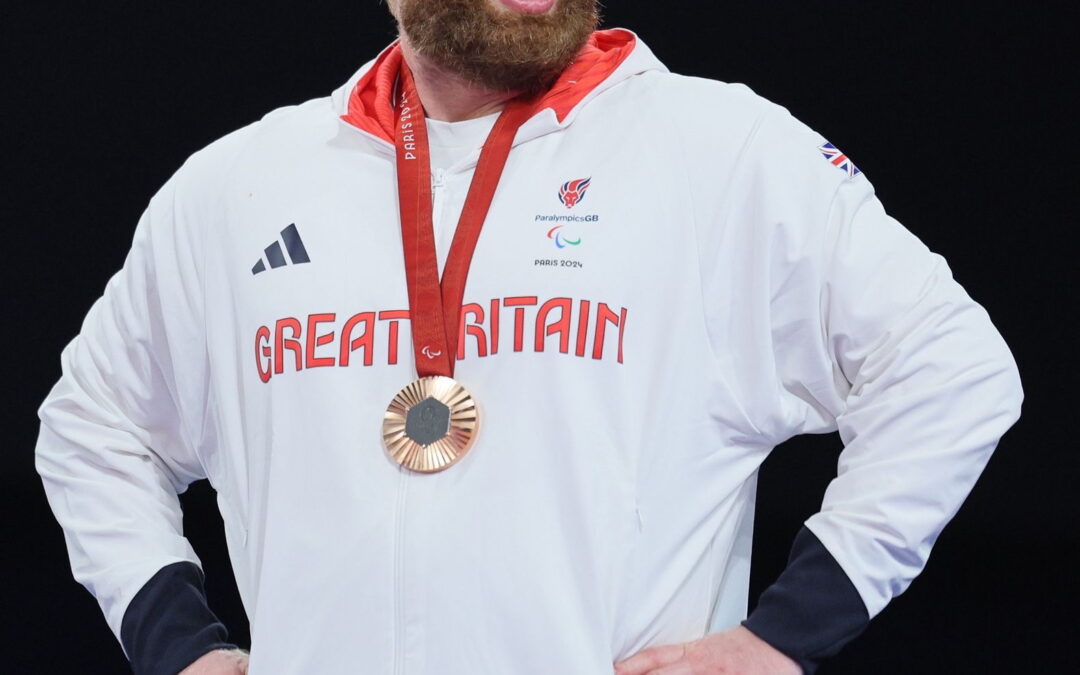
Chris, who lives in Wiltshire, won bronze in the +90kg class in Paris four years on from winning a gold medal in Tokyo in a different weight category. His achievement in winning two medals at two consecutive Paralympics makes him among the top achieving judo competitors in the world.
‘I’m thrilled to receive this invitation to be part of the Paris Roadshow. The roadshow’s design aims to inspire and empower young people – or anyone – who loves judo and wants to be part of this fantastic sport.
‘Not everyone wants to be an elite athlete and that’s okay. Judo is far more than that. It teaches discipline and resilience. And it builds confidence and it’s about team effort and personal achievement. All these skills are valuable to achieving your dreams in life, whatever those dreams may be,’ Chris said.
Chris, who hails from Yorkshire, now lives in Wiltshire. He’s one of several British judo athletes who are taking part in the British Judo Paris Roadshow. Another is Paris silver medallist Dan Powell, Wiltshire-based Evan Malloy and athletes Chelsea Giles and Emma Reid.
DOUBLE PARALYMPIAN MEDALLIST JOINS JUDO ROADSHOW – Chris Hunt Skelley MBE, who is part of the British Judo Paris Roadshow initiative.
Ambassador – you’re spoiling us
In the run-up to the Paralympics, Chris was also one of five ambassadors for Path to Paris. Path to Paris is an initiative set up by Get Set – the official youth engagement programme from Team GB and Paralympics GB. Chris found himself named as a top ten sports personality on the Disability Power 100 List. 2022 saw Chris receive an MBE for services to sport.
Chris is registered as having a visual impairment and lives with ocular albinism. Ocular albinism is a rare genetic condition. It’s caused by the inability of pigment cells in the eyes to produce normal amounts of pigment. It results in blurred vision, difficulty with perceiving depth of field and sensitivity to bright lights.