ENCHANTING EXPERIENCE IN SWINDON’S OLD TOWN OPENS TO 5 STAR REVIEWS
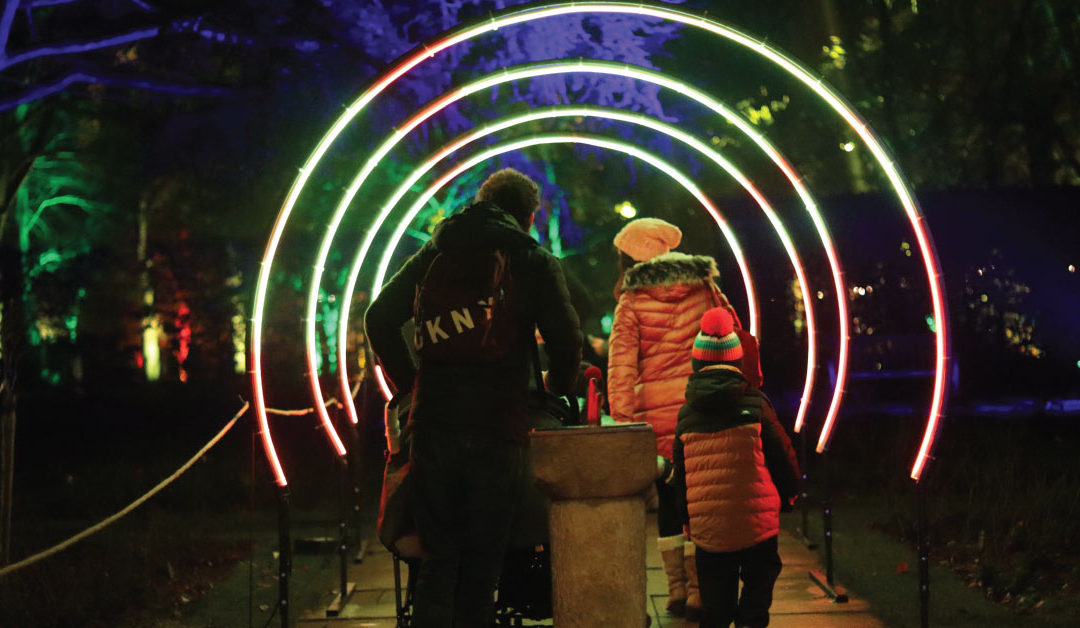
5 Star Reviews for light trail. South Swindon Parish Council has been welcoming visitors to an enchanting festive experience like no other. It’s in Swindon’s beautiful Town Gardens and, for the last two weeks, has had outstanding reviews. There’s spectacular, brand-new installations for 2022 . And with a cosy Christmas village around the bandstand, the event promises visitors the perfect evening to celebrate the season.
One visitor said: ‘I cannot recommend this enough, for all the family. It’s so Christmassy, lovely food, lights, music and atmosphere.’
5 Star Reviews for Light Trail – part of the light trail
Old favourites return
The Enchanted Gardens Light Trail is super thrilled to have welcomed back the fabulous Fandangos’ bar. They’ve got all your festive favourites, including their famous mulled wine and snowballs. Then there’s Old Town’s finest, the Town Gardens Café with their renowned Christmas Roll. Plus experienced local caterers, Farr’s, serving a range of hot food options for visitors to grab a bite before or after they walk the trail.
Another visitor said ‘What a wonderful evening in a very special setting. The trail uses the gardens to its best advantage. We loved the music and especially the lights in the Bowl. The lanterns from the schools were very special and we commend the pupils for these.’
Students from
Lethbridge Primary
Holy Family Catholic Primary
Robert Le Kyng Primary
King William Street Primary and Lainesmead Primary participated in workshops.
Award-winning local children’s author (Really Rather Wild) Kate Claxton helped the children to make lanterns. And they’re now installed in the town gardens as part of the trail.
Cllr Chris Watts, Chair of South Swindon Parish Council, said, ‘We’re excited to be hosting the second Enchanted Garden Light Trail at Town Gardens. After last year’s success, with over twenty-seven thousand visitors, we’re looking forward to welcoming one and all to a new and improved light show extravaganza. The perfect way to start Christmas.’
Cllr Neil Hopkins, Chair of Leisure, Environment and Amenities said, ‘This years’ Light Trail improves on last year’s spectacular event. There are even more installations this year. And almost all different to last year, providing an exciting experience to new and previous visitors. Through Old Town Rotary we have a car park at Commonweal School from 4th until 22nd December where all proceeds will be going to Prospect Hospice. The Light Trail is operating every evening from 2nd to 31st December apart from Christmas Day and Boxing Day.’
The details
The trail is open until New Year’s Eve – except Christmas Day and Boxing Day. And, with tickets selling fast, this is truly the perfect winter treat for the entire family.
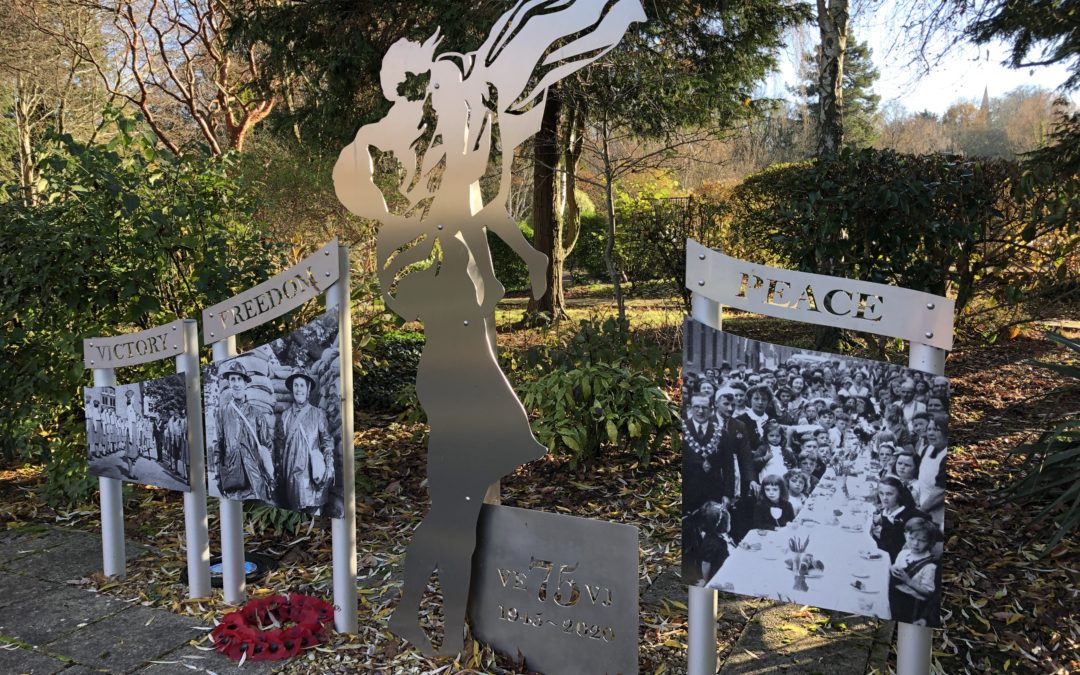
I’m somewhat late, well over two years, in celebrating this VJ Day memorial in Queen’s Park in Swindon.But I happened to pass by the park the other day so took the opportunity to nip in and take a picture of it. And the whip up a wee blog about it.
Designed by Dr Mike Pringle, the stainless steel sculpture features a woman, wrapped in a flag and holding a child. South Swindon Parish Council commissioned the piece. It’s aim, to mark the 75th anniversary of VE ( Victory in Europe)Day in May 2020. And also VJ Day in August of that year.
NB: You can find a Victory in Europe monument in Town Gardens in Swindon’s Old Town. And photographs of it in the aforementioned blog post.
A prolonged fight
May 8th, 1945 saw victory declared over Nazi Germany. Yet fighting continued against Japanese forces in the Pacific until August of that year. It took the dropping by US pilots of atomic bombs onto two Japanese cities and the death of 226,000 souls for Japan to surrender.
If it’s December then that means one thing: CHRISTMAS!! Oh – okay – TWO things – CHRISTMAS and the PANTOMIME. And everyone loves pantomime don’t they? Oh yes they do!! And we all love pantomime at the Wyvern Theatre.
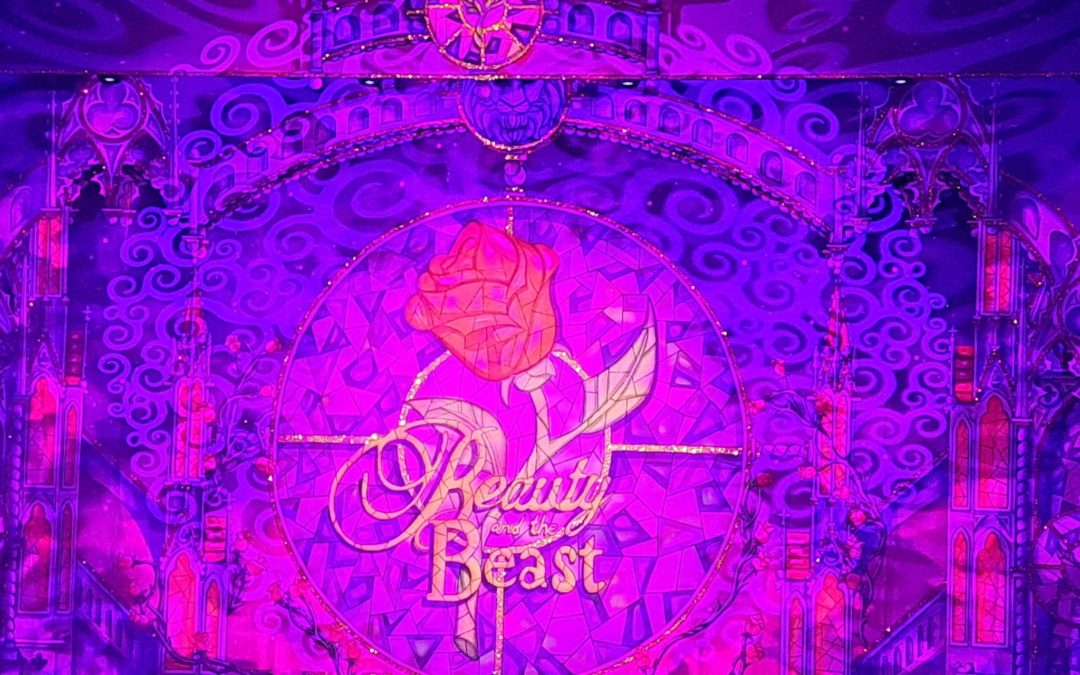
And this season’s panto is Beauty and the Beast – and more of the origins of that story below. Yet again, the leading actors were largely unknown to me – which says everything about the TV that I do or don’t watch. So it was ‘Paul who?’ Anne Hegertey I was vaguely aware of from a quiz show that I’ve rarely watched. I won’t lie – my heart sank a little. But y’know what – she wasn’t half bad (and that’s not an attempt to damn with faint praise) and I rather enjoyed her turn as Fairy Flutterby.
Paul Burling did his impressionist thing – most of them were lost on me – and that’s not at all reflection of his impressionistic ability. For what it is a reflection of see above! The programme informs us that Paul learnt his craft as a holiday park entertainer. And that grounding shows. He turns in a sterling performance as French Frank.
Roger Wright as Professor Potage had an amazing voice! So good. And of course Eloise Lord is delightful in the role of Belle.
And #OBVS David Ashley is a terrific dame. But is he really tall and Paul Burling really short? ‘Cos there was a massive height difference. Which, TBF, added rather to the comedy.
The rest of the characters and of course the ensemble are all wonderful and work soooo hard. All-in-all it’s a delightful production that I’m pleased to recommend.
On reflection though – and this isn’t at all a criticism of the performers or the production – it all seemed a bit …. low-key. As panto goes that is!
In previous years, even when taking my seat, the excitement of the children was already at fever pitch. And that was before it got started! With this one the nerf guns were minimal, there were no massive balls bouncing around the auditorium etc, etc. A reflection of the times in which we’re living? I dunno …
Anyroad up and be that as it may – we had a brilliant time and thoroughly enjoyed all the performances. So if you’ve not booked yet – then do. It’s a fun evening.
Wyvern Beauty and the Beast
The elements of panto
The art of Pantomime forms part of a long and noble British theatrical tradition. Each genre with its own particular elements. So each and every panto you see has in it, in some form or another, the following five stock characters:
The evil villain
The damsel in distress
The hero
The Principal boy – sometimes the same as 3 – traditionally played by a girl but that doesn’t happen so much now. Interesting piece on that here.
The pantomime dame – always played by a man.
Then there’s comedy characters, a panto animal, a slapstick scene, audience participation – and a theatre full of children at a fever pitch of excitement!
Some or all of those and more occur in every panto across the land and this one is no exception. You know exactly what you’re going to get and that is, of course, the absolute joy of the thing. The tradition of it all. And isn’t it the best way to introduce children to the joys of live theatre?
I’m really passionate about pantomime because it is often the first introduction for a child to theatre, and if that child has a great experience at a pantomime they will continue to come year after year.
Now … it may or not surprise you to know that the story of Beauty and the Beast existed looooong before Disney got hold of it. And the same is true of most things TBH – The Hunchback of Notre Dame, Pochahontas and the entire Disney canon.
So the Disney version of Beauty and the Beast, as this BBC article tells, has its basis on a French fairytale, La Belle et la Bete, by Gabrielle-Suzanne Barbot de Villeneuve, published in 1740. It in turn took its inspiration from the real-life tale of Petrus Gonsalvus and his bride-to-be Catherine. Petrus it seemed, suffered from hypertrichosis, which made thick, dark hair grow all over his body and face.
The court servant Catherine, so the story goes, was quite unfazed by the hirsute nature of her suitor. Together they produced four sons – two with the condition and two without – and three daughters who also had it. Their combined hairiness made them celebrities around Europe.
July 2025 – UDATE – THIS DRINK IS NO LONGER AVAILABLE
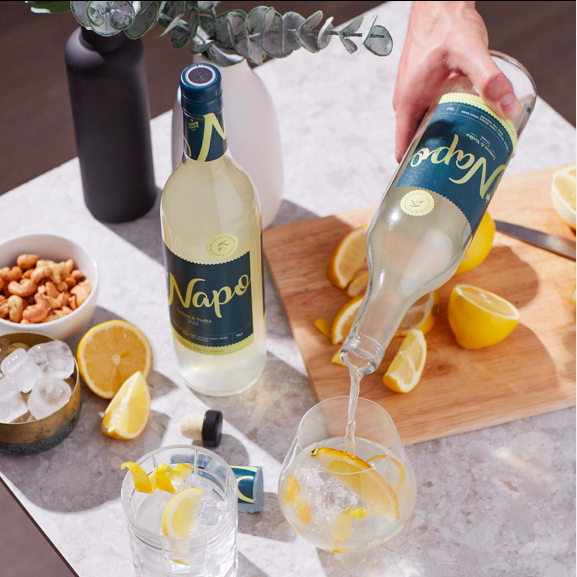
Okay – this Napo lemon and vodka drink is a bit of a Swindon in 50 drinks cheatin that this business is based in Bradford On Avon. Buuuut I did meet Robert Hobbs of Four Friends Drinks at The Foundry launch event in Workshed. And that’s very much in Swindon and it’s something different so …y’know. Here we are. With something that’s not bloody gin – Lord I hate that stuff. I had a bad experience with it once – ’nuff said. And I don’t like tonic either.
Napo Lemon and Vodka
A 100 year old recipe
Right then – some info on Napo from their website – see link above.
Napo lemon and vodka takes its inspiration from a 100-yr-old Polish recipe. Each and every bottle has over five lemons squeezed into it – cytrynowka’ (Cit-Rin-Oov-Ka’) derived from ‘cytryna’ meaning lemon. Sounds like sunshine in a bottle doesn’t it?
Poland has a long history of making different vodka flavours and is one of the world’s leading vodka producers/consumers.
The drink uses only fresh lemon juice for a fruit-infused sprit that packs a refreshing punch. It’s free from the artificial flavourings, sweeteners or preservatives so often found in other flavoured spirits.
Its alcohol content of 25% gives it a lower alcohol content than standard vodka. That means you can enjoy it straight, chilled or on the rocks.
How it came into being
Well the Covid pandemic lockdown influenced a lot of things didn’t it? I bought leopard print loafers and vowed never to wear an underwired bra ever again. Other people .. well other people invented drinks!
A Polish couple in the UK, seeking to cheer up two close friends made a lemon-infused drink inspired by … yep … you got it! Now it seems this drink went down really rather well – no doubt better than the gin of my experience. Indeed it went down soooo well that these four friends became Four Friends Drinks and Napo was born!
What Napo isn’t
What it’s not is a shot to down in one. Napo is, we’re assured, a drink for you to enjoy straight and super-chilled or poured over ice.
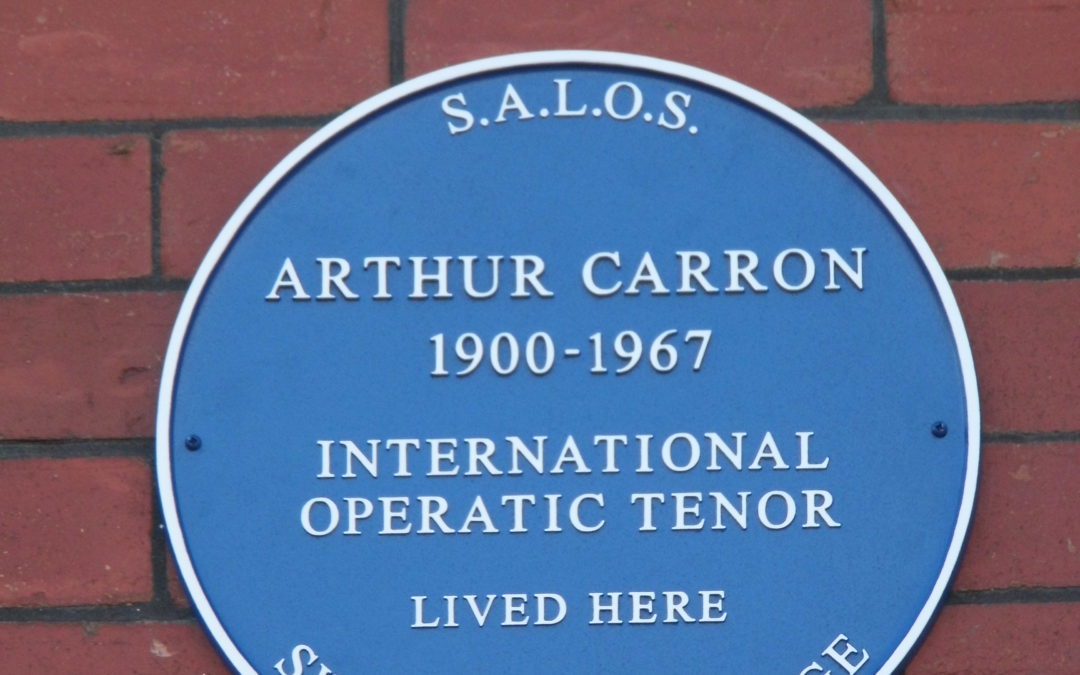
About Arthur Cox/Carron – 12 December 1900 – 10 May 1967
From Opera Arias.Com we learn that Arthur studied under Florence Easton, making his operatic debut in 1929, at the Old Vic in the role of Tannhäuser.
1931 saw him become the Old Vic company’s leading tenor when it moved to the Sadler’s Wells theatre. His roles there included Fra Diavolo, Manrico of Il trovatore, Radames of Aida, Cavaradossi of Tosca, and Otello.
In 1936 our man Arthur went stateside. There he won the Metropolitan Opera Auditions of the Air and made his debut with the Metropolitan on May 29, 1936, as Canio in Pagliacci. Further he was chosen to sing the role of Nolan in the world premiere of Walter Damros-ch’s The Man without a Country on May 12, 1937. Carron remained on the roster of the Metropolitan until 1946 when he returned to England.