Revolution Performing Arts (RPA) has announced a new partnership with Hunt Scholars. Its purpose is to support young people for children with varied needs.
The two Swindon organisations are working together to create an empowering alternative provision for young people with non-traditional educational needs. Or for those who may have found that school is not for them. The service will run, in the first instance, from North Swindon. It’s accepting referrals from local schools and offering support to home-educating families.
RPA
Fi Da Silva-Adams founded RPA in 2007. The organisation specialises in encouraging young people to celebrate their individuality through the power of performing arts.
Fi says: ‘We plan to offer a bespoke package to children who, for many reasons, have failed to flourish in the school system. Academic education works best when a person feels part of a community of shared values. Further that they feel their skills and contributions are important and have their experiences validated. We wanted to create a safe space with the right environment for resilience to develop and self esteem to grow.’
Ellie Hunt is a qualified teacher who runs the specialist tuition service Hunt Scholars from Swindon.
Later in life, Ellie received a diagnosis of autism and ADHD. With that she’s well-placed to communicate with and understand her neurodiverse clients. Ellie has three neurodivergent children who’ve all enjoyed exploring performing arts with RPA.
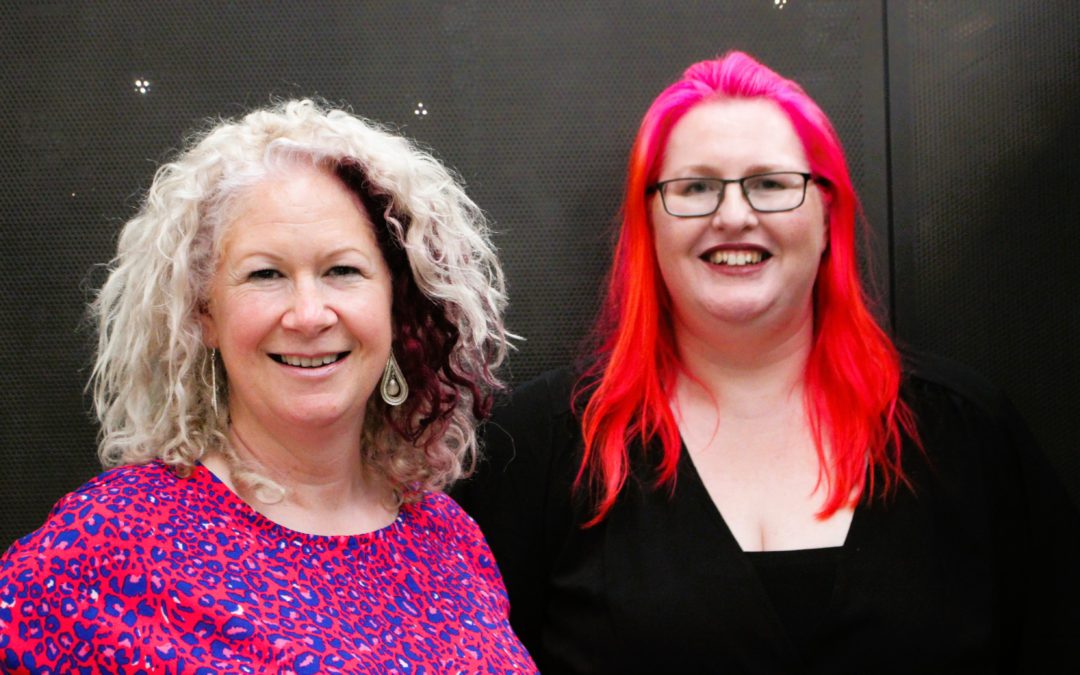
RPA Collaborates with Specialist Tutors – Fiona Da Silva Adams and Ellie Hunt.
Exuberance and joy in abundance
There’s something naturally exuberant and joyful about everything that spills out of Revolution Performing Arts. It’s a place where children feel accepted, not ‘othered’ so that they can have the confidence to be themselves,’ Ellie said.
Revolution@HuntScholars will be an inclusive education provision. One that’s rooted in performing arts and skills for education and life. Sessions are bespoke and are ready for immediate commissioning. Sessions are bespoke and are ready for immediate commissioning. Young people who might find this service of value may come through:
A referral through their school
Another support organisation
or their parents may make direct contact.
Ellie says: ‘Other providers in the locality tend to use sport to support young people with differing needs. So the time is right for an art-based package. We’ll use drama to develop emotional literacy such as understanding what body language may look like. Dance can help children who need movement breaks because they can’t sit still for long. By trying circus skills a child might master balancing a peacock feather on their finger. They’ll then take that confidence forward into a maths lesson.’
Fi Da Silva-Adams from RPA said: ‘We’re ready to support young people on that initial pathway of becoming ready to learn. And then to integrate into the wider community. But also to have a gentle reintroduction of skills across the curriculum, linking them back to education. All in a way that feels relevant and attainable for them.’
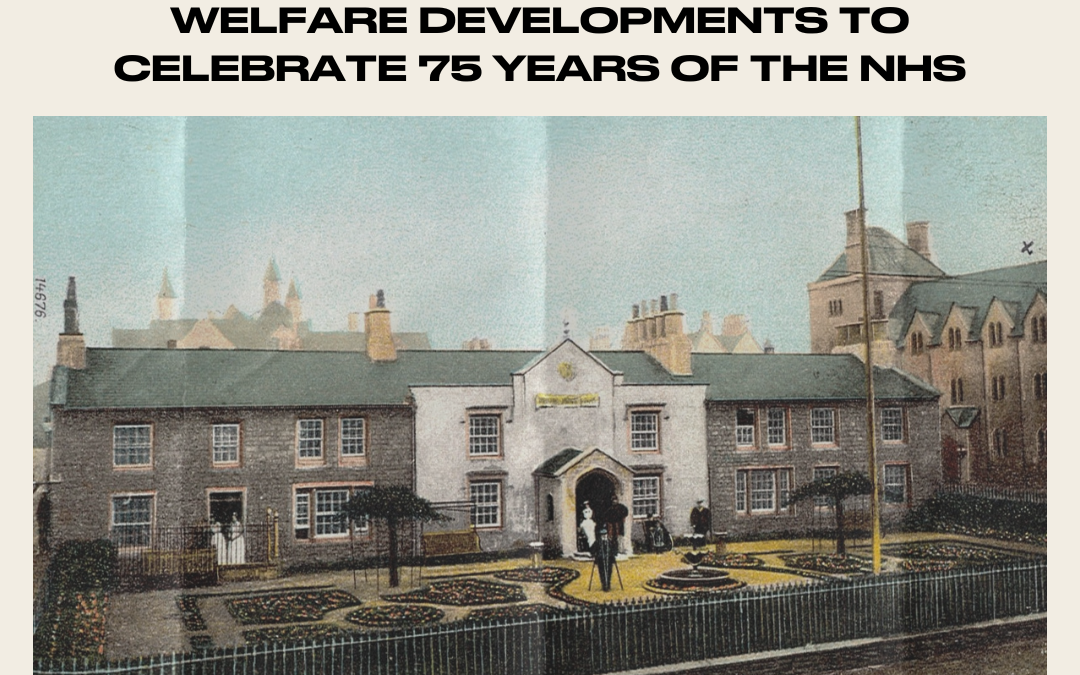
While it isn’t true to describe Swindon as the birthplace of the NHS – other places contributed to this idea of a subscription health service – the medical fund society was influential for sure. That’s because Swindon was one of the first places to offer hospital care run by the workers themselves. Contributions from the workers via payroll deduction paid for it. These funds ran the hospital and other health services.
The only influence on the NHS, Swindon may not have been. But what we can say is this:
‘”From cradle to grave” is an expression synonymous with the NHS. Yet Swindon can lay claim to offering that level of care decades before Britain got its NHS. The GWR Medical Fund Society gave an inclusive health service for 101 years before the NHS came into being.
It was healthcare ahead of its time, so much so that when Nye Bevan visited Swindon to see the health provision the MFS provided he famously commented “There it was. A complete health service. All we had to do was expand it to the whole country”.’
What’s occurring then?
Well, there’s detailed information on the Eventbrite link above. And check out these images below.
Be proud!
Swindon’s story is one that isn’t, I don’t think, one that’s told enough. I don’t think it’s possible to tell it enough. It’s one of which we should all be proud. It makes me so sad, when I see people comment on social media that they’re not proud to come from Swindon. Worse that they’re embarrassed to come from Swindon.
How can anyone not be proud that their town was built on men who walked here from all parts of the country knowing only that there was opportunity? And from that they built a community. They built the great GWR Works and those locomotives. Further they built arts and culture and a lending library and ….. drum roll please … the medical fund society and all that, that brought with it.
There’s so much more of which Swindonians should be proud of course – and you’ll find a lot of it here on this blog if you take a bit of time to root through the arts/culture/heritage posts: https://swindonian.me/category/artscultureheritage/
But for now – be sure to get to at least one of these events (I’m out of town sadly) to help Swindon celebrate the 75th anniversary of the NHS – and Swindon’s role in its creation.
Dave Gregory Guitar Supremo – Health warning: this blog does not go into huge detail on Dave’s involvement with XTC. With thanks to Chris Eley for research and writing assistance. And to Graham Carter for the images.
It would have been fab to have some up-to-date photos of Dave Gregory on this post. There’s lots of super ones on the internet but I’m always wary of copyright. So if anyone has one in their personal collection that they’d be happy for me to use that would be wonderful.
Early Life
David Charles Gregory entered this world on 21 September 1952 at the Cheriton Nursing Home on Westlecot Rd in Swindon. His dad worked in the railway works. He grew up in Purton and attended Commonweal School from 1964 to 1969.
Dave started learning the piano at the age of nine and started out on an acoustic guitar in 1966. He bought his first guitar at Christmas of that year. In time-honoured style he used money earned from his paper round from Kempster’s Music Shop on Commercial Rd. He played his first gig at Purton Youth Club in March 1967. First though he’d suffered the ignominy of his piano teacher sacking him for not practising. Even so – he went on to become Dave Gregory Guitar Supremo.
A set back and a home of his own
While at school Dave played in youth clubs and church halls around Swindon. This experience he described as ‘learning by the seat of our pants.’ . Summer 1969, found him diagnosed with diabetes, and he left school and started work in a factory in Malmesbury. The band split in 1970.
Over the next few years, Dave played in several bands (including country and western) ending up in Alehouse who made their debut at the Brunel Rooms in 1974. They had some interest from EMI but that fizzled out. Made redundant in 1976, he spent a year with a progressive rock band from the Forest of Dean, Gogmagog. This didn’t work out and he returned to Purton broke, taking a job with a mail order delivery company. Dave bought his first house, 16 Stanier St, in January 1979.
Dave Gregory’s first home at 16 Stanier Street Swindon
The road to XTC
Dave had met Andy Partridge for the first time at the Penhill Youth Club in 1968. It was a call from Andy around the same time as he was moving house, that saw Dave audition for XTC and get the gig. In March, he quit his job and, at the age of twenty-six, realised his dream of becoming a professional musician.
He was a member of the group between the single ‘Life Begins at the Hop’ (1979) and early sessions for the album Apple Venus Volume 1 (1999). There are millions of words written about XTC, Swindon’s greatest band, and their struggles but there isn’t time to go into that here. Many words exist about Dave’s departure.
I asked Swindon musician Steve Cox (aka Mr Love and Justice) what he thought Dave Gregory had brought to the band. He said: ‘His most telling contributions were his twelve-string Rickenbacker playing on English Settlement – one of their best albums. And then his string arrangements on the Skylarking album.
He did a lot to help XTC develop and change from their earlier new wave keyboard led sound in the Barry Andrews days into one of the great and original English bands. One where more records followed where, although they had their very own sound and style, classic Beatles/Beach Boys influences became more evident.’
Dave Gregory Guitar Supremo – XTC Black Seas album cover. The background to this was designed by Swindon artist Ken White.
Life after XTC
Dave was a member of Swindon-based Tin Spirits from 2008 until they decided to call it a day in autumn 2018. Their debut album Wired to Earthreceived much critical acclaim. He has also worked with a range of other musicians. A diverse list that includes Peter Gabriel, Lulu, Mark Owen, Porcupine Tree and Steve Hogarth’s H-band.
On the Big Big Train
Progressive rock band, Big Big Train asked Dave to join them in August 2009. He appeared on their album The Underfall Yard. Dave performed as a full member of the band from 2012’s English Electric Part 1 until early 2020 when he decided to step down. Well for international performances at least. Said Dave in a piece on the BBT website: ‘I’m proud of the role I’ve payed within Big Big Train and have enjoyed the last decade with the band immensely. I look forward to remaining associated with Big Big Train in the future
Visit to Wiltshire Town Honours a Twinning Friendship of Almost Seventy Years
GERMAN STUDENTS VISIT MALMESBURY. STUDENTS from Niebüll in Germany are enjoying a trip to their twin town of Malmesbury. The visit marks the towns celebrating almost seventy years of friendship.
A civic reception
On 7th June, a civic reception at the town hall, led by Mayor Cllr Gavin Grant, welcomed twelve Year 9 and Year 10 students from Niebüll.
German students visit malmesbury – Gavin Grant with students from Niebull
Cllr Grant said: The basis of the connection between our two towns is the importance of our young people to the future of our communities, countries, continent and planet.
They walk in the footsteps of hundreds of young people from both our towns. They’ve built the important friendship that we celebrate today and have honoured for almost sevent years.’
On the visit
Thirteen students from Friedrich-Paulsen-Schule are currently on the exchange visit. It’s organised by Malmesbury School and supported by the Malmesbury & District Twinning Association. During their stay, the students will be taking part in lessons and will be visiting Bath and Bristol as well as Malmesbury itself. Students from Malmesbury School will be visiting Niebull themselves later this month.
Headteacher Brett Jouny said:
‘At Malmesbury School we value our foreign exchanges and partnerships. We know that one of the best parts of learning a new language is visiting the country and being part of the culture. Exchanges allow our students to do this. They’re popular events, and we’re delighted to have them up-and-running again for the first time since the pandemic.
‘We strive to prepare our students to be global citizens and part of this is learning a modern foreign language. Languages remain a popular subject at the school.’
Well-established links
Niebüll has been linkedwith Malmesbury since 1954. In that year, the first youth exchange happened. Over the years, hundreds of people from each town have visited each other. The towns underwent a formal twinning in 1976. Niebüll is a town with a population of around 10,000. It lies close to the Danish border in Nord Friesland, Schleswig-Holstien.
In the town, residents speak German and Danish with an economy based on the small business sector. Like, Malmesbury, it has a strong artistic culture and is home to the Richard Haizmann Museum of Modern Art, the Natural History Museum and the Frisian Museum.
Malmesbury Town Council works in partnership with Malmesbury School and the Malmesbury & District Twinning Association to ensure the mainentance of strong links with its two twin towns. Niebull in Germany and Gien, in the Loire region of France. This three way relationship is unusual in town twinning.
Malmesbury also has a strong connection to two ‘friendship’ towns. Malmesbury which is the principal town in Svartland, West Cape Province, South Africa. And Bad Hersfeld, Hersfeld-Rotenburg District, Hesse in Germany.
Topical or what? With the current weather conditions a blog by Dr Hugo De La Peña MD, PhD, FRCP on summer sun safety couldn’t be more apt. Hugo is a renowned cancer specialist, Fellow of the Royal College of Physicians and Cancer Research UK ambassador. He took part in a recent Cancer Research TV campaign to help raise much-needed funds for clinical trials. He’s helped raise hundreds of thousands of pounds by taking part in the London Marathon 2023 and Race for Life events across the UK. Dr Hugo is an NHS consultant and an educational and motivational speaker on cancer, its prevention, treatment and cure.
Dr Hugo de la Pena talks about summer sun safety
Not a lesson on avoiding the sun
Let me start first by stressing that the benefits from sunlight are MONUMENTAL so this is not a lesson on avoiding the sun. Feeling the warm sunshine on your face will give you a few seconds of instant inner peace. The benefits of our sun on our mental health are priceless and countless.
If you’re on your own, the sun will make you appreciate the nature around you even more. And, for a lot of people, the sunny days will make you want to socialise with family and friends – especially getting together for outdoor activities. As always, I don’t tell people what to do, my advice is for people to take it or leave it. It’s based on scientific data, but also on life experience. I had successful treatment for an early skin cancer caused by sun exposure.
A British thing
I don’t deny it’s a very British thing to do, for boys and men to get their shirts off as soon as the sun shines. And for some women to sunbathe in their bikinis in the park. There’s nothing wrong with that at all, but remember that it’s the chronic unprotected sun exposure that causes skin damage and cancer. It’s almost impossible to get skin cancer without sun exposure. I myself had a small and early skin cancer in my arm called squamous cell carcinoma. These cancers are slow growing and, in my case, I got successful treatment with a chemotherapy cream. Other cancers of the skin though, melanomas, are far more serious, aggressive and lethal if diagnosed late.
Here are some tips to help you enjoy the sunshine in a healthy way.
Don’t be a sitting duck
Be aware of the sun when you’re not meaning or wanting to get exposed, for example whilst driving. If you have a long commute or a long drive when going on holiday, your right arm (if you are the driver) and face can get exposed to the sun for hours without realising. Skin cancers in the right forearm and face are very common.
If you go to a music festival, the horse races, a football game, Wimbledon, the F1 race, beer gardens, etc, you could be sitting or standing at the same location and can get exposed to the sun for hours without realising.
Ergo, it’s always a good idea to carry sun block as routine – whether you need o or not. Then, if you find yourself in a situation where you can’t leave or move and the sun is beating down, you can put on sun block on the spot. In fact, why not put it on any way?
If you scratch my back, I will scratch yours
When out with friends at beer gardens, the beach, the pool and BBQs, you’ll have lots of fun. But once you have a few drinks, you will stay out in the sun for longer and will become inadvertently more careless. Thus, it’s a good idea to have someone in the group to remind people every two hours to put on sun cream again. As we have someone who’s a named driver – have someone who is a named ‘sun cream’ nagger!
More swimming, more sun cream
When swimming outdoors, even if your sun cream is waterproof, it will last less time than usual. When you swim you also get double sun exposure. The first hit from direct sun on to you, but also a second hit on reflection from the water with extra sun bouncing back to you, known as the mirror effect. So, when in the water, reapply sun cream every hour, instead of every two hours. Ask someone with you to remind you and support each other in re-applying sun block on a regular basis.
Children First
As with any emergency, children (and teenagers) always come first when it comes to summer sun safety. Pay attention to their behaviour in the sun. Artificial tanning ‘sunbeds’ are forbidden in the under 18s in the UK thanks to a proven link between them and skin cancer. But try to discourage older children from using them.
When basking in the sun to get a tan, encourage them to put on sun block often and to sit in a shady spot or under a large shady umbrella. Roasting their skin in the sun is dangerous because roasting is exactly what will happen with the risk of blistering.
Toddlers need to wear sun suits when swimming or at the beach that most of their body because they are particularly vulnerable to the sun.
Cancer does not discriminate over skin colour but …
Yet when it comes to skin cancer, there is no doubt that the fairer your skin is, the more at risk you are. So, if you’re as white as a friendly ghost or have lots of lovely cute little freckles, take extra care, because you are most at risk. In the sunshine ensure sun block, shade and a hat are your best friends for your own summer sun safety.
Further – did you know that melanin production – the thing that gives you your tan – has a cut-off point?
Don’t stay outside for longer than your skin can create melanin. Melanin is the pigment responsible for tanning. Everyone has a melanin cut-off point, which is usually 2 to 3 hours. After this amount of time, your skin will not get darker in a certain day. If you tan past that point, you’ll be putting your skin in harm’s way. Find out more here.