Faringdon Road Swindon – 1880s.
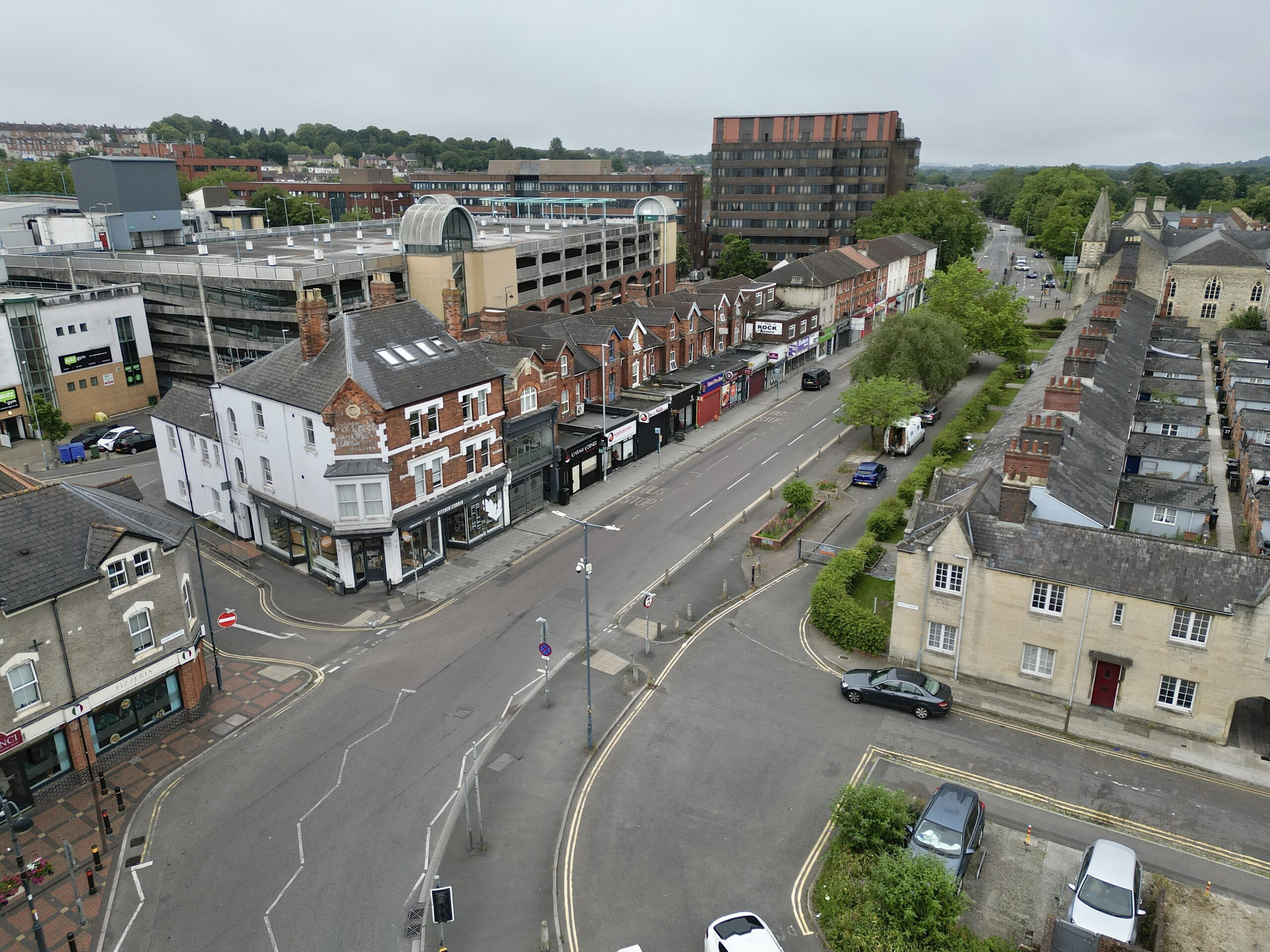
Then on the first corner of Faringdon Road is the Kitchen on the Corner café in the old WG Little premises.
Image courtesy of Jason Spickett of Swindon from the Air
Developed in the 1880s, the time was when this stretch of road comprised two separate streets: Faringdon Road and Faringdon Street. They, along with Westcott Place and Fleet Street, were developed along an ancient track known as the Fleetway or Fleteway. Developed in the 1880s, the time was when this stretch of road comprised two separate streets: Faringdon Road and Faringdon Street. They, along with Westcott Place and Fleet Street, were developed along an ancient track known as the Fleetway or Fleteway. A 1773 Andrews & Drury map shows this track connecting Lower Eastcott with the main road leading from the bottom of Kings’s Hill towards what’s now West Swindon.
Thus, where Fleet Street meets Bridge Street, in a nod to that long-gone track, a currently unoccupied commercial building bears the name Fleetway House.
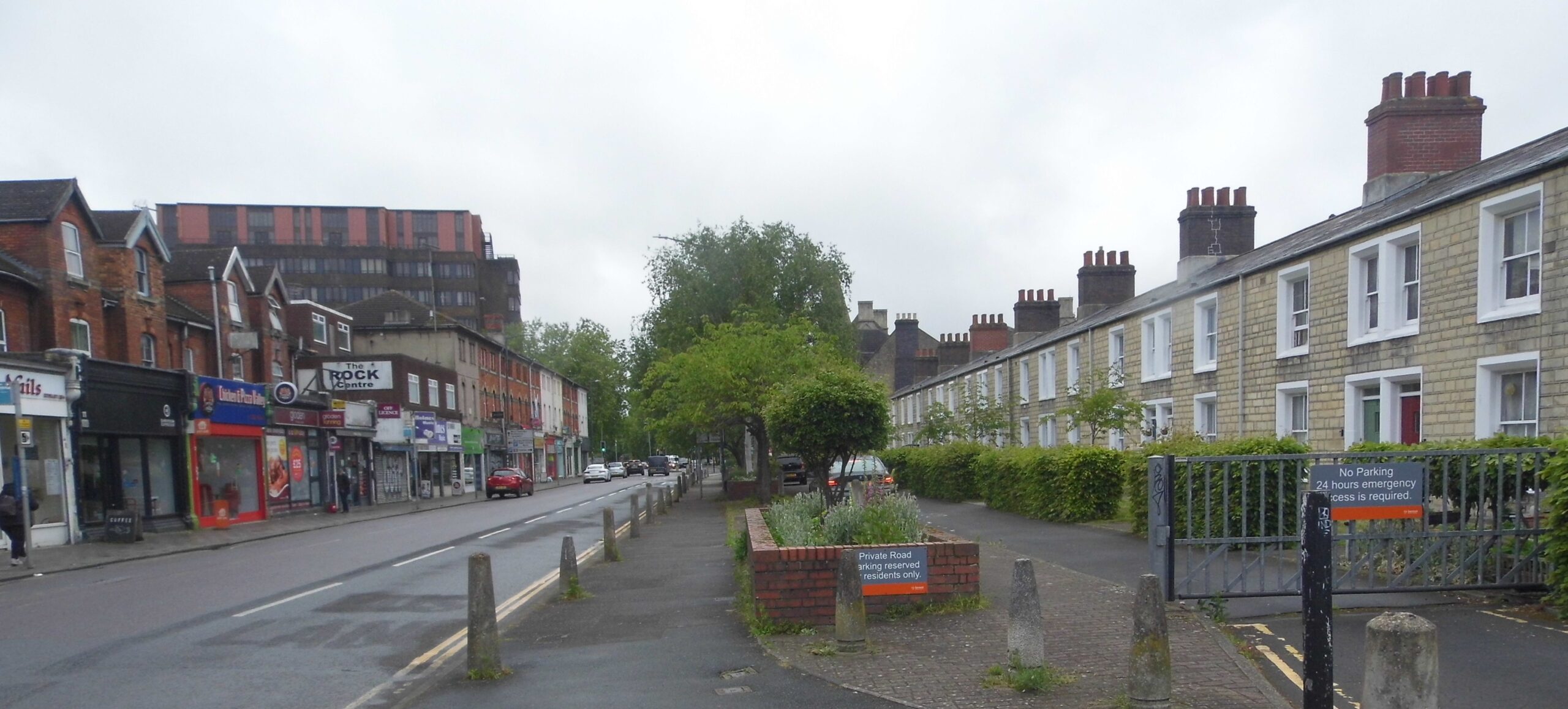
The Swindon Society state that the whole thing became Faringdon Road in 1928. And, according to Sheldon & Tomkins in their Roadways book, the street incorporates Faringdon Street, Bath Terrace, St Anne’s terrace and the northern terrace of Cambria Place. It appears that the renaming took place to avoid confusion between houses in the road with the same numbers.
The Roaring Twenties
The Swindon Society state that the whole thing became Faringdon Road in 1928. And, according to Sheldon & Tomkins in their Roadways book, the street incorporates Faringdon Street, Bath Terrace, St Anne’s terrace and the northern terrace of Cambria Place. It appears that the renaming took place to avoid confusion between houses in the road with the same numbers.
Mapping it
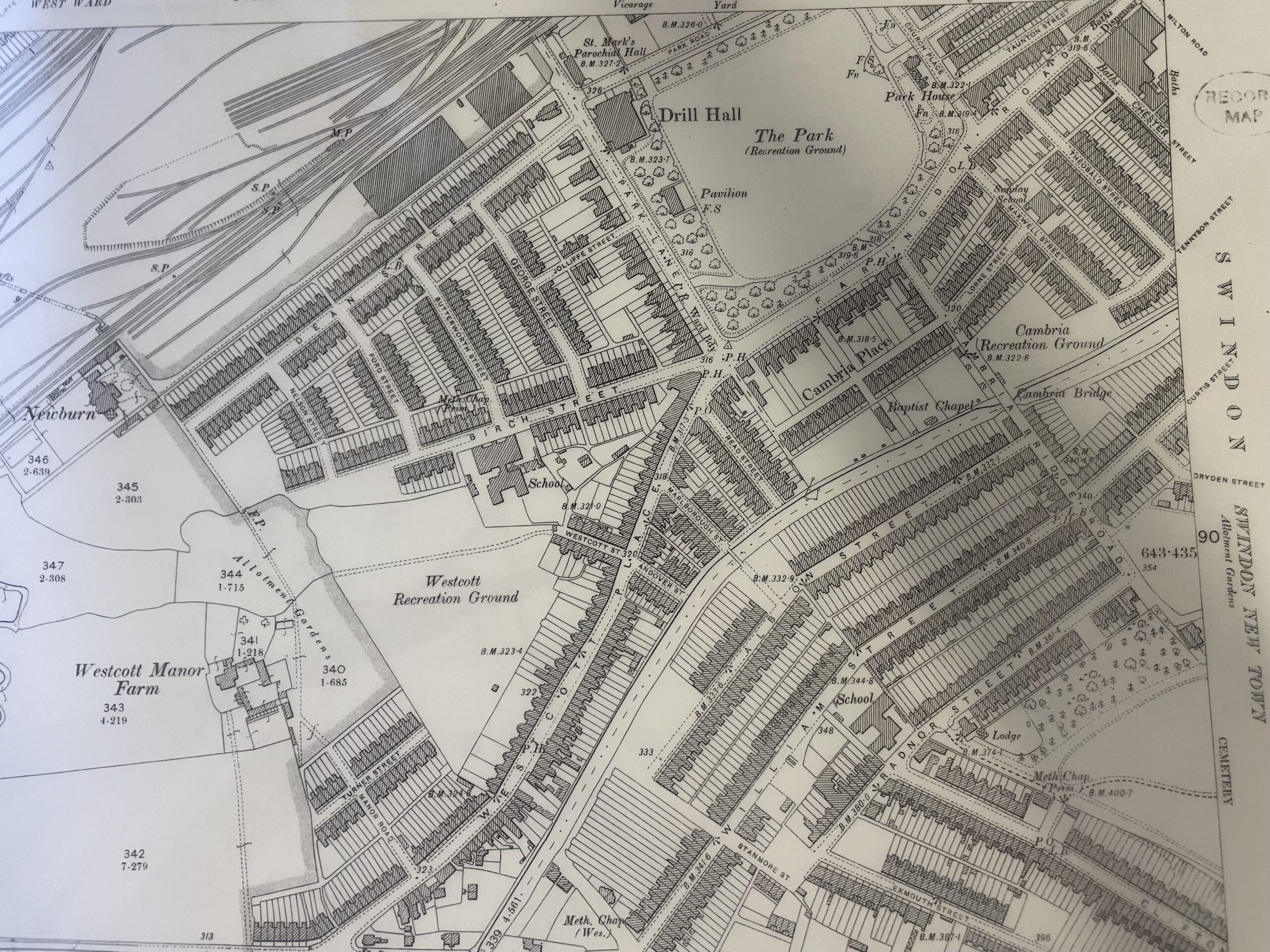
Looking at the section from the OS map below you’ll note the Faringdon Road section is off the map. But it began at the Park Lane/Westcott Road junction. On its left-hand side, in the direction of the town centre it ran past the GWR park, the Taunton Street cottages and the GWR Medical Fund Society Hospital (now the central community centre) ending at the junction you see.
Over the junction, you’ll see this thoroughfare becomes Faringdon Street. There, the first building is the erstwhile barracks, now youth music centre.*
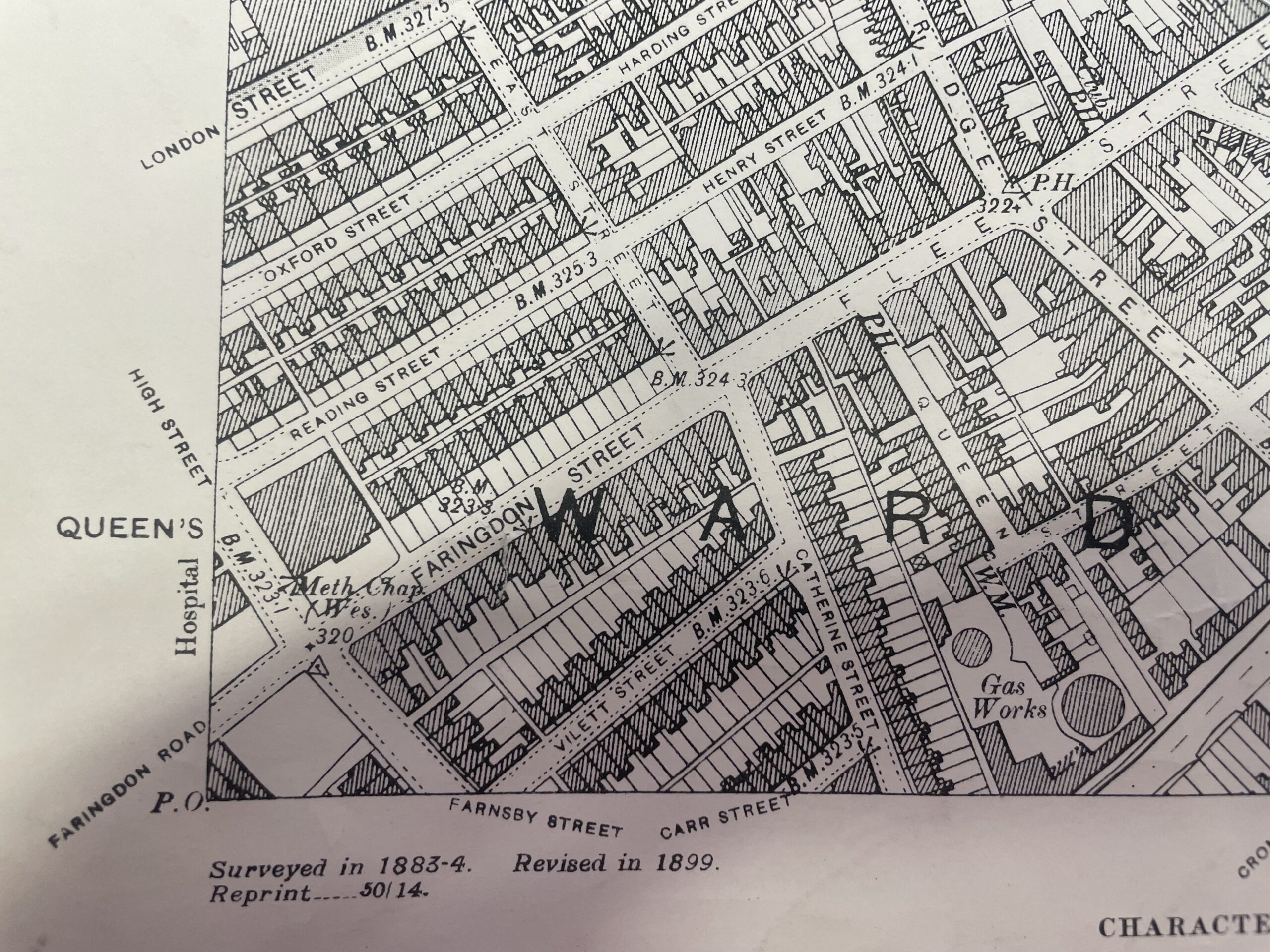
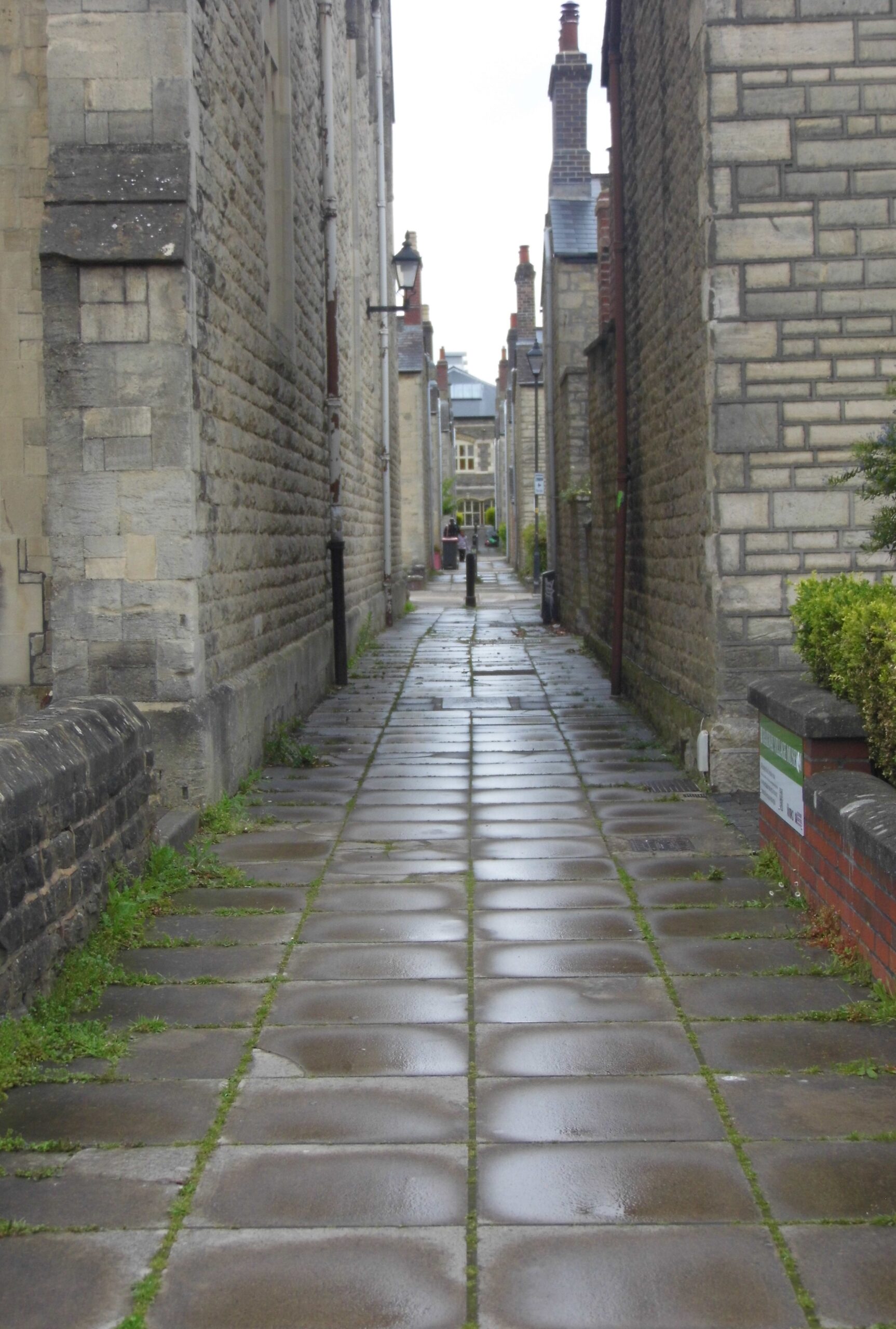
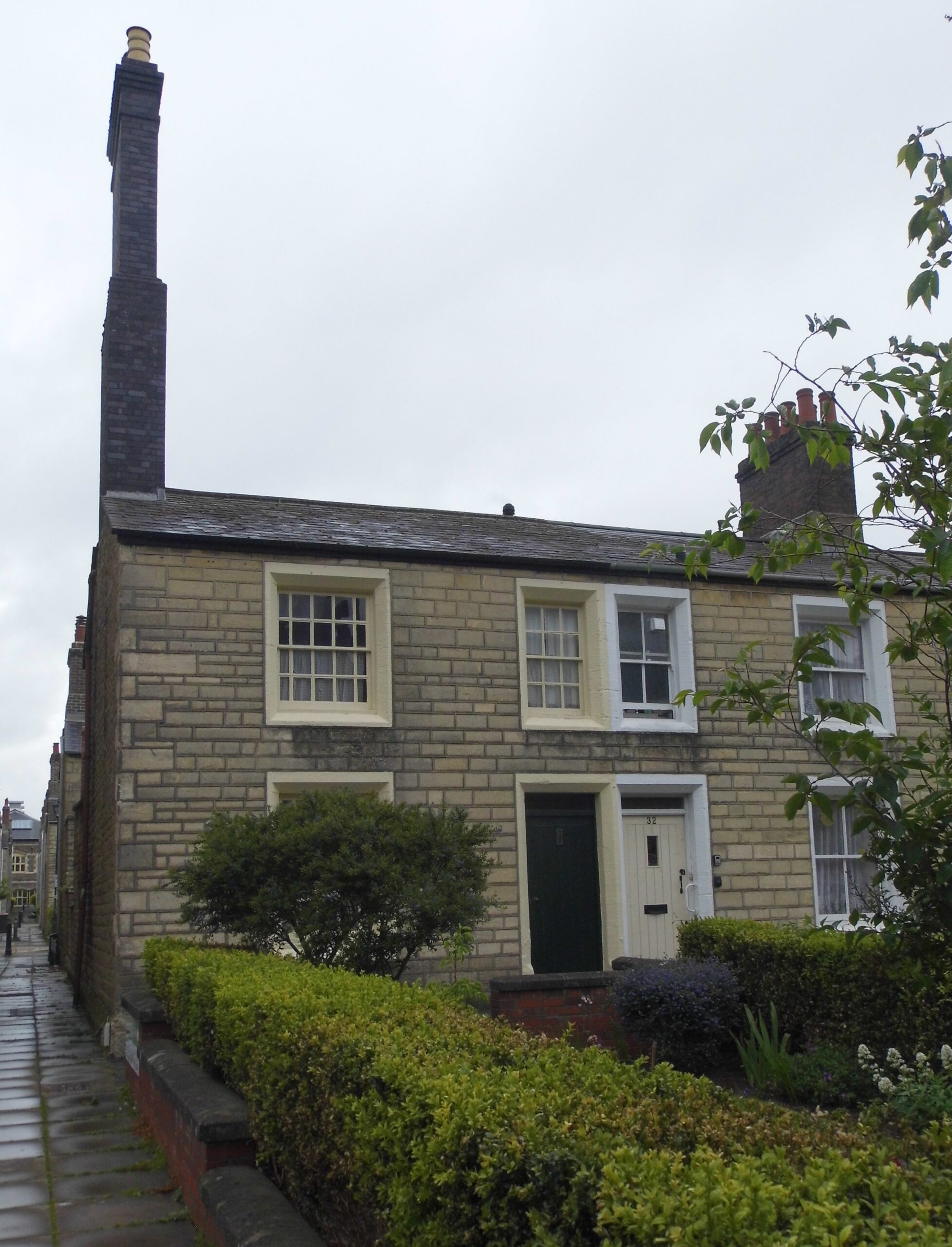
There’s then a backsie before another run of railway village cottages begins. These ones are classed (now) as Faringdon Road. The first one you come to, Number 34, is the railway village museum. This stretch of the old Faringdon Street ended with No 4, cornering with East Street on the left-hand side of the road and with Catherine street across the road, before morphing into Fleet Street.
Eyes right
On the street’s right-hand side, you pass much of the Health Hydro before it continues across the junction with Milton Road and ends where it corners with Catherine Street. On that corner is a fab café in Faringdon House, No 1 Faringdon Road called Kitchen on the Corner (used to be Love Brownies). That building once was owned by draper and philanthropist WG Little.
**4-34 Faringdon Road are, like all the cottages in the railway village, Grade II listed.
Number 34 Faringdon Road recreates a foreman’s cottage, circa 1900. John Chandler, in Swindon Decoded, tells us that James Hall, a second-generation Swindon railwayman, lived there in modest comfort with his wife and family. Somewhere around 1860 James moved into this dwelling with his parents, when it was new and he was a child. Swindon Heritage Preservation Trust now manage the museum.
*The Platform
Having covered this in Swindon in 50 More Buildings I’ll simply say that this building’s enjoyed a chequered career. It opened in 1855 as a hostel for single men employed in the Works. As such it never was popular. In 1867 it became a Methodist chapel. Then, from 1962 it served as the home of the railway museum until that moved across the tracks to STEAM. At the turn of the millennium it morphed into The Platform – a music and performance space.
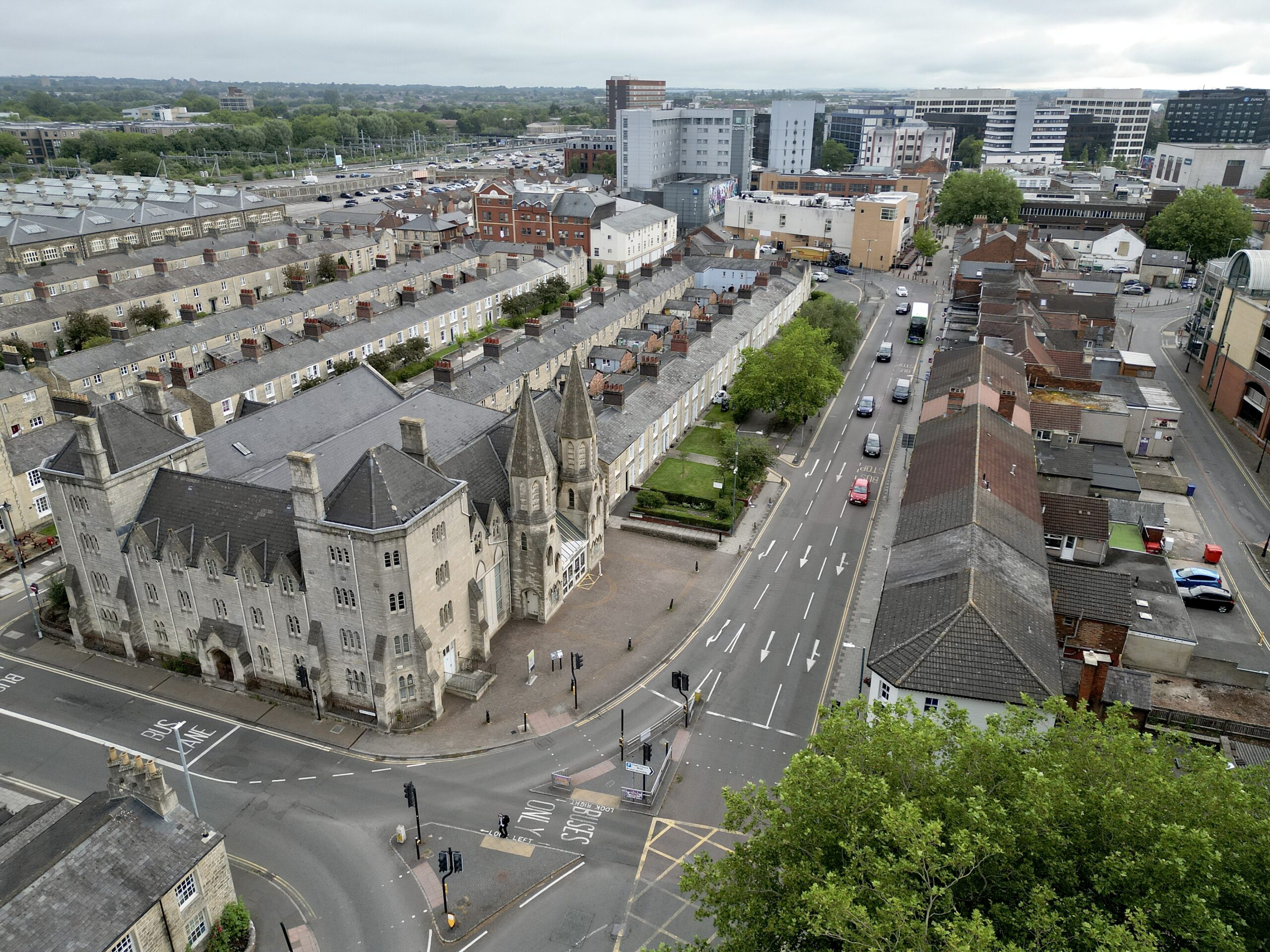
Image courtesy of Jason Spickett – Swindon from the Air
Businesses past and present
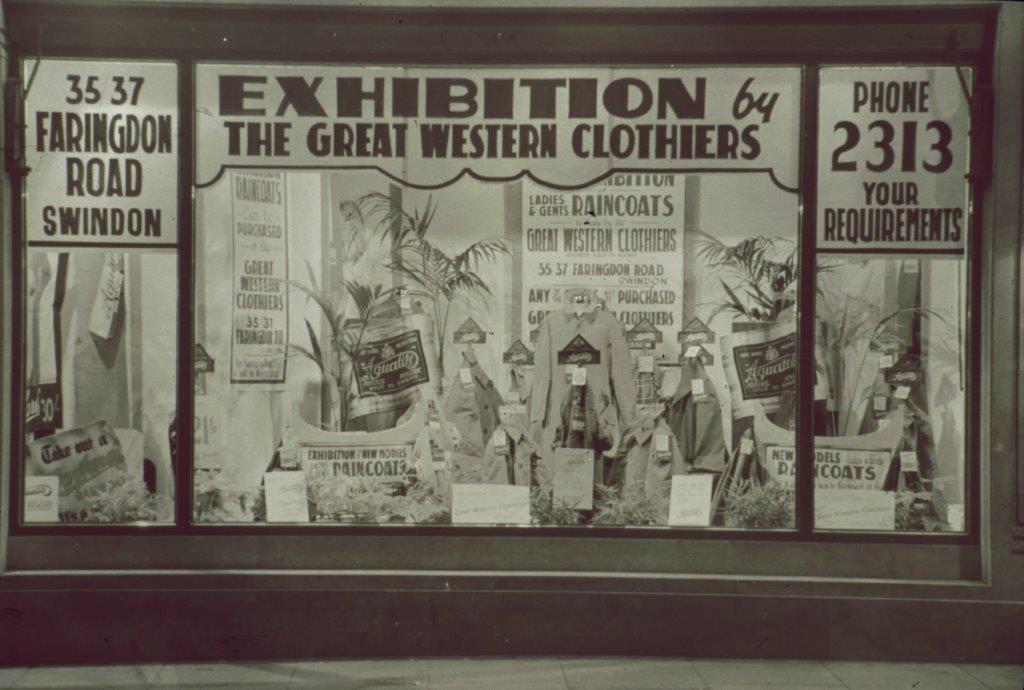
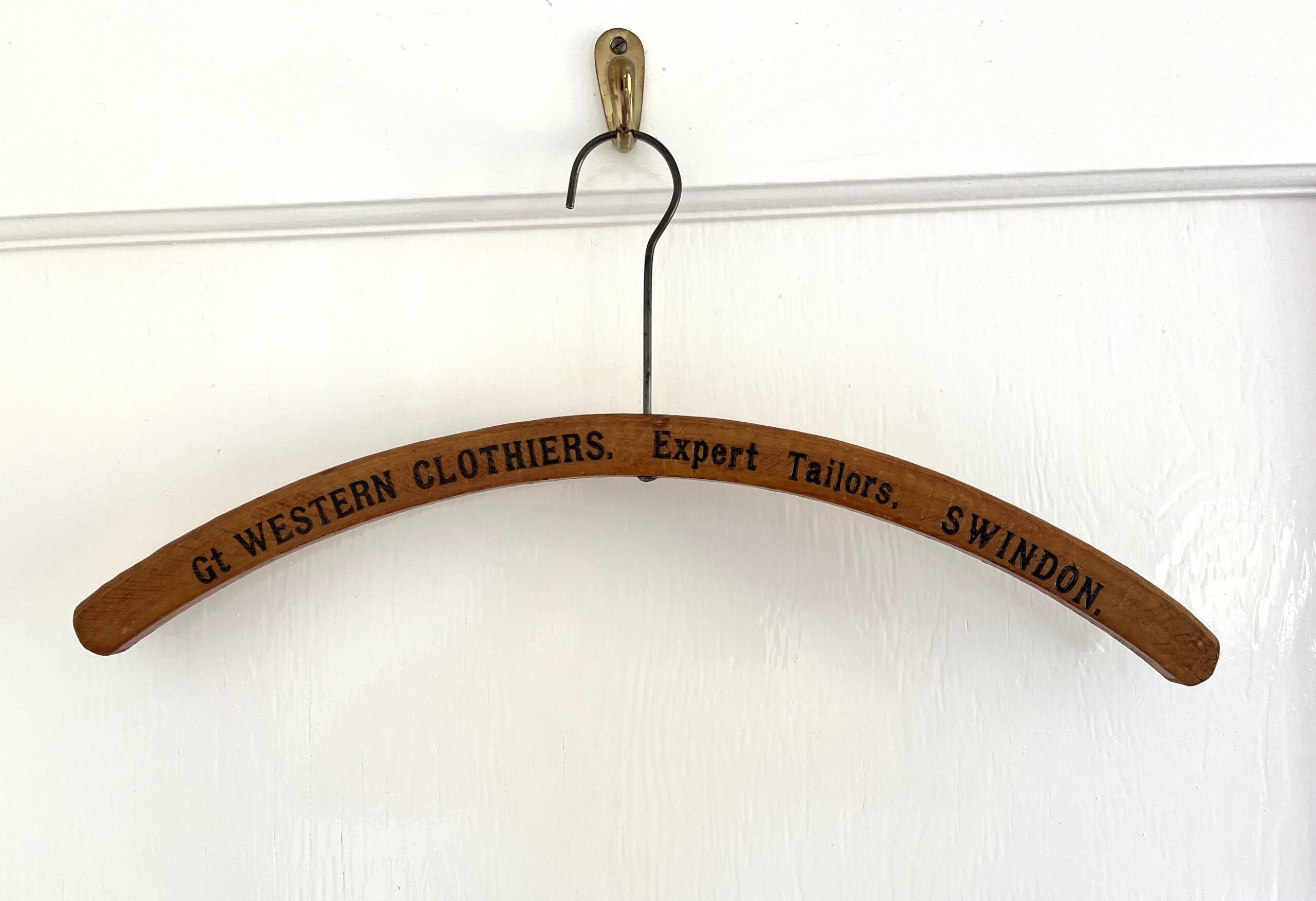
I’ve already mentioned the long-gone draper WG Little. Worthy of note, if only for the excuse of using this wonderful image of its window display, is another clothing business that once traded there, by the name of Great Western Clothiers.
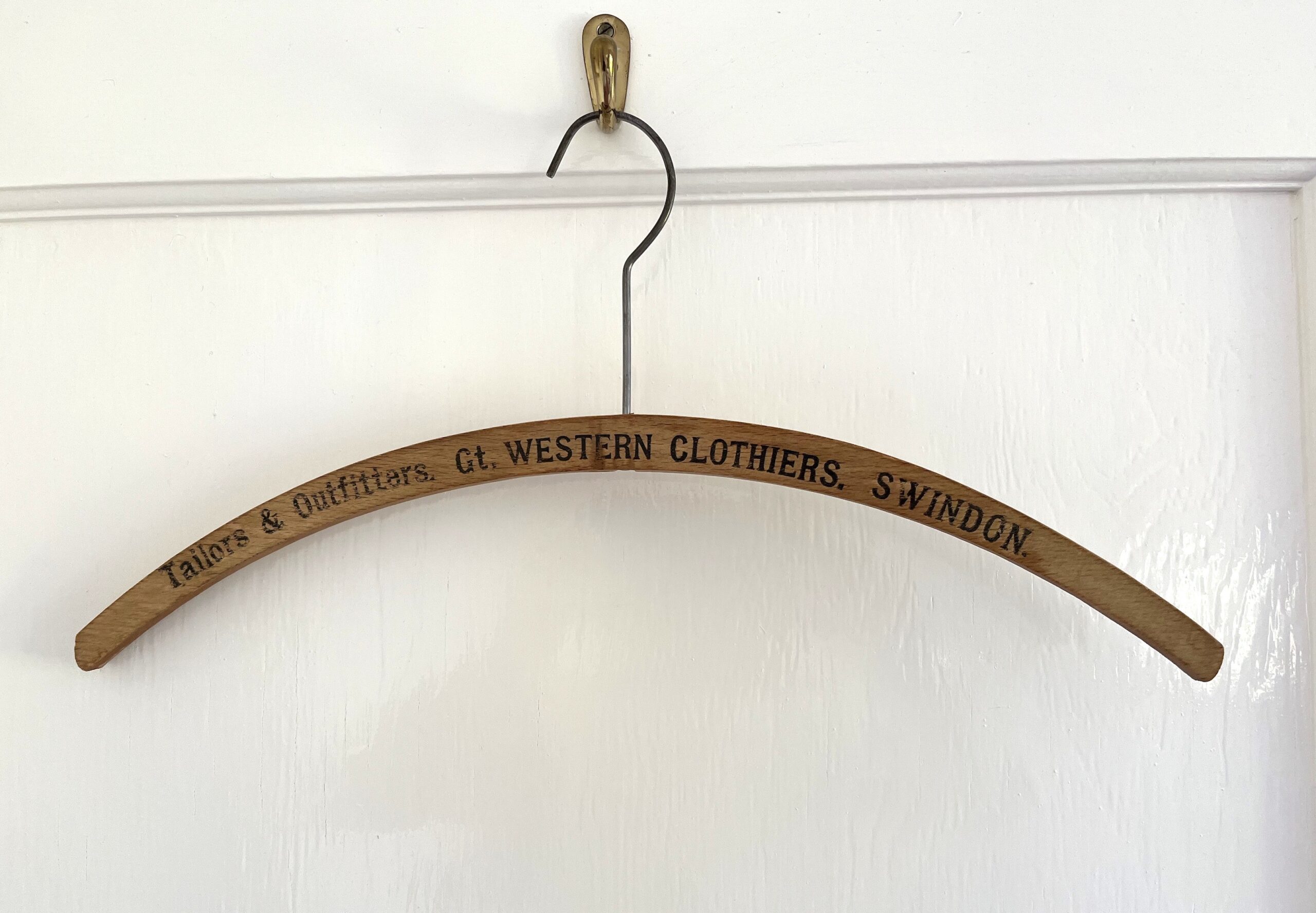
On the topic of Great Western Clothiers, a listener wrote in to say that he has and still uses a couple of wooden coat hangers from the aforementioned drapery that are a good 120+ years old. They were his grandmother’s and then his mothers’ and now his. Both is grandmother and mother lived in the railway village – as did he when he was a small boy.
I like that – the shop is long gone but the coat hangers live on to tell the tale.
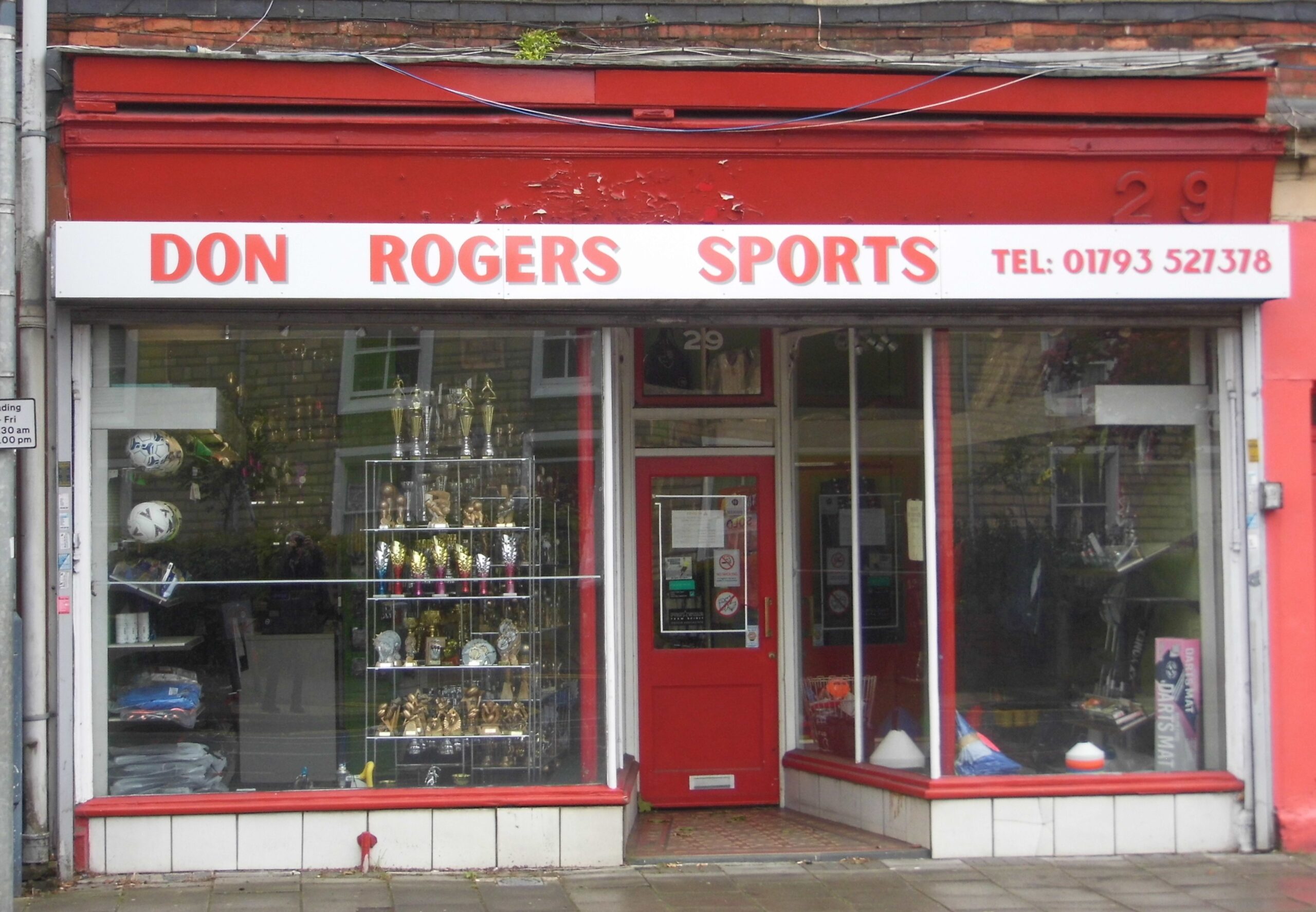
We can’t leave Faringdon Road without visiting the Don Rogers Sports Shop at number 29. Established in 1967 by the man himself, it’s still going strong. Don Rogers is a household name for many Swindonians as a Swindon Town Football Club player – with whom he enjoyed a glittering career.
New murals at the GWR Park
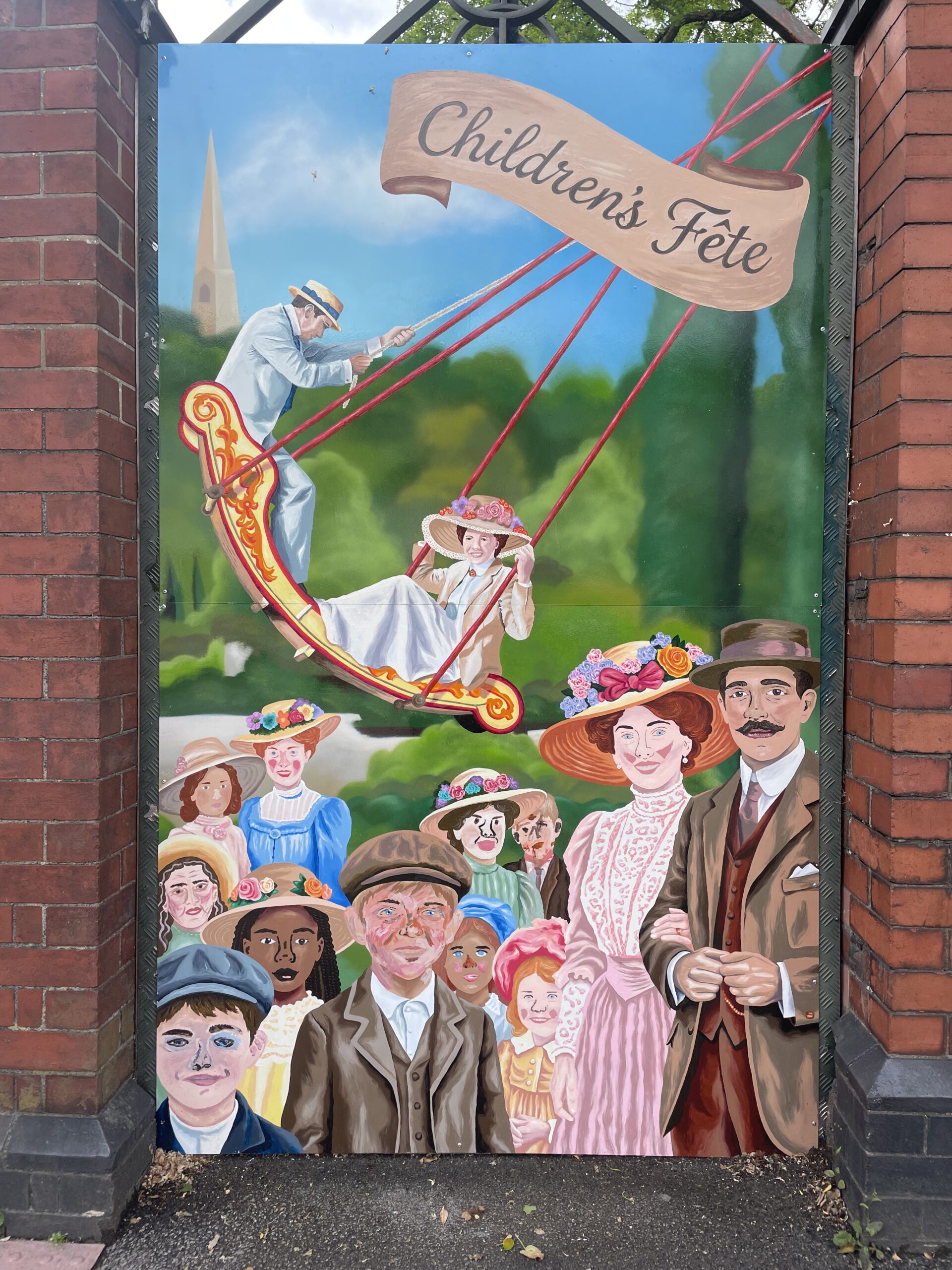
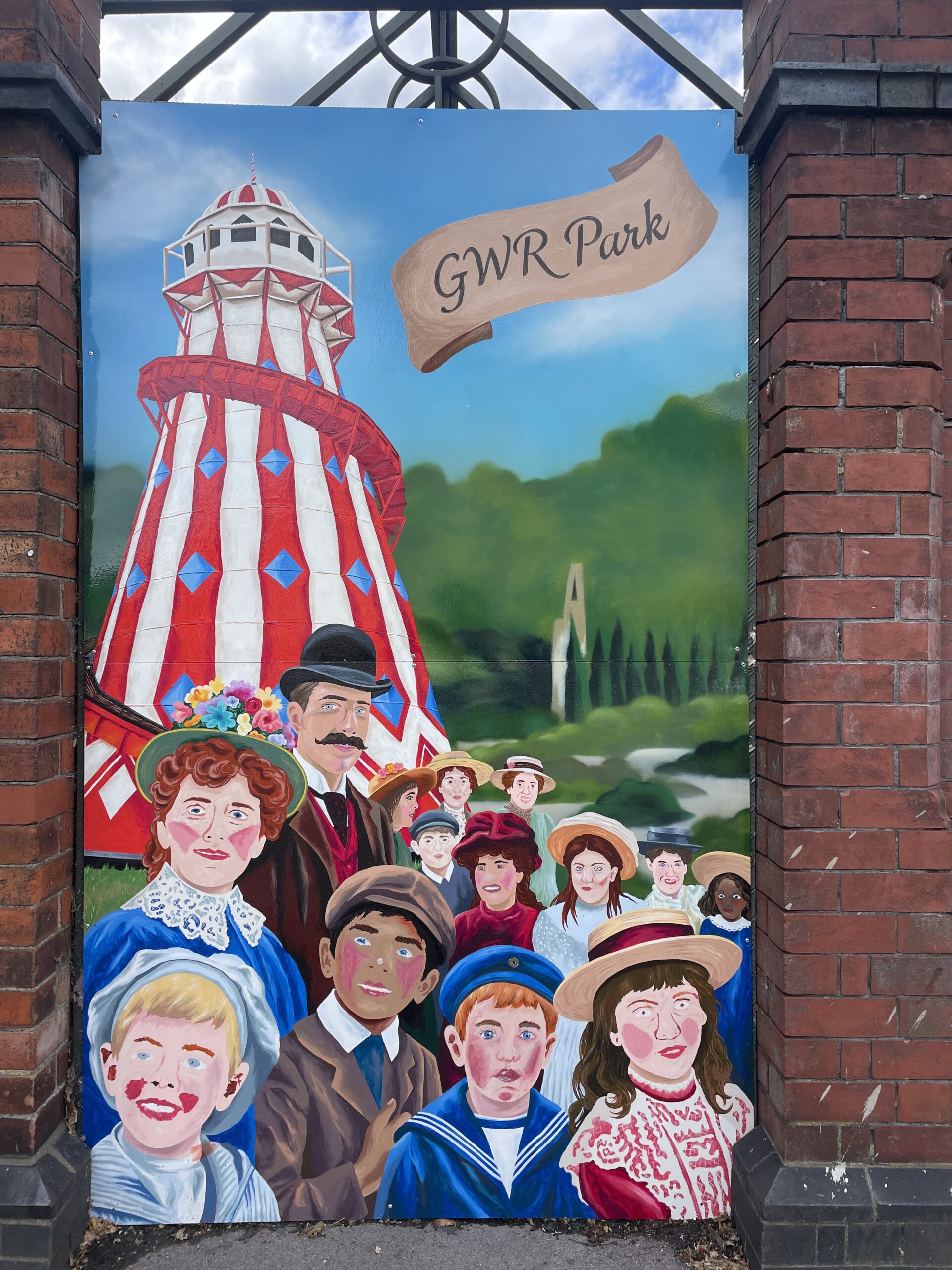
The murals you see below are on the outside edge of the Faringdon Road side of the GWR park. Swindon paintfest star, and creator of a mural in my back garden, Sarah Harris, produced them during the 2026 Blossom Festival with help from the public – children and adults. Referencing the Children’s fete of old they’re glorious.
My mate Simon Webb grew up on Faringdon Road – 153 to be precise. His home was opposite the park and used it as a front garden. They also had 100ft f back garden and he describes it as a fab place to grow up. Today it’s as v busy thoroughfare but back then I image it was a whole lot quieter.