Supermarine Road South Marston, SN3. Why am I writing about a road? It’s a good and fair question. Well, having this year, at long last (long story) got Swindon in 50 More Buildings finished and out into the wild, I’d had every intention of stopping there. But it wasn’t to be. Earlier this year I got an email from Amberley Books saying they were starting a new series XXXX in 25 Streets and would I be interested in writing Swindon in 25 Streets? Cutting short a long story, my project for 2026 is to write that very thing. Hence my interest in streets and roads!
Coming back from somewhere with someone (can’t now recall who or what) I noticed we were on Supermarine Road. And the thought occurred that it could be a candidate for the new project. But of course it can’t. As with Swindon in 50 Buildings the publisher’s brief prevents me foraying into the wider borough. And Supermarine Road lies in the wider borough. But, not wanting to waste the idea, here I am.
So why this road?
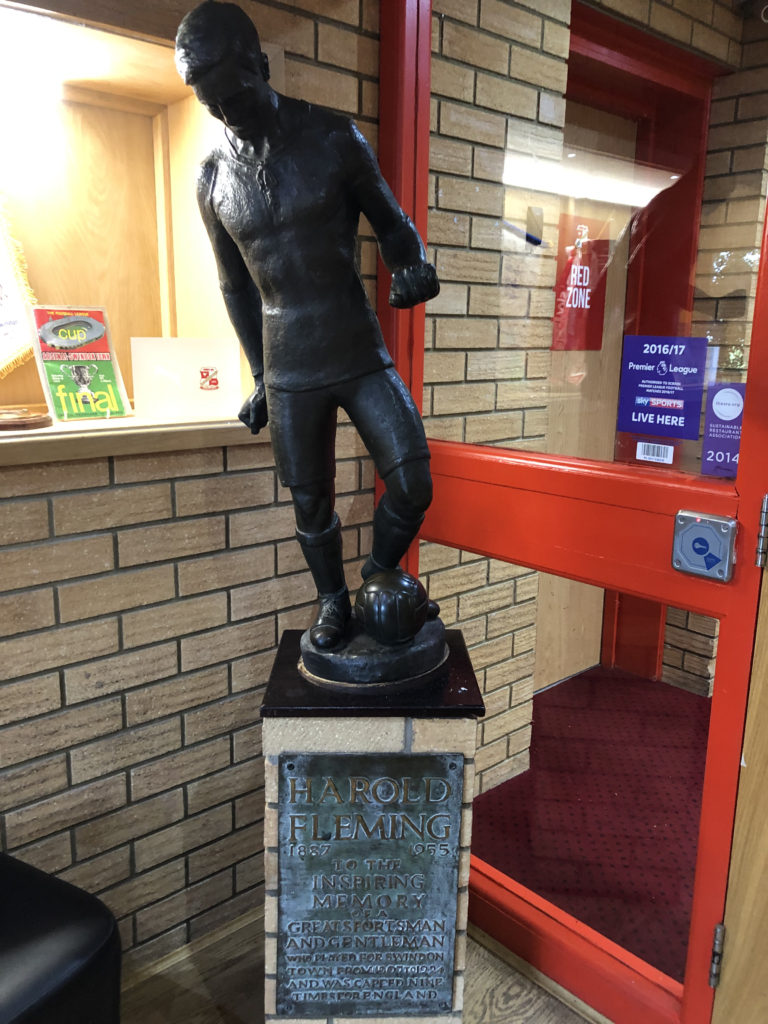
Answering that brings me back to the remit of the forthcoming-much-later-this-year book. So the streets I’m selecting don’t necessarily have to be interesting in and of themselves. Though some of them will be for sure. No, I’m selecting some streets based on their connections – why they’re so named for instance. Thus I’ll include Fleming Way for, amongst other things, its very name, given for Harold Fleming the footballer.
And it’s for connections that I figured Supermarine Road South Marston merited attention. Now I daresay many of you are well aware of the whole Supermarine Spitfire thing. But it’s only in relatively recent times (2014) that I’ve come to that party. I mean, I was aware of the Supermarine sport’s club etc, etc – but had no idea why they were so called. So here we are.
In simple terms then, the historical significance of this highway is that it once housed a Vickers-Armstrong shadow factory. Between 1941 and 1944/5 it produced WWII Spitfire and Seafire aircraft.
Post war it became a manufacturing site for such jets as Scimitar and also Concorde components. Then later it housed the Honda plant.
The wartime production – 1941-1944/5
Due to the bombing of the main Southampton facility in 1940 the Supermarine company moved to a shadow site in South Marston. The factory made over 100 Mark 21 Spitfires and around 50 Seafires for the Royal Navy.
They tested the aircraft on a runway close by. In later years that became the Honda test track.
Post-war and industry
In 1945, Vickers-Armstrong took over the airfield and factory and became the Supermarine Division. In that form, they continued to make and repair planes into the 1950s. The site made Attacker and Scimitar jets – with the last aircraft being completed in 1961. They later they made Concorde components.
Then, as mentioned above, the site found itself sold to Honda UK in the 1980s.
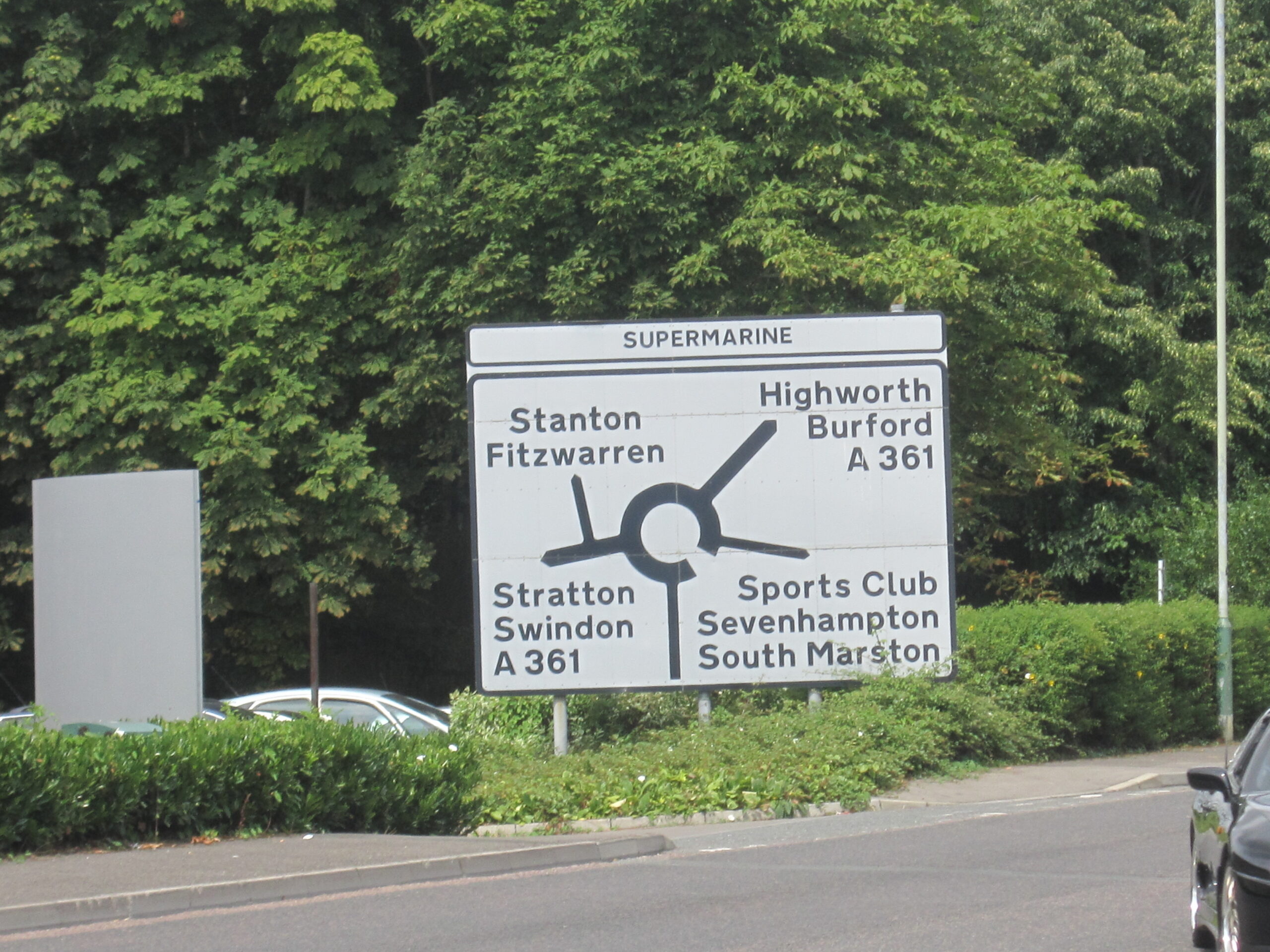
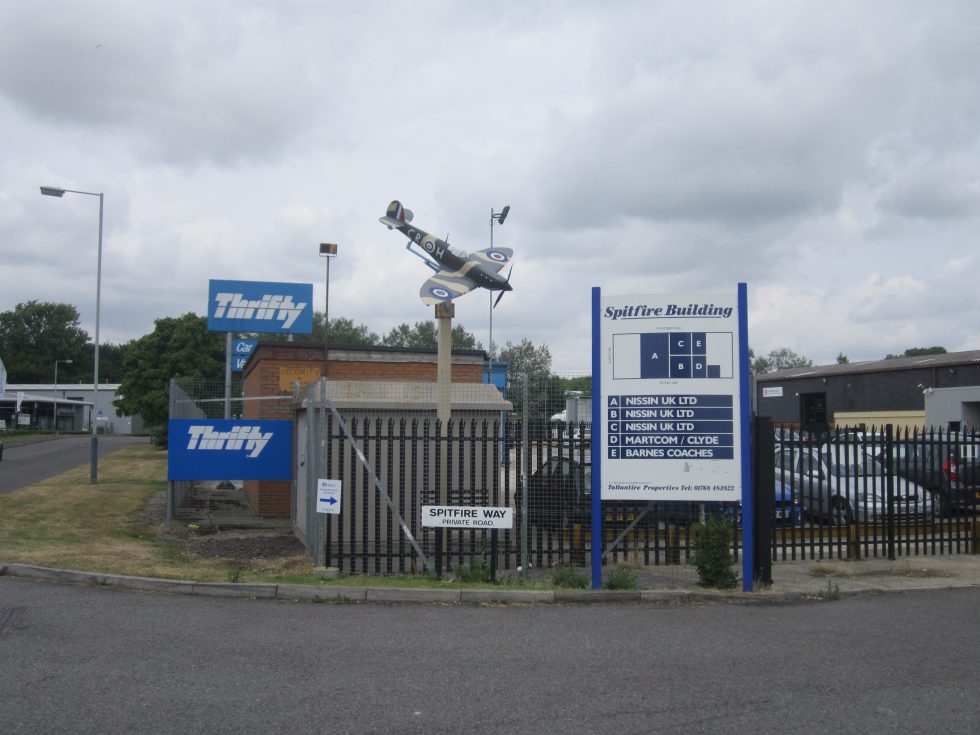
For more on this theme go here: https://swindonian.me/2014/08/05/swindon-roundabouts-part-1/
And for a celebration of the Spitfire/aviation heritage go here:
https://swindonian.me/2019/06/29/swindon-spitfire-heritage-celebrated/
Other connections to the Supermarine name
Well, aside from planes and cars we have sport! The period after the war saw the establishment of the Vickers Sports and Social Club for the benefit of the staff. The club secured its long-term home on Supermarine Road in 1988. Find out more about their history here: https://www.supermarinesportsclub.co.uk/club-history
Not forgetting of course, the Swindon Supermarine FC. This club formed in 1992 following a merger of Supermarine FC and Swindon Athletic FC.
Other South Marston connections
- Alfred Williams: https://swindonian.me/2024/08/18/alfred-williams-hammerman-poet/
- The Sustrans portrait bench: https://swindonian.me/2014/01/11/portrait-bench-south-marston-cycle-path/