Cinderella at the Wyvern. Yep. It’s Panto time again. And for 2024 the Wyvern Theatre are serving up that Christmas classic, Cinderella, featuring she of the glass slipper.
Book your tickets here and you SHALL go to the ball! https://trafalgartickets.com/wyvern-theatre-swindon/en-GB/event/pantomime/cinderella-tickets
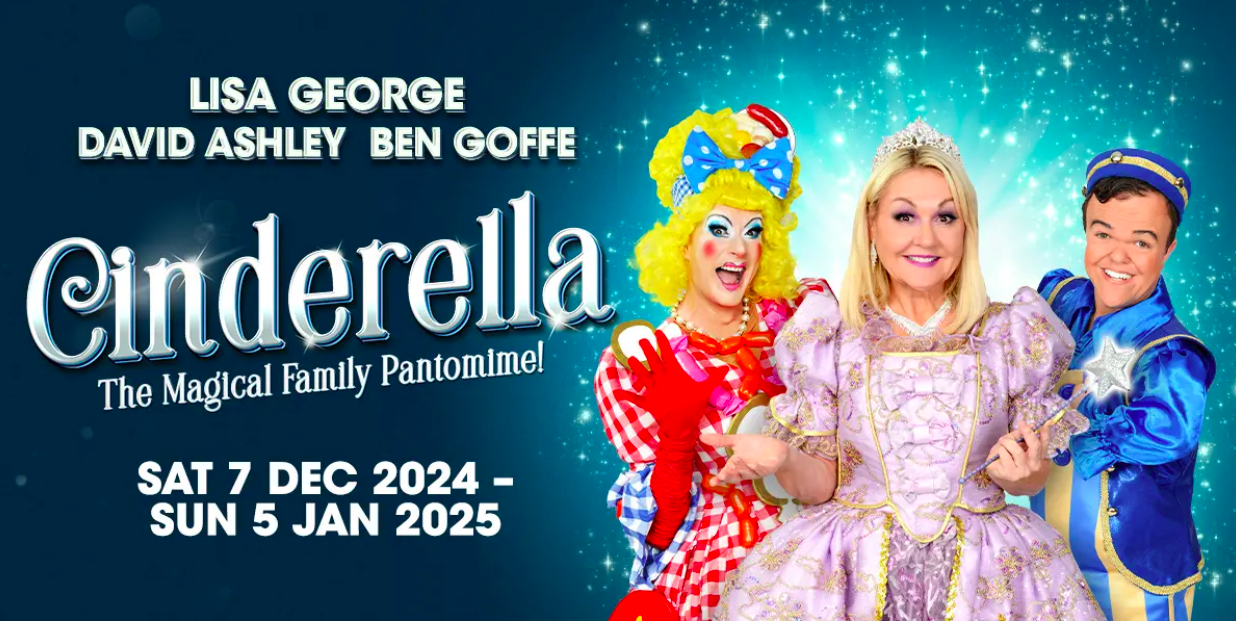
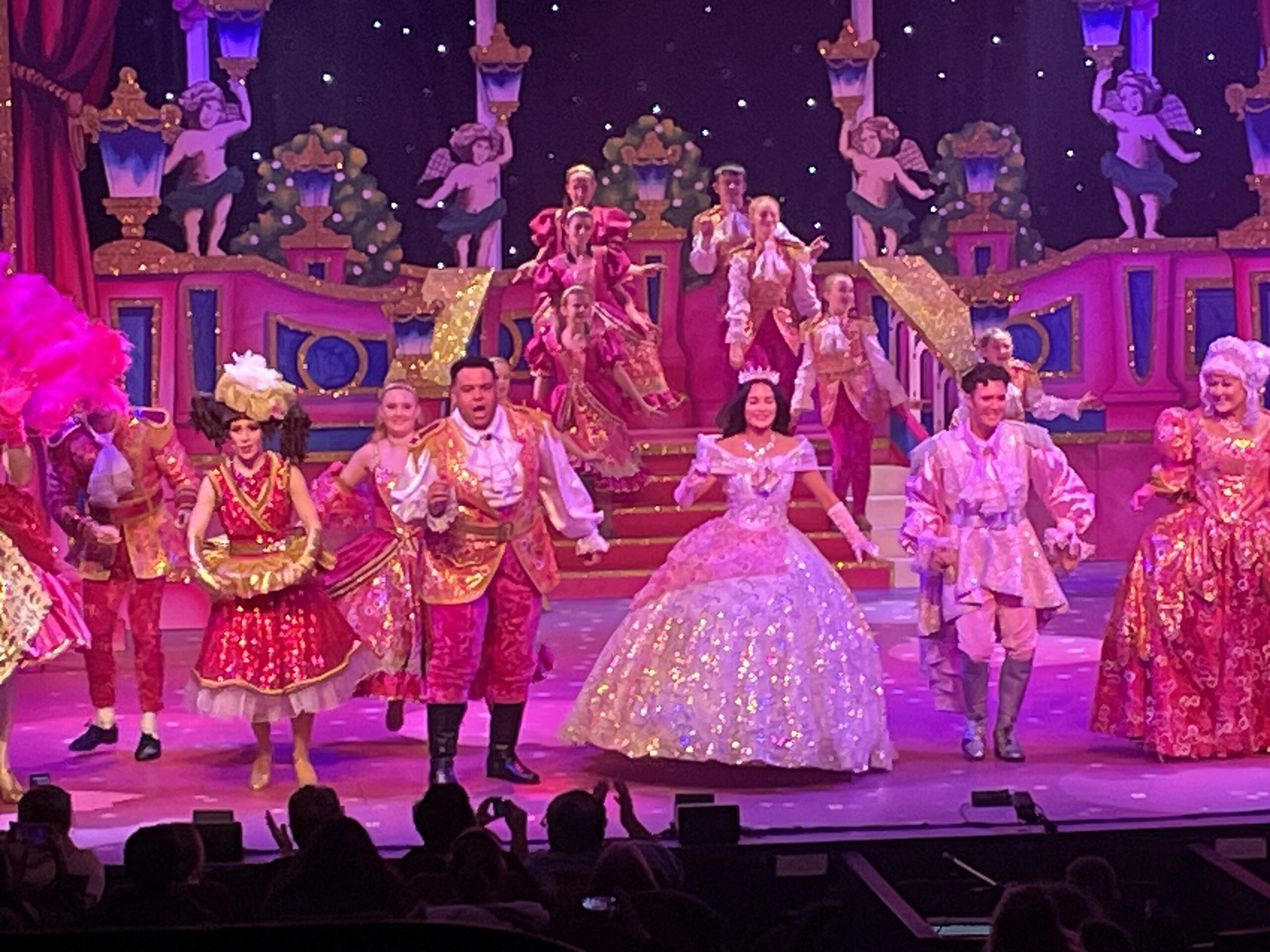
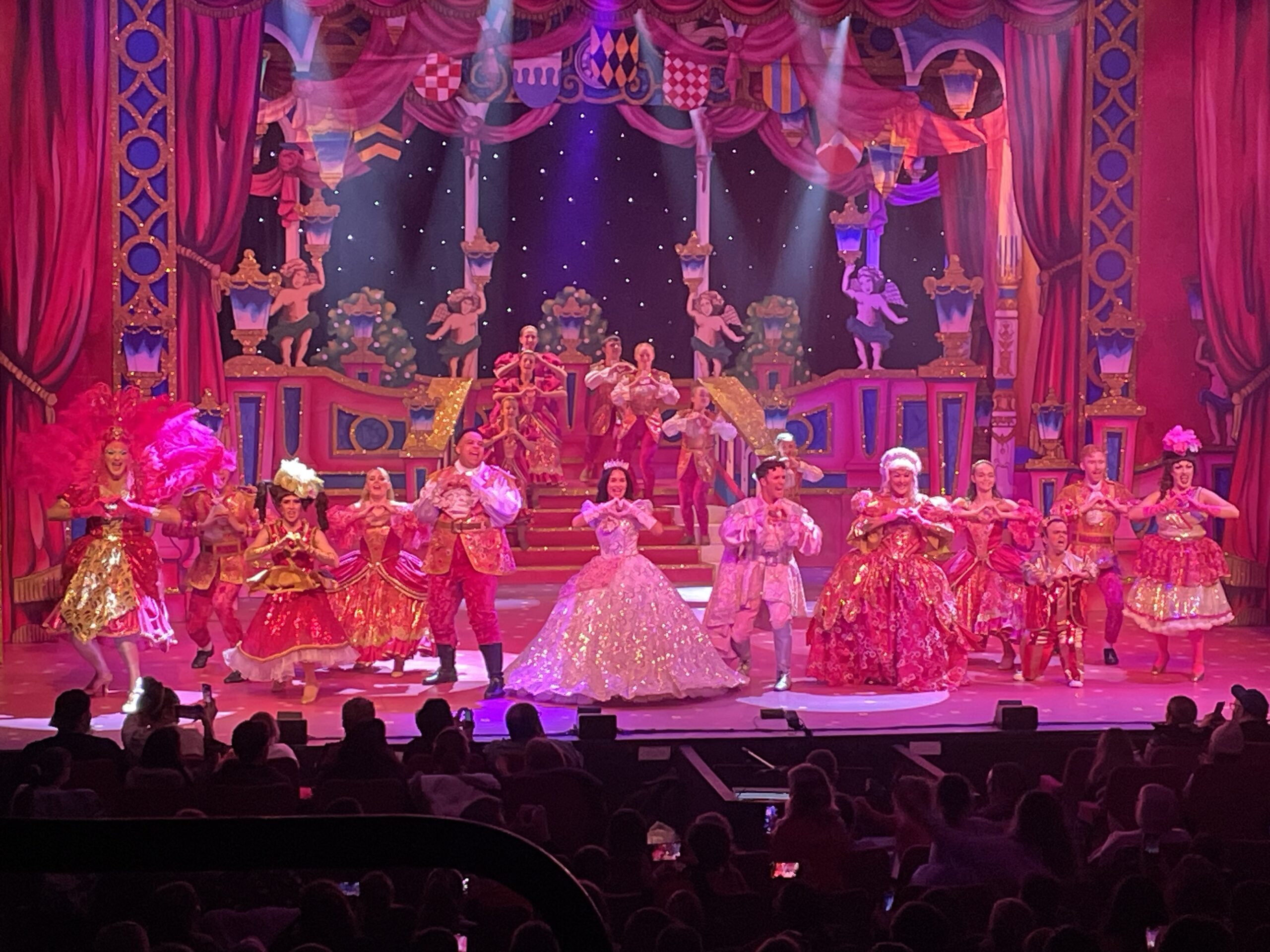
As ever, this production has all the elements you know and love. There’s tiaras, tantrums, slapstick, sparkles and a stunning, showstopper of an end to the first half. But to say more than that would be spoilers!
In the role of Molly Miggins, the Panto dame, David Ashley is as polished and professional – and funny – as you’d expect from someone with his long experience treading the boards. And wearing outrageous outfits. Obvs.
Meanwhile, Lisa George of Coronation Street fame, did us a lovely turn as the Fairy Godmother in an enviable green cloak that I can’t help think would complement some green velvet loafers I have in my possession. Anyway …
… Ben Goffe gave us a turn as a charming and bouncy Buttons and Maisie Scarlett delighted in the titular role.
But of course everyone is wonderful and I must and will give a special mention to the ensemble and junior ensemble. They’re the glue that pulls the whole thing together. All credit to them.
About the Cinderella story
As with most of our well-known, much-loved pantomimes the story of Cinderella has its roots in an ancient folk tale. Known also as The Little Glass Slipper, this one, according to that fount of all knowledge, Wikipedia, has thousands of variants told around the globe.
The protagonist is a young girl living in poor circumstances who’s suddenly blessed by remarkable fortune in the form of ascension to the throne via marriage.
Emerging sometime between 7 BC and AD 23, came a tale of a Greek slave girl, Rhodopis, who marries the king of Egypt. This story is often seen as the earliest known variant of the Cinderella story.
Giambattista Basile, in Italy, published the first literary European version of the tale in 1634. But 1697 saw the version that’s most known in the English-speaking world published in French, by one Charles Perrault. He did so in something called Histoires ou contes du temps passé, as Cendrillion. And that became Anglicized into Cinderella.
And of course the Brothers Grimm had their fingers in the Cinderella pie. They published a version called Aschenputtel in their folk tale collection Grimms’ Fairy Tales in 1812.
Name change
Although the story’s title and main character’s name change in different languages, in English-language folklore Cinderella is an archetypal name. The word has embedded itself in the language to mean someone/something whose talents and attributes aren’t noticed and recognized. Thus in the sporting world the term ‘Cinderella’ gets used to refer to a team or club that wins over stronger, more favoured competitors.
This ever-popular story continues to influence popular culture internationally, lending plot elements, allusions, and tropes to a wide variety of media.
Book your tickets here: https://trafalgartickets.com/wyvern-theatre-swindon/en-GB/event/pantomime/cinderella-tickets