July 2020
Last year, when writing Swindon in 50 Buildings, I knew I simply had to include Thomas Turner’s villas on Drove Road. Since the book’s publication, I’ve had a mind to write a bit more on here about Thomas Turner Swindon brick-maker and his brick-making enterprise. But I never quite got round to it. Then not long back I saw a super blog by Swindon historian Frances Bevan so figured – why reinvent the wheel? I may as well feature that with my own photographs. Well, I say mine, actually they’re Chris Eley’s, whom I despatch on photographic missions. I’m super grateful for that.
The Catalogue Houses
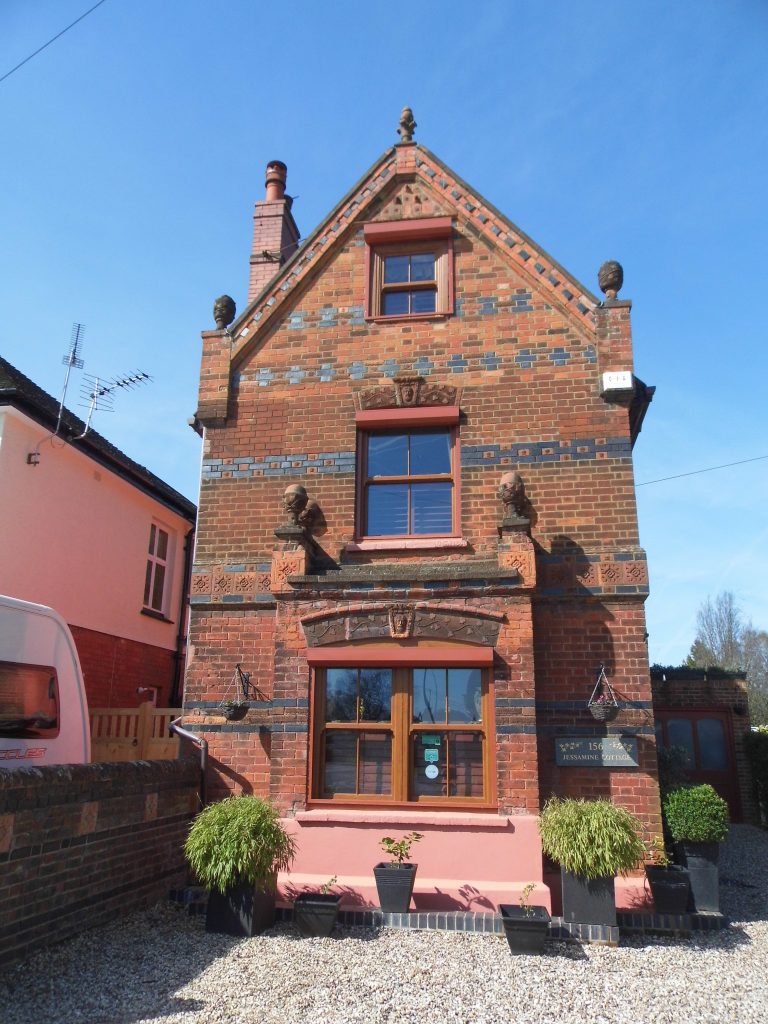
There’s several houses in Swindon that feature Mr Turner’s work. But it’s arguable that these two are the most notable. With the colloquial nickname ‘The Catalogue Houses’ – that’s exactly what these houses are. And there’s more than a touch of the whimsey about them.
Indeed, as Frances writes in her blog, Brickmaker Extraordinare, ‘When brick and tile manufacturer Thomas Turner wanted to advertise his wares he certainly thought of an eye-catching method. In 1889 he built two properties known as the ‘catalogue houses.’
The two cottages along with Jessamine Cottage, were 19th century show homes, built to display every brick and tile, every finial and moulding, made in Turner’s works.’
And do read the rest of Frances’ blog for more detail about Thomas Turner. She has some lovely detail in there about him. And there’s a picture too, of where he now lies in Christ Church in Old Town.


For the well-to-do
Imagine having the where-with-all back in the day to have your own home built? To rock up to Drove Road, look at these villas and pick out bricks and decorative elements for your own home? An early version of the Ikea catalogue – but for bricks instead of Besta storage units.
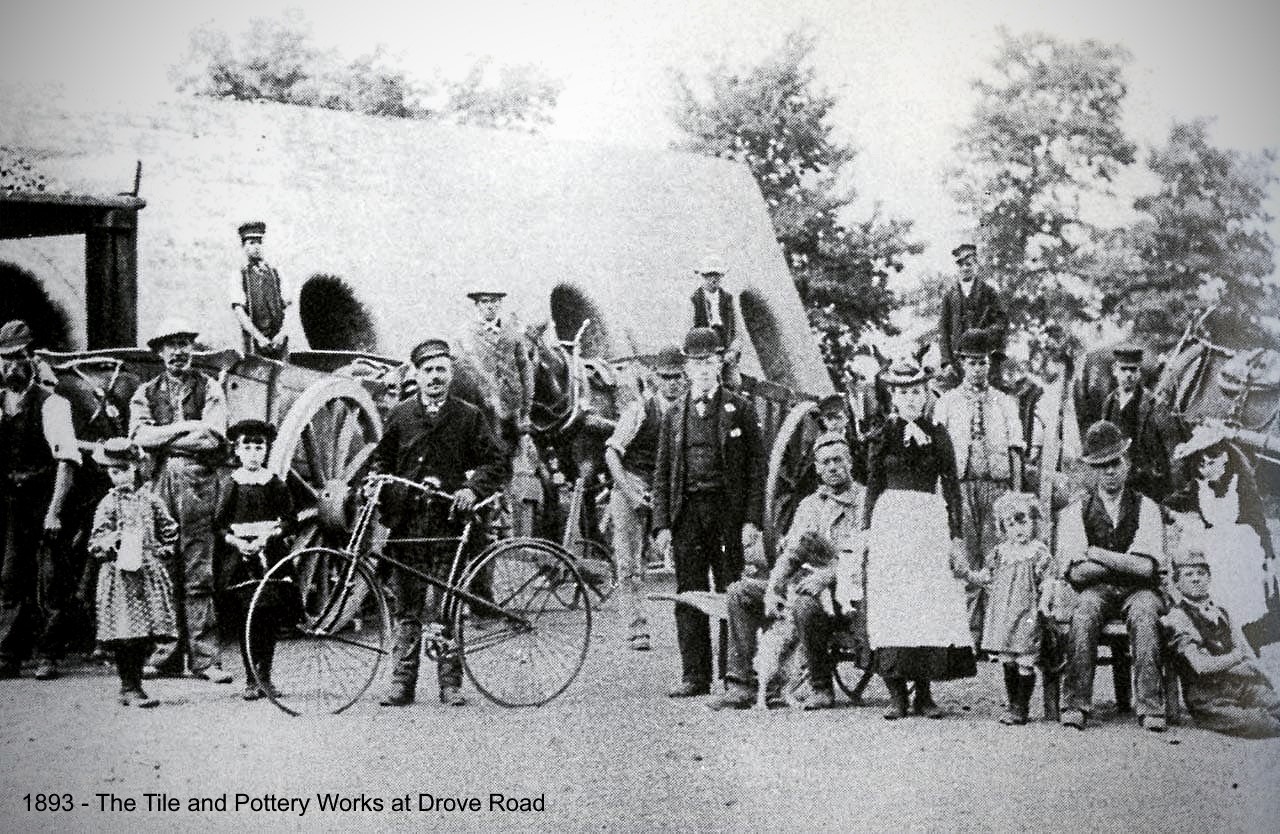
Thomas made the bricks on his manufacturing site on Drove Road – on what is now Queen’s Park. Wandering around that delightful oasis it’s hard to picture it as the clay pit, that once it was.
Turner’s family home, Grove House, sat a spit up the road from these villas and currently does duty as the Miller and Carter Steakhouse restaurant.
About Turner
According to Mark Child’s Swindon Book, Thomas Turner hailed from Cheltenham. Frances Bevan expands on that by explaining how, following his marriage to Mary Gosling, a farmer’s daughter from Coate, he came to live in Stratton St. Margaret. The newly-weds began their life together at the brick works at Cross Roads, Stratton St. Margaret. There they had their two children, Emma and William, baptised at the parish church. A second son, Jonathan, came along in 1875.
In the 1860s TT took over a small brickworks in the village and there set up a large tile and pottery works. In the 1870s he built up the aforementioned Drove Road works.
Frances further tells us that the Drove Road properties featured early in Turner’s output, being built for his workers in 1871. She further explains that records held at the Wiltshire and Swindon History/Heritage centre in Chippenham reveal a mere fraction of his work in Swindon during the 1880s and 1890s. His 3D catalogue included numerous houses and cottages built in Westcott Place, Drove Road and Belle Vue Road. And, in 1892, houses in the street that took his name.
The 1880s saw the family move into Grove House on Drove Road with their servant, Annie Lewis – also Cheltenham born.
Civic duty
In 1875, Turner comprised the solo Swindon representative on the nine-man board that took on the running of the Wilts & Berks canal when the original company sold out.
Come 1881, his bricks and pottery decoration were used to build and embellish St Paul’s church on Swindon’s Edgeware Road. Ditto the chancel added in 1883. Demolished in 1965, the church formed the building blocks of the 1884 Wilts & Dorset Bank on the corner of Wood Street and Cricklade Street. Some also were utilised in the extensions of the museum and chapel at Marlborough College.
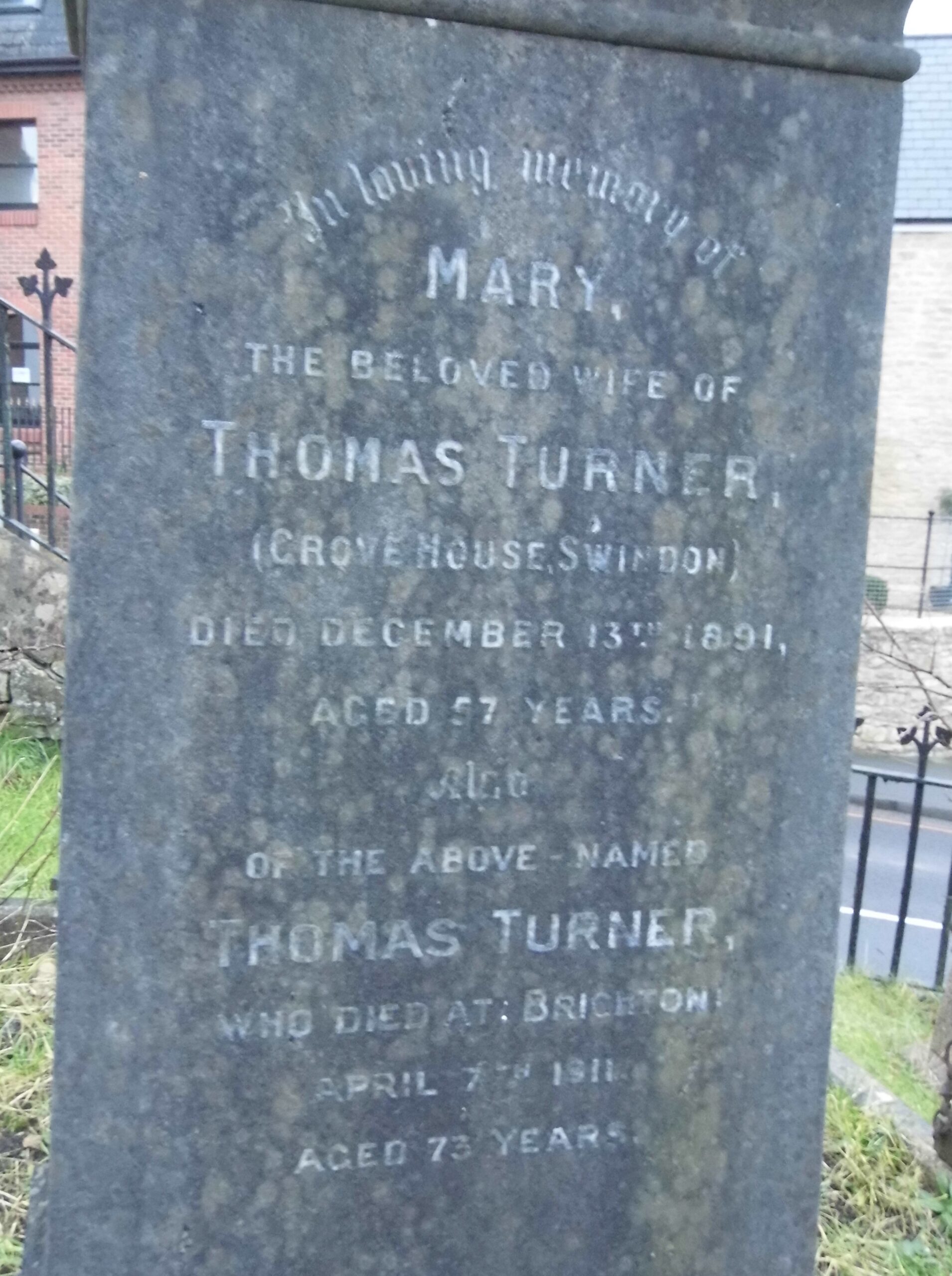
Turner died in Brighton but is buried in Swindon at Christ Church.
1896 saw one Thomas Bazzard take over the Swindon Tile and Pottery Works.
Thomas Turner’s resting place
In the graveyard at Christ Church in Old Town, just inside the Cricklade Street gates, you’ll see this grave/memorial. Note though it states that Thomas Turner died in Brighton. Apparently on the 14th April 1911, an obituary appeared in the North Wilts Herald that said ‘the remains were laid to rest in the family vault in Swindon parish churchyard … the first part of the service was conducted the previous day at St Augustine’s Church, Brighton.
NB: You can also see, in the middle picture, one of Anderson’s Almshouses.
Speaking of the man’s grave …anecdotally from a friend … ‘Apparently a very bad employer, my friend’s Grandmother used to spit on his grave when they went to Church at Christchurch …’
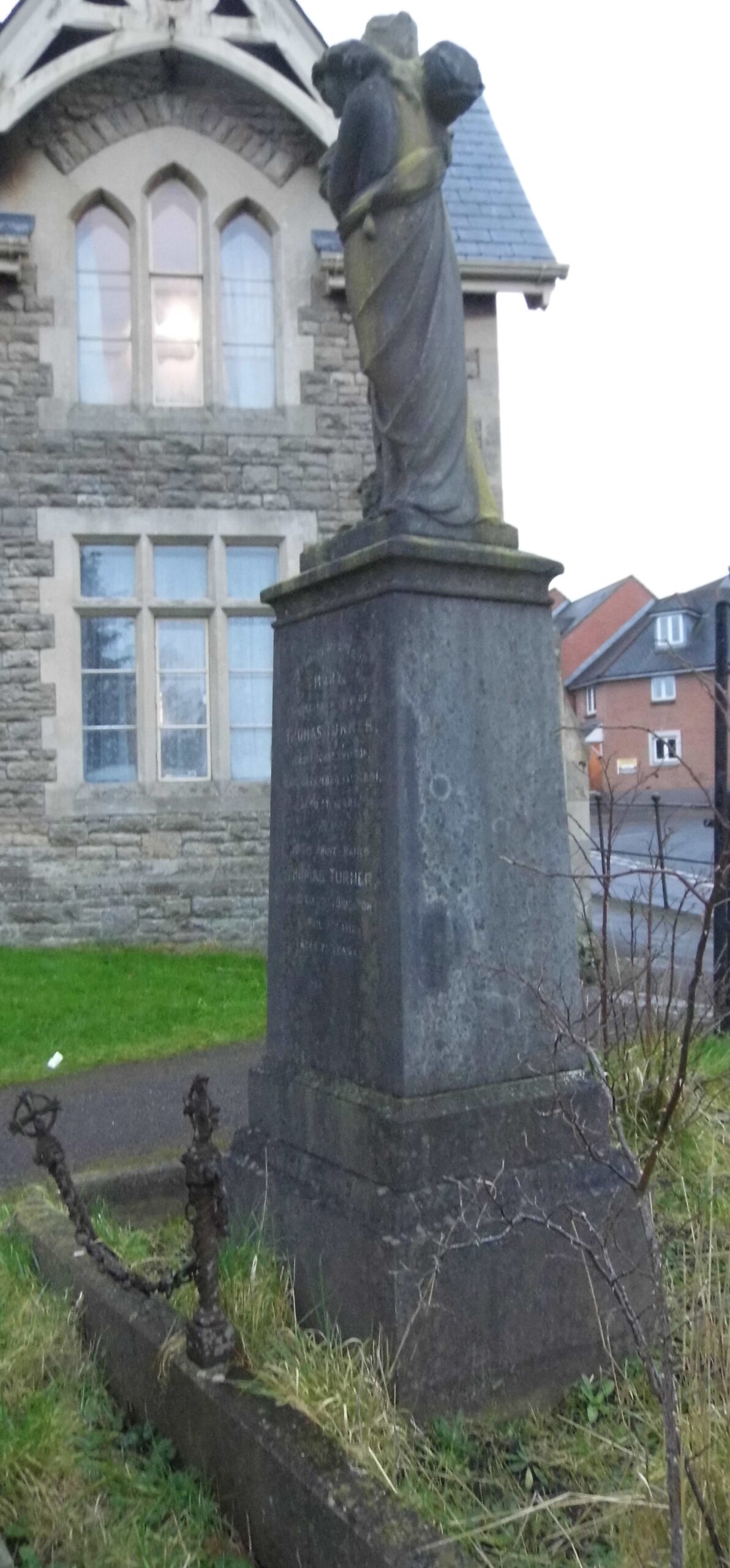
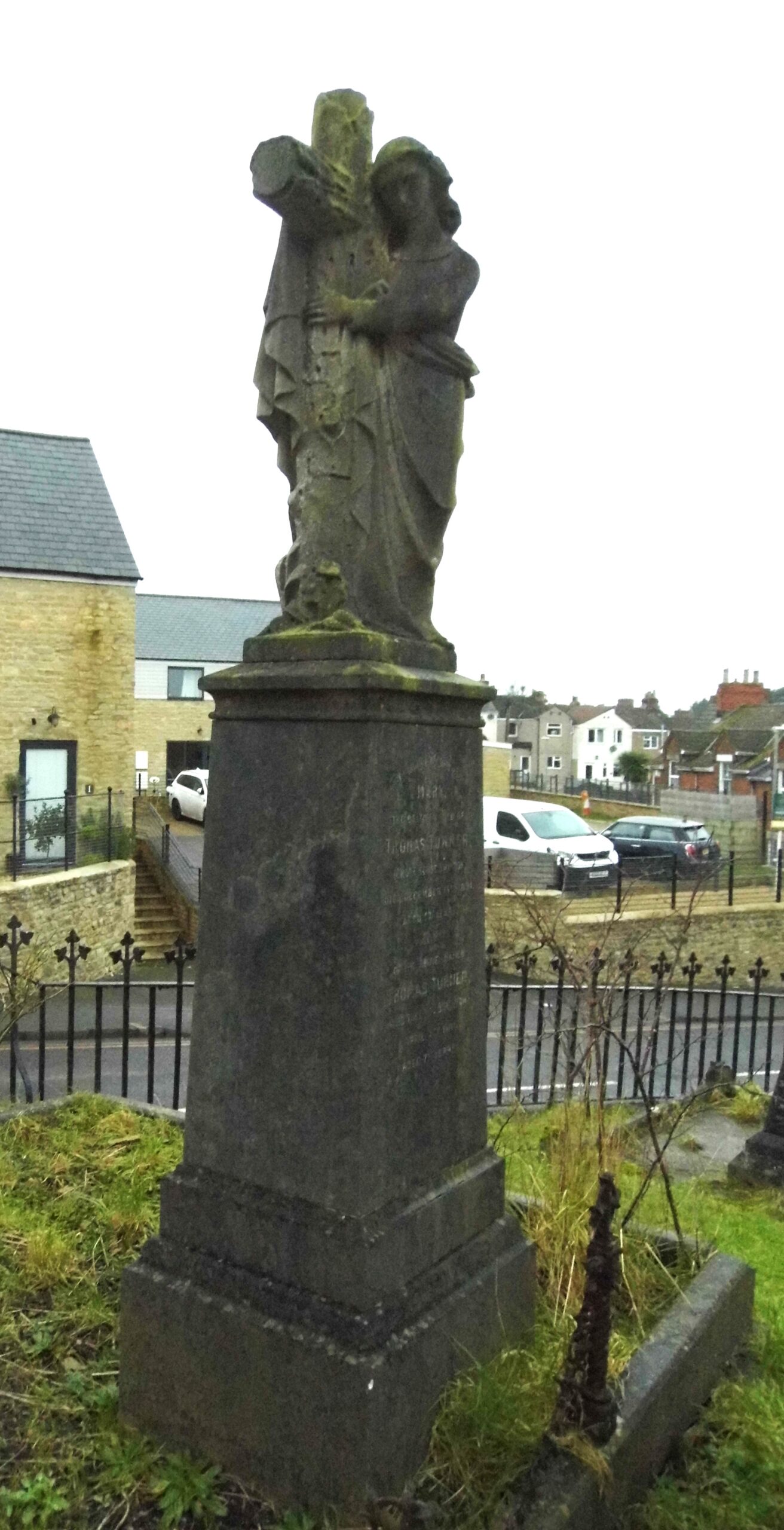
Now – get exploring! Whip your smart phone out and call up Google maps and go looking for other houses bearing Thomas Turner features.
You can find typical Turner decorative features in Belle Vue Terrace, Hunt Street and Turner Street (named after our man) off Westcott Place. These houses were built with his own bricks as were other streets linking New Swindon and Old Town.
On those houses, and on others he built in Lansdown Road, Kingshill and Westcott Place you’ll find a repeated pottery plaque or keystone in the form of a bearded man surrounded by shell motifs and running vines. It’s said that this face is the likeness of Daniel Lynch, a worker at Turner’s Stratton St Margaret brick, pottery and tile yard.